You order a screen canopy in the spring, and by late summer the poles are bending, the top has faded, and the mesh sags where the zipper meets the corners. A hard top screen house works differently: it is a fixed outdoor structure with a rigid roof, a welded metal frame, and screens around the sides that keep insects out without blocking the breeze. This guide covers what defines that type of shelter, the advantages that justify its price, the details to inspect before buying, and the placement and maintenance habits that extend its life.
A hard top screen house is an outdoor enclosure that combines a solid, non-fabric roof with mesh walls on a metal frame. Instead of a canopy that flutters in the wind, the roof is a rigid panel of steel, aluminum, or polycarbonate that stays flat, sheds rain, and creates real shade. The walls use fine screen mesh, typically with a zippered or magnetic door, which is what separates the structure from an open-sided hardtop gazebo.
Think of it as the middle option between a portable screen tent and a fully enclosed sunroom. It stays up for an entire season or year-round because it is built like a small structure rather than a camping product, and it keeps the space light and airy because the walls are mesh instead of glass or vinyl panels. Patio dining areas, children's play zones, and reading corners all benefit from this arrangement, especially where mosquitoes and flies are constant.
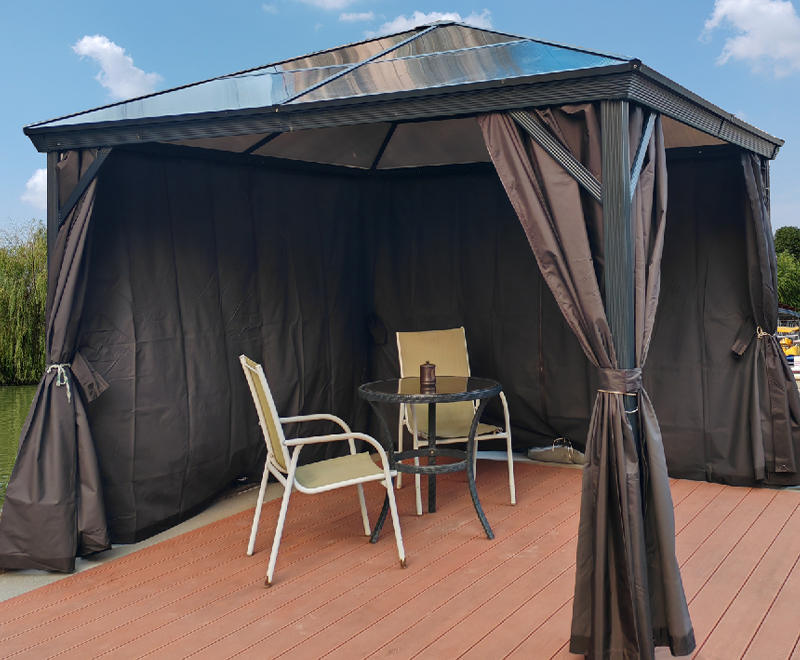
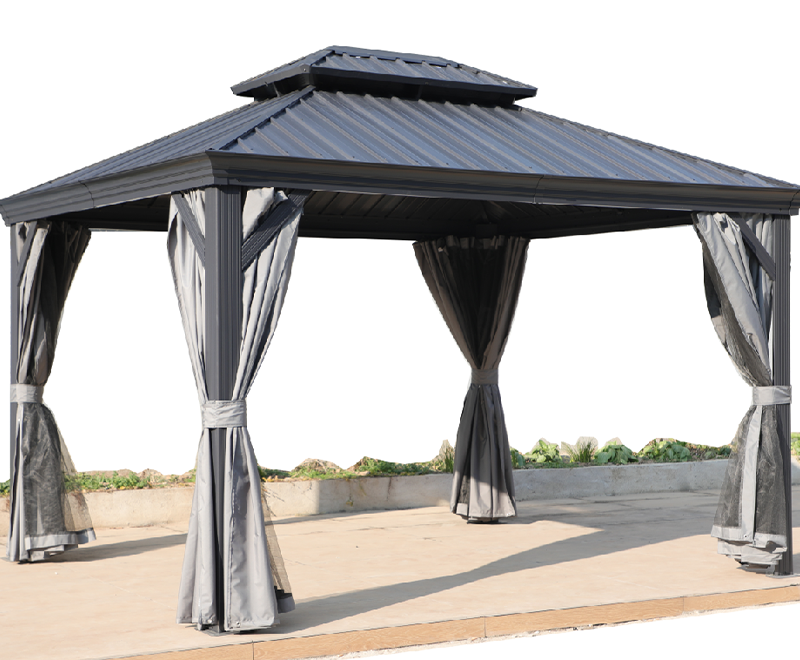
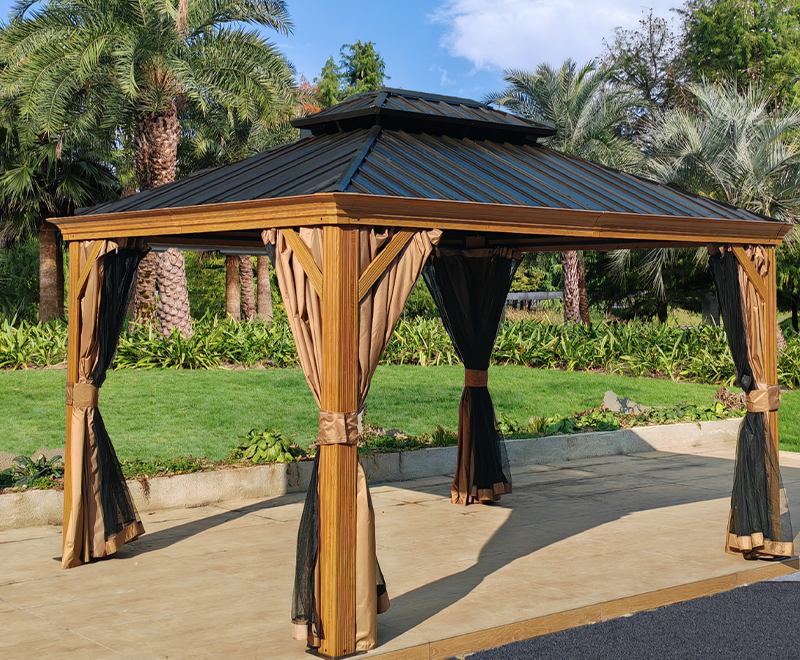
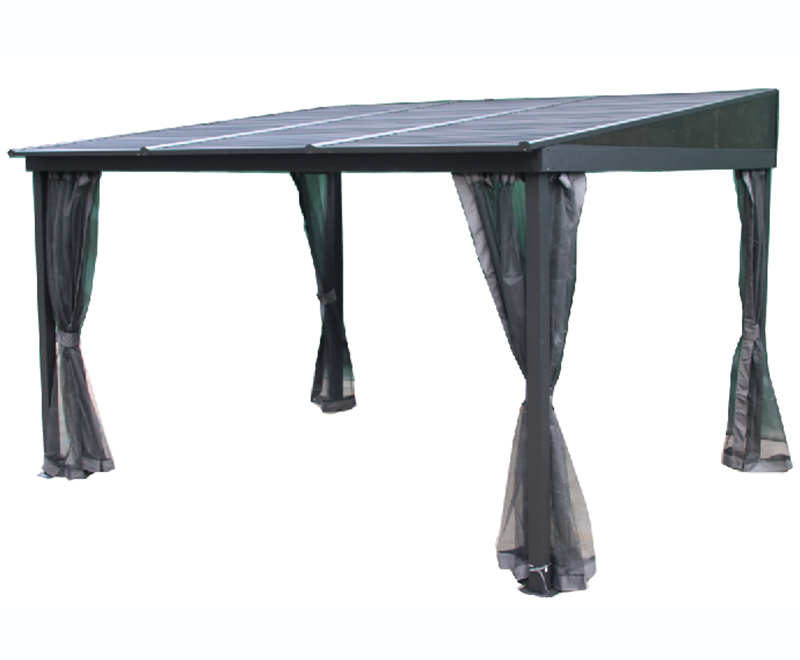
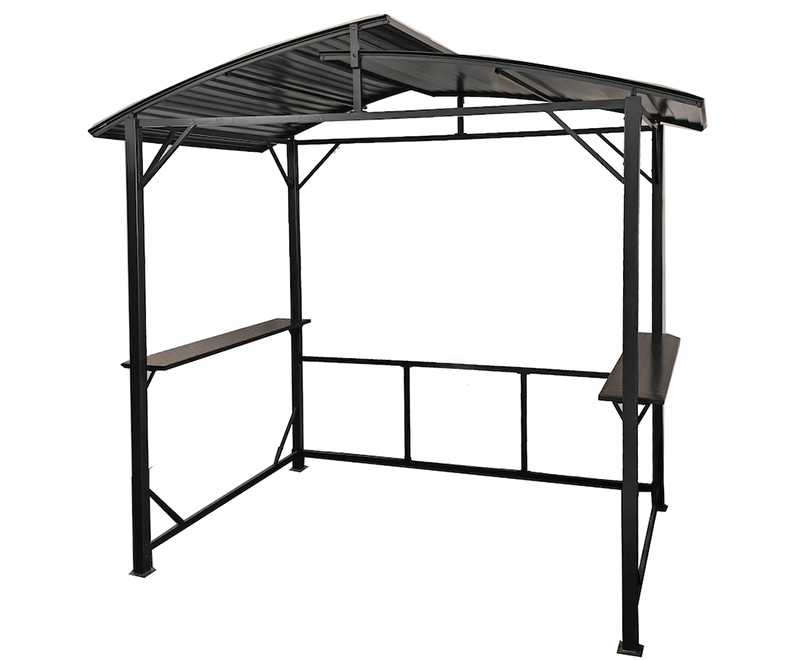
A compact layout shows how effective this combination can be. The 3 x 3.6m iron roof sun shed pairs a sheet-metal roof with screened sidewalls, giving a modest patio a sheltered room that blocks sun and bugs at the same time.
The roof is where screen shelters fail first, and it is also the part that sets the comfort level inside. Fabric tops absorb heat, sag when wet, and break down quickly in strong sunlight. A hard roof reflects or diffuses more solar radiation, so the area below stays noticeably cooler in the afternoon. It also gives you a dependable surface for hanging lighting, ceiling fans, or curtain rods, none of which a flimsy canopy can support.
Stability is the second big difference. A steel or aluminum frame with a rigid roof behaves like a small building, not a tent. It withstands gusts without flexing, and the whole structure is far less likely to lift off its foundation. For anyone in a windy coastal area or a region with summer thunderstorms, that difference alone justifies the higher purchase price.
Prices vary widely across suppliers, usually for good reason. The frame, the roof panel, and the screen system carry most of the performance, so those are the areas to compare first.
The frame should be steel or aluminum with a corrosion-resistant finish. Welded connections hold up better than bolted ones, which can loosen over time from vibration and thermal movement. On steel frames, ask about the coating applied after welding; galvanizing or powder coating thickness determines how many years the structure will survive humid air and lawn sprinklers.
Four roof materials dominate the market. Each one suits a different use, and the right choice depends on how much sun, heat, and weather the structure will face:
| Roof material | Best for | Key points to verify |
|---|---|---|
| Clear polycarbonate | Maximum natural light for plants or daytime use | UV-protective coating, sheet thickness, impact rating |
| Bronze or tinted polycarbonate | Reducing glare and heat while keeping some brightness | Light transmission percentage, heat reduction claims |
| Steel or galvalume sheet | Maximum durability in wind, snow, and heavy rain | Coating type, anti-condensation layer, edge sealing |
| Sun panel (translucent composite) | Balanced light diffusion with better insulation | Panel composition, UV stability, warranty period |
Mesh density matters for two reasons: mosquito protection and airflow. A fiberglass or stainless steel mesh in the 20-30 mesh range stops the smallest biting insects while still letting air move through. Check the zipper material as well, because cheap zippers are the most common failure point on any screened structure. A door threshold that closes tightly also prevents insects from crawling in underneath the frame.
If keeping bugs out is the central reason for the structure, choose a model built specifically around that task. The 3.6 x 5.48m mosquito-proof sunroom uses fine mesh walls on a large footprint, so a full dining set can stay outside comfortably through the summer months.
Installation location determines a large part of how satisfied you will be. The ground must be flat and well drained; standing water under the frame attracts insects and accelerates corrosion on metal posts. A concrete slab or deck is the most reliable base, while grass installations need ground anchors or screw piles rated for the structure's wind load.
Orientation also changes how the space feels at different hours. A door facing south brings in more daylight but also more heat. If evening use is your priority, angle the structure so the setting sun hits the roof instead of shining into the mesh. Those location considerations for wall-mounted sunrooms apply just as much to freestanding screen houses when you are deciding between an open yard, a fence line, or a house wall.
Wall-mounted versions save floor space and use the building wall as a second support, useful on narrow patios. Freestanding units offer greater freedom in garden layout but require strong anchoring at all four corners.
Hardtop screen houses need less care than fabric canopies, but they still need attention. Three habits make the biggest difference. First, wash the roof panels twice a year with mild soap and water; a soft cloth removes pollen and tree sap without scratching the protective coating. Second, inspect the mesh after storms for tears or pulled areas, and clear grit from the zipper tracks before they jam. Third, check the fasteners that connect the frame to its base, especially in spring after a windy season.
Keeping leaves and small branches off the roof performs double duty: it prevents stains on the panel surface and reduces the load the frame has to carry in wet weather.
A hard top screen house earns its cost when mosquitoes, harsh sun, and light rain would otherwise keep you indoors. It replaces the flimsiness of a fabric screen tent with a solid roof and a metal frame, and it adds the insect protection that an open hardtop gazebo lacks. The extra money goes into the frame, the roof coating, and the screen hardware, which is exactly where it should go.
A 3.6 x 4.2m transparent screen sun room shows the balanced option: a clear roof that keeps the interior bright, screened walls that block bugs, and a steel frame built for real furniture. If that matches the outdoor room you have in mind, compare a few models from a hardtop gazebo manufacturer with in-house metal fabrication, and the differences in build quality will show up quickly.
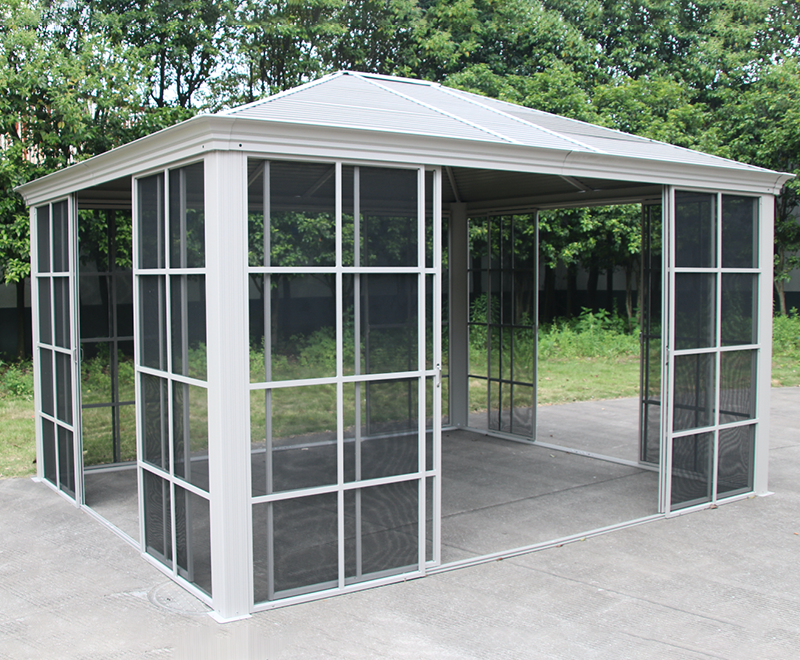 Wholesale 3.6x4.2m Transparent Screen Sun Room Factory, Manufacturers - Ningbo JNingbo Jinjin Leisure Co., Ltd. is China wholesale 3.6x4.2m Transparent Screen Sun Room manufacturers and factory, details:3.6x4.2m gauz...View Product →
The company has 20 professional and technical personnel and more than 200 company employees; it covers an area of 15,000 square meters. We are an enterprise specializing in the production, design and sales of metal products.
No. 137-1, Zhangjia, Shangtian, Fenghua, Ningbo, China
justin.gao@vip.163.com
+86-13867888253
OEM/ODM Hard Top Tent/Shelter Manufacturers
Copyright © Ningbo Jinjin Leisure Co., Ltd. All Rights Reserved.

 English
 中文简体
中文简体 Français