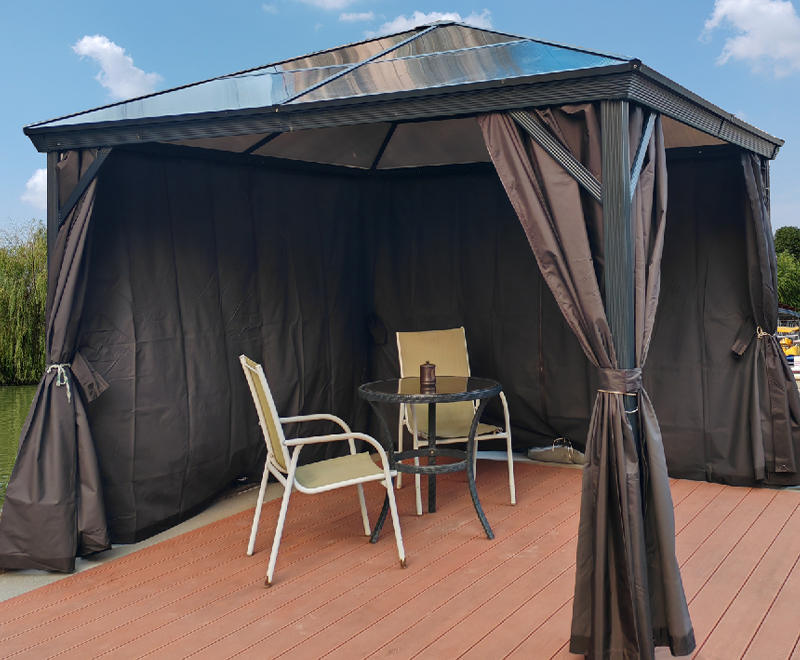
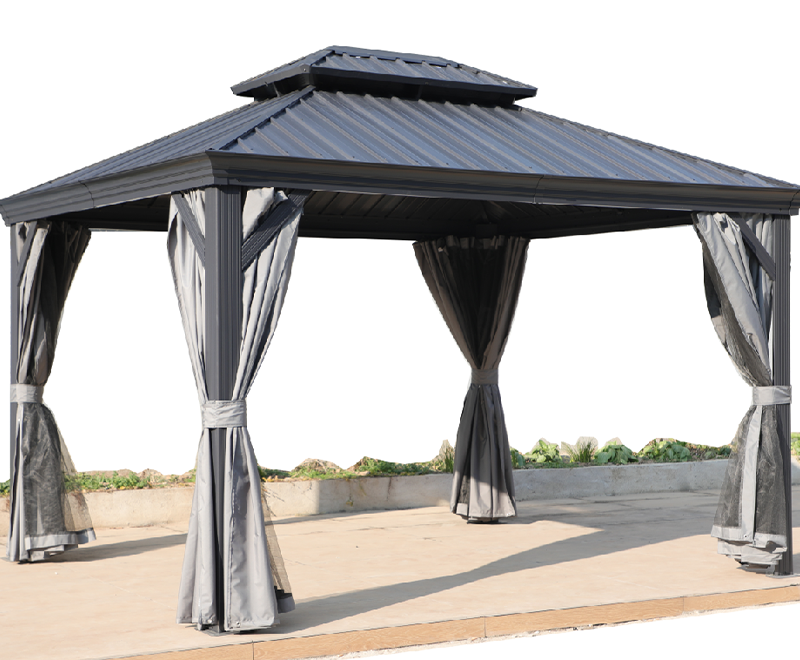
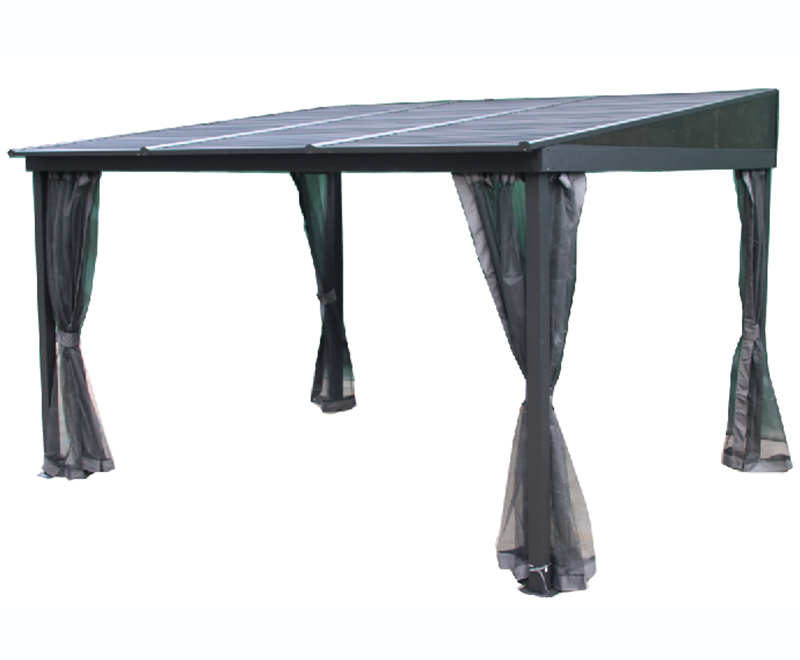
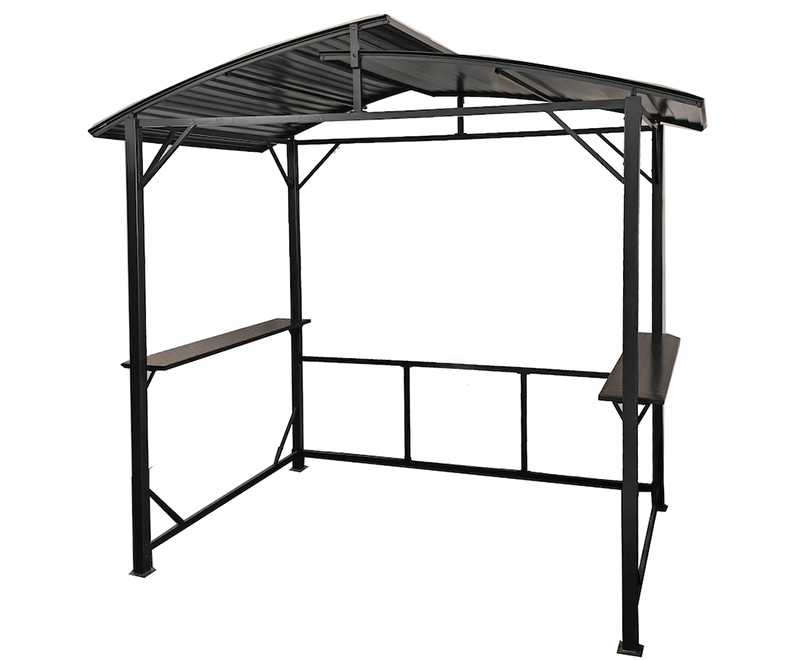
An 8 x 10 gazebo with screen works hard for the amount of yard space it takes up. It gives you a solid roof, an insect barrier, and a defined seating area without swallowing a small patio. The practical question is not whether you want one, but what to check before you commit. This article walks through the size, the screening, the roof material, and the installation basics so you can make an informed choice.
An 8 by 10 footprint converts to roughly 2.44 by 3.05 meters. That means about 80 square feet of covered floor area. In practice, you can place a four-seat dining table with enough room to walk around it. The same footprint also works for two lounge chairs with a small side table, or a bar-height table with stools. This is not a crowd-sized space, but it is comfortable for everyday use.
Compared to a 10 x 10 unit, the 8 x 10 saves a meaningful amount of yard space. If your patio or deck is between 10 and 12 feet wide, the 8 x 10 often aligns better with the edges and does not create a heavy overhang. For many small and medium backyards, this size is the sweet spot where shade, protection, and visual proportions meet.
| Footprint | Coverage | Seats | Typical Use |
|---|---|---|---|
| 8 x 10 ft | 80 sq ft | 4-6 | Small to medium patios |
| 10 x 10 ft | 100 sq ft | 6-8 | Medium backyards |
| 10 x 12 ft | 120 sq ft | 8-10 | Larger backyards |
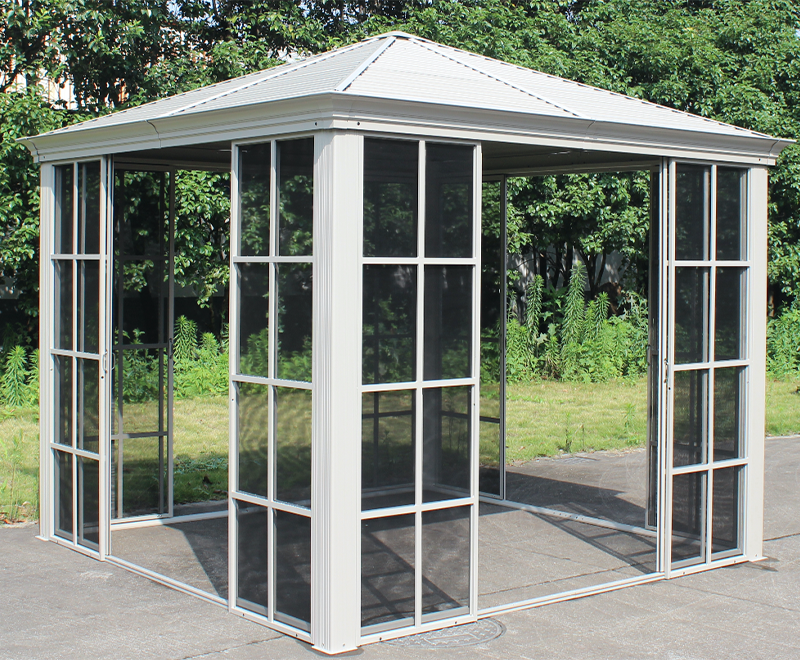 3x3m Luxury Screen Sunroom with Aluminum Frame and 8 DoorsThis 3x3m sunroom suits smaller patios, offering a semi-enclosed space with movable doors and insect screens. Its aluminum frame resists rust, and the galvanized steel roof ensures durability without heavy overhang.View Product →
The screen layer is what turns a simple shelter into a usable outdoor room. In the late afternoon and early evening, mosquitoes tend to be most active, which is exactly when many people want to sit outside. A well-made screen wall keeps most insects out while allowing air to move through the structure. Because the mesh is transparent, you keep the view of the garden and do not need to rely on artificial lighting during daytime hours.
Mesh material and density matter. Fiberglass mesh is common because it holds its shape and resists UV damage. A denser weave stops smaller insects, but also reduces airflow slightly. For an 8 x 10 screen gazebo, a balanced mesh density gives the best compromise: enough ventilation to stay comfortable and enough protection to keep bugs out.
For families with young children, the screen also creates a semi-enclosed play area that is easier to monitor. You can set up a small table for crafts or snacks without worrying about biting insects or strong direct sun.
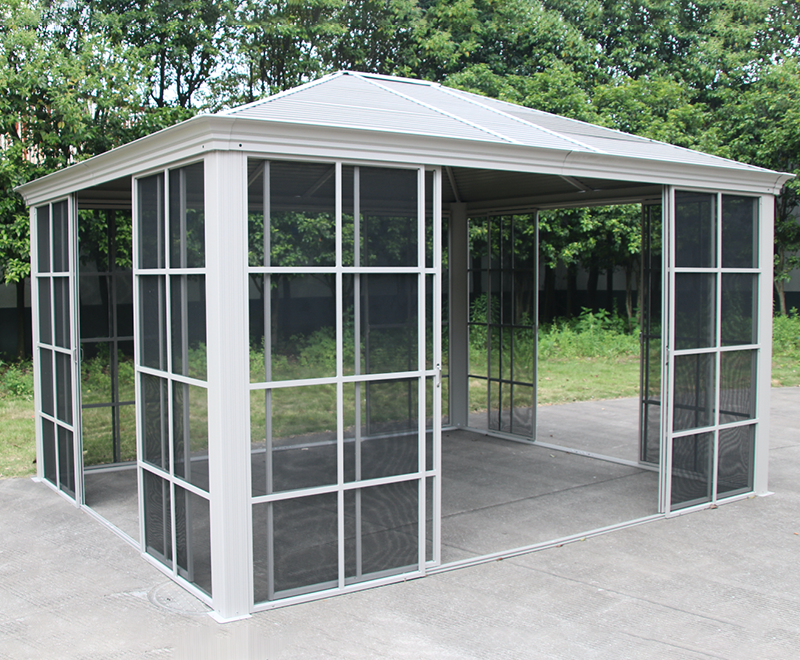 3.6x4.2m Transparent Screen Sun Room with Water-Draining BeamsIdeal for families needing a safe play area, this larger sunroom features 120x120mm columns and stepped roof tiles. The grooved columns and beam edges direct rainwater away, boosting longevity and comfort.View Product →
The roof material has a bigger effect on long-term satisfaction than any other feature. A soft top made of fabric can look great when the weather is calm, but it wears out quickly under sustained wind, UV exposure, and heavy rain. When the roof fabric sags or tears, the whole frame becomes less stable and the screen walls lose their tension.
A hardtop roof uses polycarbonate panels or metal sheets over a metal frame. Polycarbonate panels, especially multi-wall versions, add an insulating air layer that reduces heat buildup. They also resist impact better than glass. Metal roofs shed water and snow well but transfer more heat downward in strong sun. Either way, the hardtop structure keeps the frame rigid, which allows the screen mesh to remain flat and taut.
For a screen gazebo, a stable frame is not optional. The screens are attached to the frame, and even a slight shift in the frame causes wrinkles or gaps. This is why hardtop models are the better investment for most climates.
| Feature | Hardtop | Soft Top |
|---|---|---|
| Wind resistance | Strong with proper anchoring | Moderate |
| Expected lifespan | 5-10+ years | 2-3 years |
| Maintenance | Low | High |
| Shade efficiency | High | Medium |
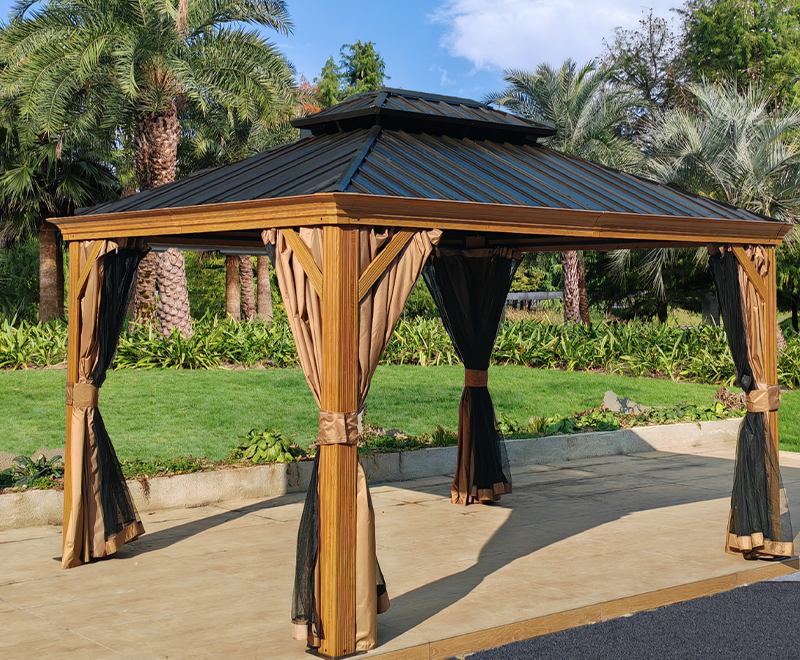 Hardtop Gazebo Manufacturers: Durable Aluminum and Steel ModelsThis manufacturer focuses on hardtop gazebos with galvanized steel or aluminum frames, designed to withstand wind and snow. Their products combine stability with rust resistance, making them a sound long-term choice for screen structures.View Product →
There is no single perfect configuration for every yard. There are, however, a few mechanical details that decide how well an 8 x 10 gazebo with screen behaves over time.
Where you place the gazebo changes how it performs. An open spot with morning sun and afternoon shade often gives the best balance. If your region has strong prevailing winds, avoid placing the structure directly in the wind corridor between your house and the fence. If the gazebo is intended for outdoor dining, keep it within a short walk from the kitchen door, otherwise the practical convenience drops.
If you have a grill area, keep the screen gazebo at a distance. Grease and smoke can settle on the mesh and require more frequent cleaning. Positioning the structure close to a garden bed or a tree line can provide natural shade, but also means you need to watch for falling leaves and branches.
Screen panels can be cleaned with a soft brush and mild soap. Rinse with a garden hose on a low-pressure setting. Avoid pressure washers; they damage the mesh and can push it out of the frame. Check the roof screws and corner brackets twice a year, especially after winter or a period of strong storms. If you live in a snowy climate, clear the roof as soon as accumulation reaches a few inches to avoid stress on the panels.
Beyond the functional side, the visual condition of the structure matters as well. If you want the gazebo to look integrated with the rest of your yard, you can follow these practical ideas for decorating a hardtop gazebo, which focus on simple additions like lighting, planters, and fabric accents rather than major construction.
An 8 x 10 gazebo with screen is a strong fit for homeowners who want a dedicated outdoor corner without giving up the whole yard. It handles the two main reasons people stop using their patios: heat and bugs. The best results come from confirming the frame coating, the roof type, and the screen quality before ordering. Once those are settled, this size becomes an enjoyable extension of your home for a long time.

The company has 20 professional and technical personnel and more than 200 company employees; it covers an area of 15,000 square meters. We are an enterprise specializing in the production, design and sales of metal products.
No. 137-1, Zhangjia, Shangtian, Fenghua, Ningbo, China
justin.gao@vip.163.com
+86-13867888253
OEM/ODM Hard Top Tent/Shelter Manufacturers
Copyright © Ningbo Jinjin Leisure Co., Ltd. All Rights Reserved.

 English
 中文简体
中文简体 Français