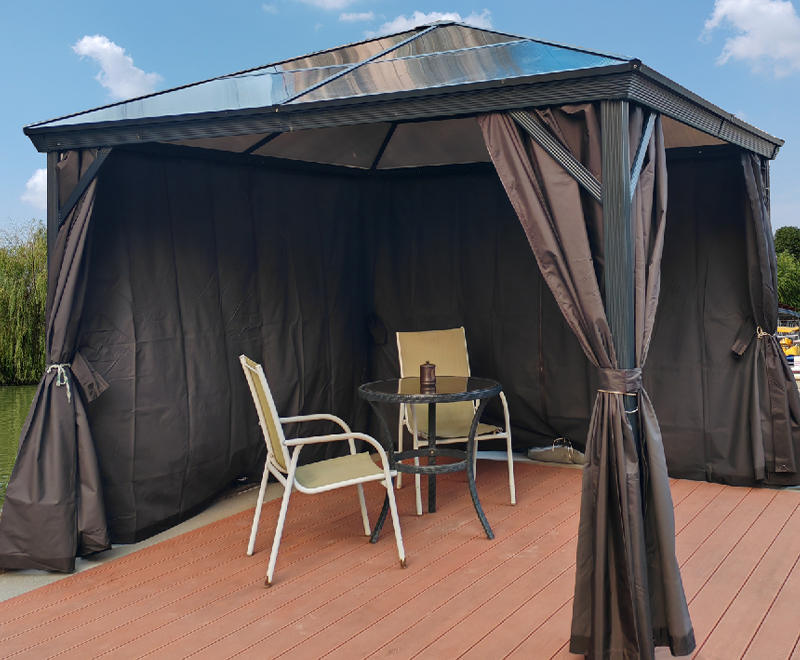
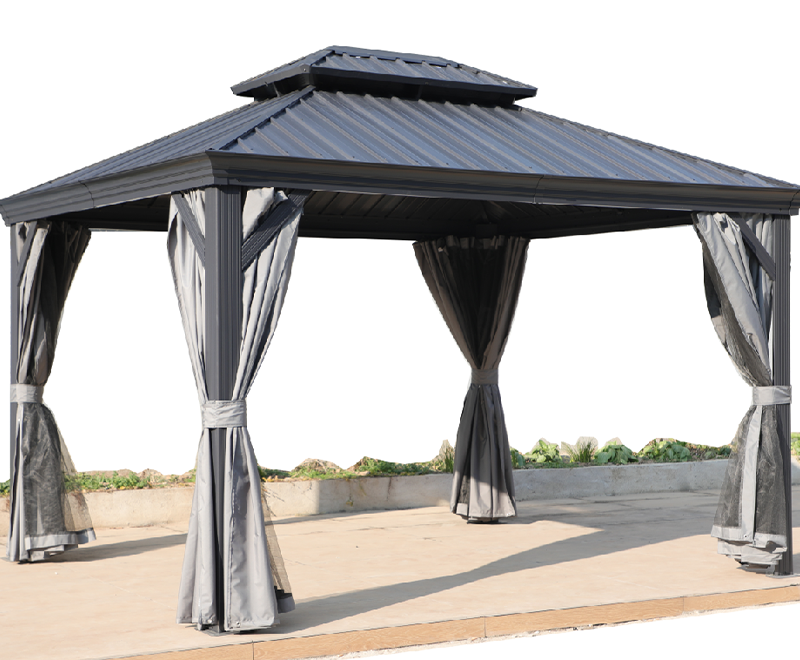
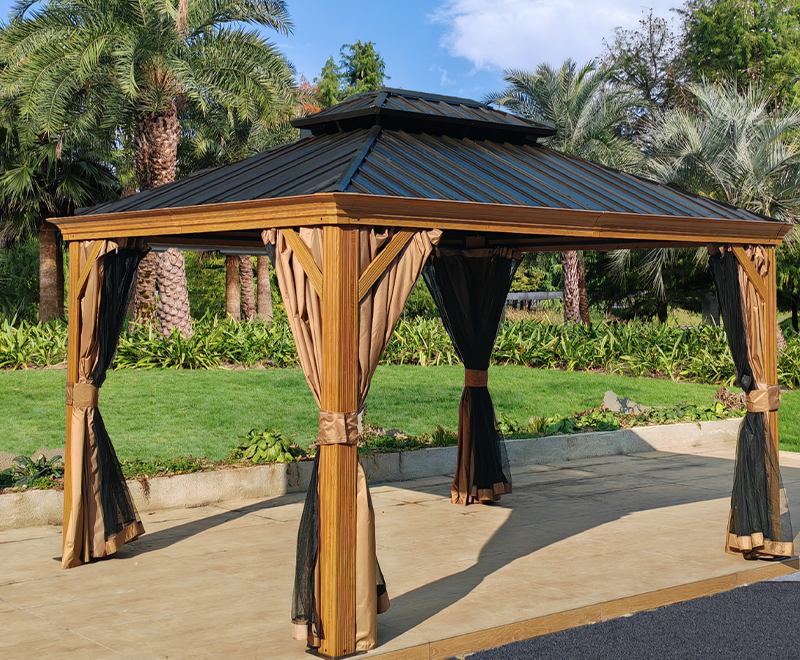
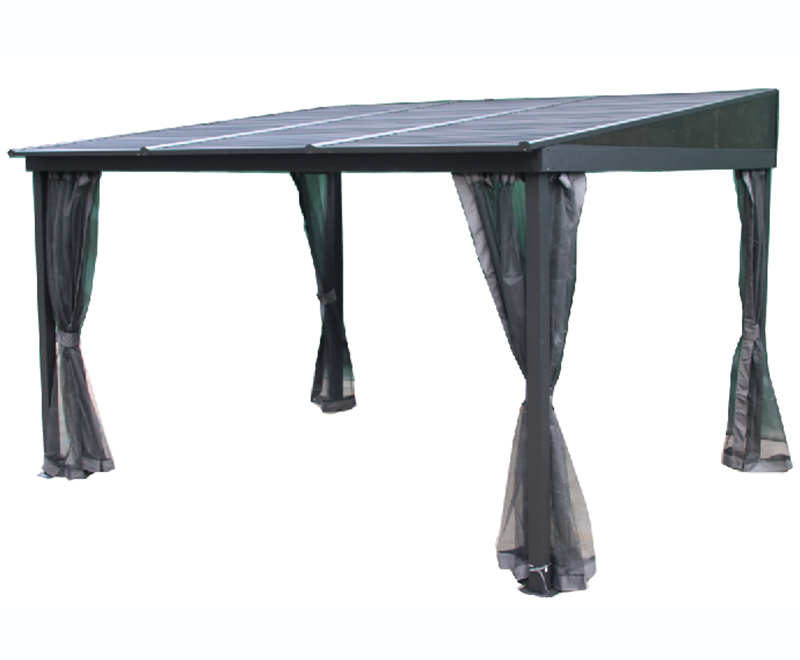
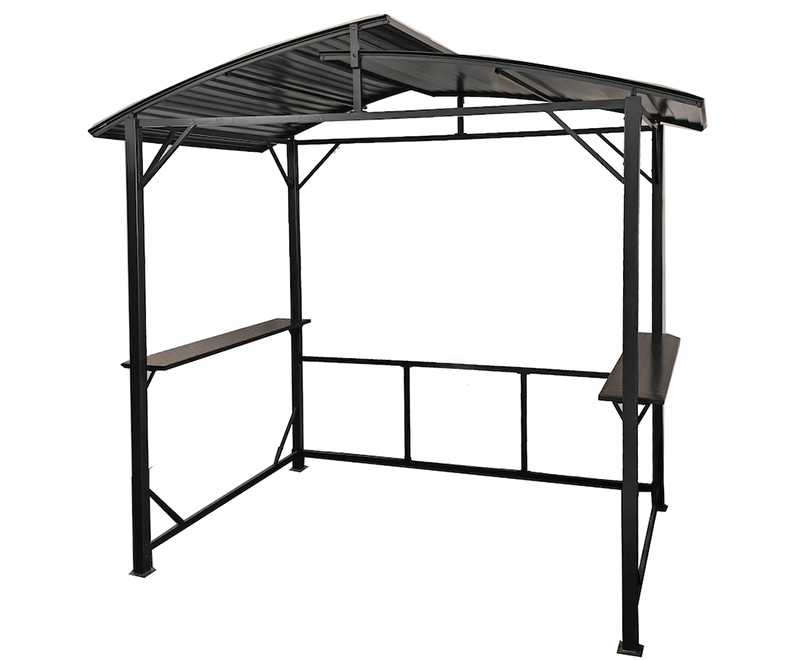
For homeowners with limited outdoor square footage, the challenge is always how to maximize “livable” space without making the backyard feel cramped. The Wall-mounted Gazebo, also known as an Attached Gazebo or Lean-to Pergola, has emerged as the premier architectural solution for urban dwellings. Unlike traditional freestanding structures that require a large central footprint, the wall-mounted design integrates seamlessly with your home’s exterior, offering a sophisticated blend of functionality and style.
The Geometry of Efficiency: Eliminating the Inner Pillars
One of the primary reasons a Wall-mounted Gazebo is considered the ultimate space-saver is its radical departure from traditional four-post engineering. In a small patio environment, every square inch of floor space is premium real estate. By attaching the structure directly to your home’s facade, you effectively eliminate half of the vertical obstructions.
Reclaiming the “Walking Zone”
In a standard 10x10 freestanding gazebo, the four corner posts often dictate the flow of traffic. You find yourself walking “around” the structure. With a house-mounted gazebo, the two pillars closest to the house are gone. This creates an unobstructed “Walking Zone” right outside your sliding glass doors or French doors. This design is particularly beneficial for narrow patios where a traditional post would literally block the path to the garden or grill area.
Structural Leverage and Stability
By using the house as a primary support member, the Wall-mounted Gazebo gains superior lateral stability. The house acts as an immovable anchor, which allows the remaining two outer posts to be slimmer and more elegant. This “lean-to” configuration means less bulky material is needed on your patio floor, creating a visual sense of openness. For those searching for heavy-duty outdoor shelters that don’t overwhelm a small yard, this structural efficiency is a major selling point.
Creating a Seamless Indoor-Outdoor Flow
A small patio can often feel like a separate, disconnected slab of concrete. However, a Wall-mounted Aluminum Gazebo acts as a transitional bridge, effectively extending your indoor living room into the open air. This “extension” effect is a top-tier strategy in modern Landscape Architecture for increasing perceived property size.
The “Extended Ceiling” Visual Trick
When a gazebo is attached to the house at the eave line, the ceiling of your interior room appears to continue outdoors. This eliminates the visual “break” that occurs with freestanding units. For owners of small condos or townhouses, this architectural continuity makes the interior feel significantly larger. The gazebo roof provides a protective canopy that encourages you to keep your doors open, facilitating natural ventilation and a deeper connection with your garden.
All-Weather Transition and Convenience
Common search queries like “waterproof patio cover” highlight a key consumer pain point: the gap between the house and the shade. With a wall-mounted model, there is no “rain gap.” You can step from your dry kitchen directly into your dry outdoor dining area even during a summer downpour. This makes the gazebo a functional part of the home 365 days a year, rather than a fair-weather destination at the far end of the yard. It transforms the patio into a “Bonus Room” that adds actual utility to your floor plan.
Comparative Analysis: Wall-Mounted vs. Freestanding Structures
To help customers in the Commercial Research phase of their buying journey, it is vital to provide a clear comparison of how these structures utilize space and resources.
| Feature Comparison |
Wall-mounted Gazebo (Attached) |
Freestanding Gazebo (Traditional) |
| Footprint Impact |
Low (only 2 outer posts) |
High (minimum 4 bulky posts) |
| Architectural Integration |
High (looks like a home extension) |
Low (stands as a separate unit) |
| Installation Site |
Must be adjacent to a sturdy wall |
Can be placed anywhere in the yard |
| Wind Resistance |
Superior (Anchored to the house) |
Moderate (Dependent on ground anchors) |
| Indoor Cooling Benefit |
High (Shades the house wall) |
Low (No direct impact on house temp) |
| Cost Efficiency |
High (Uses existing house structure) |
Moderate (Requires more raw materials) |
Versatile Design for Urban Micro-Spaces
Modern Wall-mounted Gazebos are not one-size-fits-all. They are engineered with modularity that caters to the specific constraints of urban micro-patios. Whether you are looking for a retractable roof gazebo or a fixed polycarbonate patio cover, the versatility of wall-mounting is unmatched.
Adjustability and Customization
One of the most searched terms in the industry is “custom size gazebo for patio.” Wall-mounted units offer high adjustability. The wall-side ledger board can often be mounted at varying heights to clear window frames or fit under low eaves. This flexibility is crucial for older homes with non-standard exterior layouts. Furthermore, the outer posts can often be adjusted slightly inward or outward to avoid existing drainage pipes or uneven ground, making it a “forgiving” installation for DIY enthusiasts.
Smart Accessory Integration
In a small space, clutter is the enemy. An attached gazebo allows for cleaner integration of utilities. Since the structure is flush against the house, running electrical lines for outdoor LED lighting, infrared patio heaters, or a sound system is much simpler and more aesthetically pleasing. You don’t have to deal with unsightly wires running across the lawn or through the middle of the patio. By mounting these accessories directly to the gazebo frame or the house wall, you keep the floor area clear for what matters most: your patio furniture and your guests.
FAQ: Wall-Mounted Gazebos for Small Spaces
Q1: Can a wall-mounted gazebo be installed on a house with siding?
A: Yes, but it requires proper technique. Installers must use spacers or “blocks” to ensure the mounting bracket is secured directly into the structural studs behind the siding. This prevents the siding from being crushed and ensures a heavy-duty structural connection.
Q2: Does an attached gazebo help with energy bills?
A: Absolutely. By providing shade directly over your windows and glass doors, a Wall-mounted Gazebo reduces solar heat gain. This can lower the surface temperature of your exterior wall by up to 15°C, significantly reducing the load on your air conditioning system during summer months.
Q3: Is it possible to add curtains or mosquito netting to these units?
A: Most premium Wall-mounted Aluminum Gazebos come with integrated dual-track systems. This allows you to install both privacy curtains and mosquito netting simultaneously, which is a must-have for enjoying your patio in the evenings without pests.
Q4: How does the snow load capacity compare to freestanding models?
A: Because one side is bolted to the house, these units are exceptionally rigid. Most high-quality models are rated for significant snow loads (e.g., 60-100 kg/m²), as the house provides a stable anchor point that prevents the frame from twisting under weight.
References & Technical Standards
- International Residential Code (IRC), Section R507 – Requirements for deck and porch attachments to the primary structure.
- Energy Performance of Shading Devices in Residential Buildings – Study on how attached awnings and gazebos contribute to Passive Cooling.
- Urban Land Institute (ULI) Report on Outdoor Living – Analysis of how “Outdoor Rooms” increase the market value of urban residential properties.



 English
 中文简体
中文简体 Français