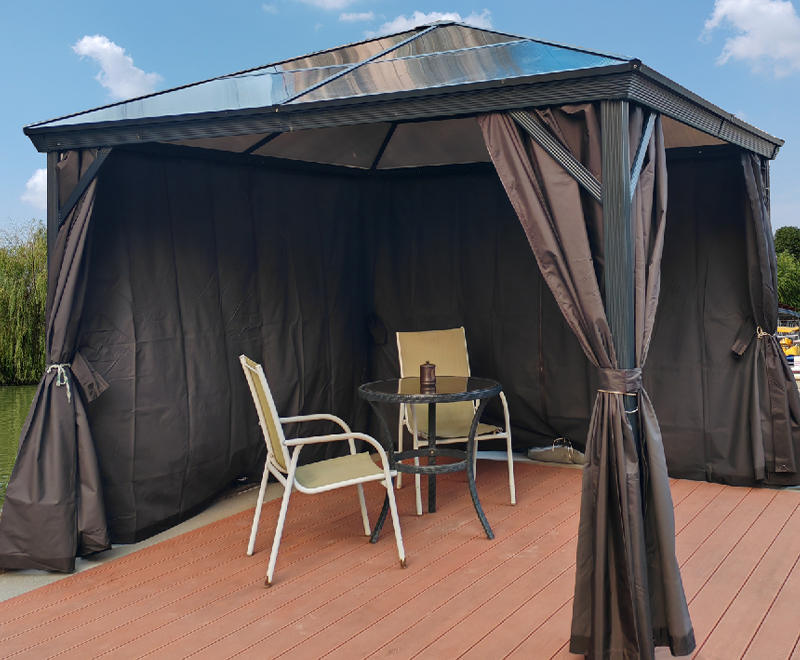
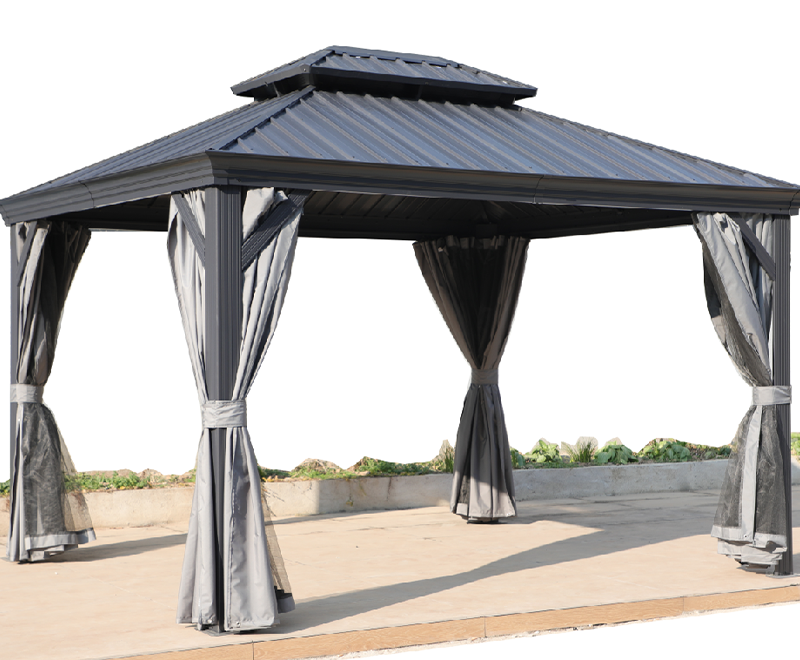
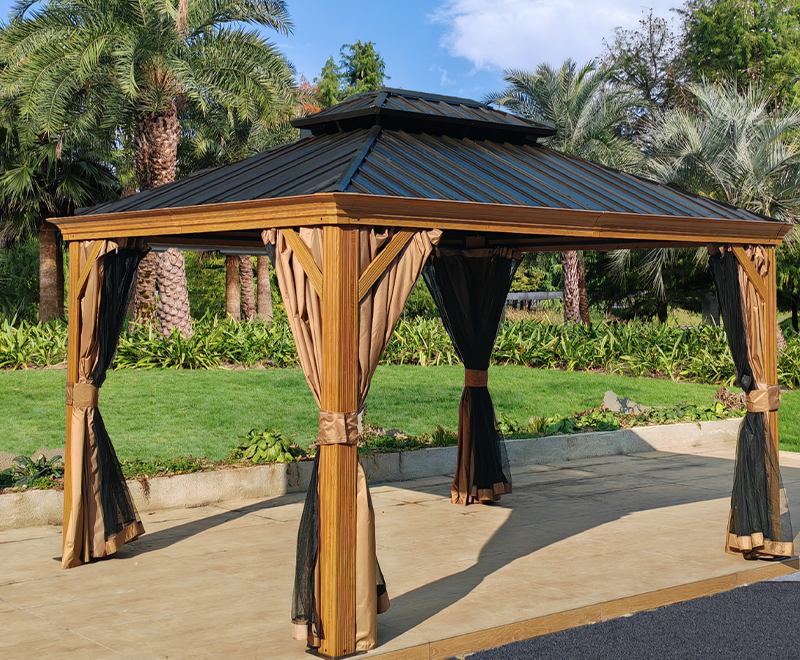
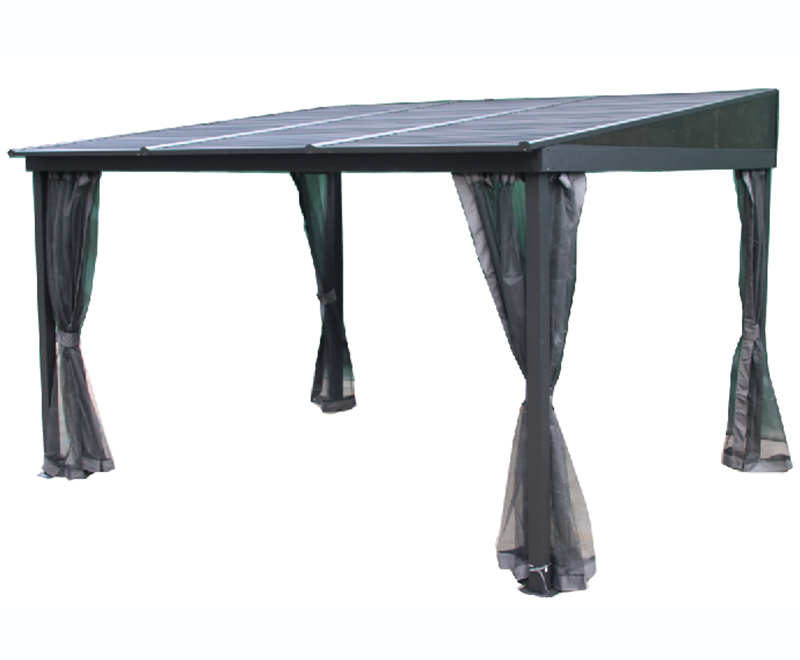
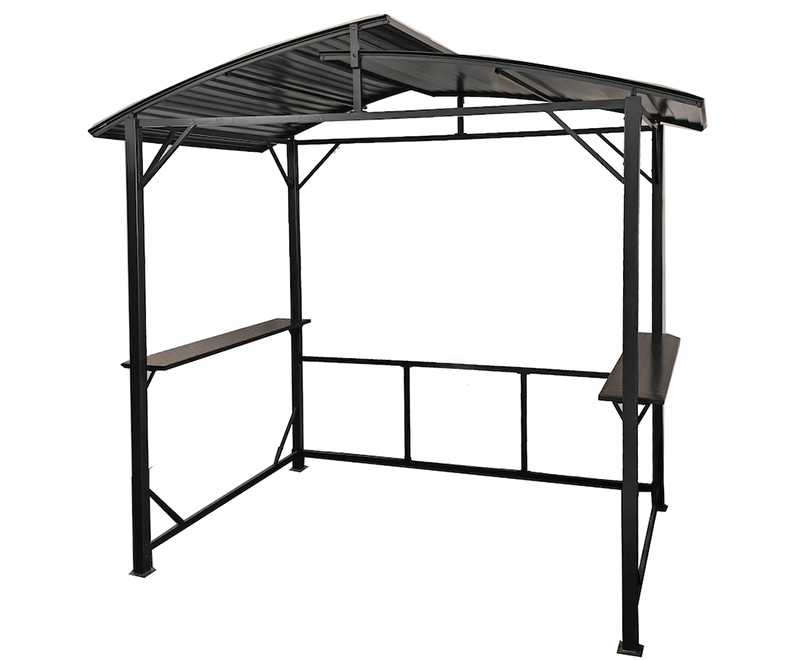
Investing in a hardtop gazebo is one of the most significant upgrades you can make to your outdoor living space. However, the “Aluminum vs. Steel” debate often leaves homeowners confused. While both materials offer a permanent roofing solution compared to fabric canopies, their long-term performance, maintenance requirements, and resistance to the elements vary drastically.
1. Corrosion Resistance: The Battle Against Rust
When discussing longevity, rust is the number one enemy of any outdoor structure. The chemical composition of your gazebo’s frame determines whether it will look brand new in five years or become a structural hazard.
The Science of Aluminum Longevity
Aluminum is naturally a non-ferrous metal, meaning it contains no iron. When aluminum is exposed to air, it forms a thin, microscopic layer of aluminum oxide that protects the metal from further corrosion. In the context of a Hardtop Gazebo, this means even if the powder coating gets scratched during assembly or a hail storm, the metal underneath will not rust or flake. This makes aluminum the gold standard for coastal areas where salt air accelerates the degradation of most metals.
The Vulnerability of Steel
Steel, conversely, is an iron alloy. While most modern steel gazebos are “Galvanized” (dipped in zinc) or “Electrophoretically” treated to prevent rust, these are merely surface-level protections. Once the protective coating is breached—whether by a tight screw, a falling branch, or simple wear and tear—moisture reaches the iron core. Once oxidation begins, it often spreads underneath the paint, leading to structural weakening and unsightly orange streaks on your patio.
2. Structural Strength and Weather Performance
Longevity isn’t just about rust; it’s about how the gazebo stands up to Mother Nature’s fury, including heavy snow loads and high-velocity winds.
Weight as a Double-Edged Sword
Steel is significantly denser and heavier than aluminum. In regions prone to extreme wind gusts or tornadoes, the sheer weight of a Steel Hardtop Gazebo provides a sense of grounded security. A steel frame is less likely to vibrate or “hum” during a storm. However, this weight makes the initial installation a grueling task, often requiring at least three to four adults to safely lift the roof panels into place.
Engineering Strength in Aluminum
Aluminum is lighter, which leads to a common misconception that it is “flimsy.” Modern high-end gazebos use extruded aluminum with internal reinforced ribs. This engineering allows the pillars to support significant weight (such as a 2,500 lbs snow load) without the bulk. However, because aluminum is lighter, it is imperative that the structure is properly anchored to a concrete footing or a reinforced wooden deck. Without proper anchoring, an aluminum gazebo can act like a sail, risking displacement during severe weather.
Snow Load and Wind Ratings
When searching for a gazebo, you must check the PSF (Pounds per Square Foot) rating. Steel roofs often handle heavy, wet snow slightly better due to the rigidity of the steel panels, but many premium aluminum models now feature galvanized steel roof panels on an aluminum frame to provide the “best of both worlds” (often called Hybrid Gazebos).
3. Maintenance and Long-Term Ownership Costs
The “cheaper” option up-front often becomes the more expensive option over a decade of ownership. Understanding the Total Cost of Ownership (TCO) is vital for your enterprise investment.
The “Set It and Forget It” Lifestyle
An Aluminum Hardtop Gazebo is virtually maintenance-free. To keep it looking new, a simple seasonal wash with mild soap and water is sufficient. You don’t need to worry about repainting or applying rust inhibitors. For busy homeowners or commercial properties, the time saved on maintenance represents a significant indirect saving.
The Maintenance Schedule of Steel
If you choose a steel model, you must be prepared for annual inspections. You will need to keep a bottle of touch-up paint handy to seal any chips immediately. Many steel gazebo owners find themselves needing to treat the interior of the hollow poles with rust-preventative sprays. If ignored, a steel gazebo may only last 5–7 years before the joints become brittle, whereas an aluminum structure can easily exceed 15–20 years of service life.
Comparison Table: Aluminum vs. Steel Gazebos
| Feature |
Aluminum Gazebo |
Steel Gazebo |
| Material Composition |
Non-ferrous (Rust-proof) |
Iron-based (Rust-prone) |
| Average Lifespan |
10–20+ Years |
5–8 Years |
| Weight |
Lightweight / High Strength |
Heavy / Very Rigid |
| Best Climate |
Coastal, Humid, High Rain |
Dry, High Wind Areas |
| Maintenance Level |
Low (Minimal cleaning) |
High (Rust monitoring/Painting) |
| Price Range |
Premium / Mid-to-High |
Budget / Entry-Level |
4. Aesthetic Value and Home ROI
Beyond utility, a hardtop gazebo is an architectural feature that can increase your property’s resale value. The material you choose affects the “curb appeal” over time.
Modern Design Versatility
Aluminum can be molded into sleek, modern profiles with cleaner lines. It often comes in high-quality wood-grain finishes that mimic the look of natural cedar or teak without the rotting issues of real wood. This makes aluminum gazebos a favorite for contemporary landscape designs.
Traditional Sturdiness
Steel gazebos often have a more “industrial” or traditional wrought-iron look. Because steel is easier to weld in a factory setting, you might find more ornate decorative scrollwork on budget steel models. However, if the paint begins to fade or chalk due to UV exposure—a common issue with cheaper steel powder coatings—the aesthetic value of your backyard drops significantly.
5. Which Should You Choose?
The decision ultimately depends on your local climate and how long you plan to stay in your home.
- Choose Aluminum if: You live in a rainy or coastal area, want a “one-and-done” installation, and view your gazebo as a 10+ year investment.
- Choose Steel if: You are on a strict budget, live in a very dry climate with low humidity, or need a temporary structure (5 years) for a specific use case.
FAQ: Frequently Asked Questions
Q: Do hardtop gazebos add value to a home?
A: Yes, a permanent hardtop gazebo is considered an outdoor improvement that can increase home value by expanding the functional square footage of the living space.
Q: Can I leave my hardtop gazebo up all winter?
A: Hardtop gazebos are designed for year-round use. However, you should always clear excessive snow accumulation from the roof to stay within the manufacturer’s weight limits.
Q: Is aluminum or steel better for a DIY assembly?
A: Aluminum is much easier for DIYers because the components are lighter and easier to maneuver. Steel often requires professional help or a larger crew due to the weight of the rafters and pillars.
Q: Does salt air affect aluminum gazebos?
A: Aluminum is highly resistant to salt air corrosion, making it the recommended choice for beachside properties where steel would rust within one or two seasons.
References and Further Reading
- Corrosion Engineering, Science and Technology Journal – Comparative analysis of non-ferrous metals in outdoor environments.
- American Society of Civil Engineers (ASCE) – Wind load and snow load standards for permanent residential outdoor structures.
- National Association of Landscape Professionals (NALP) – Trends in outdoor living and ROI of permanent shade structures.



 English
 中文简体
中文简体 Français