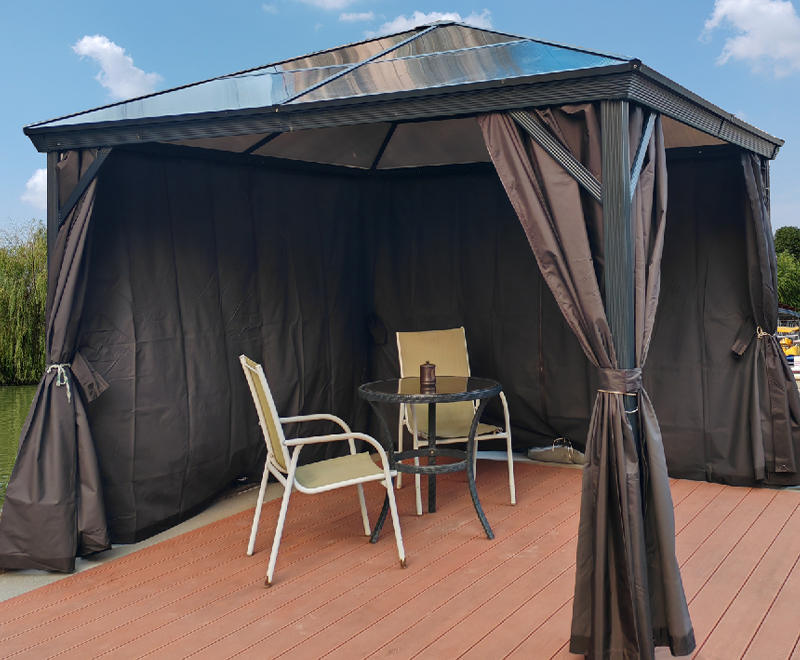
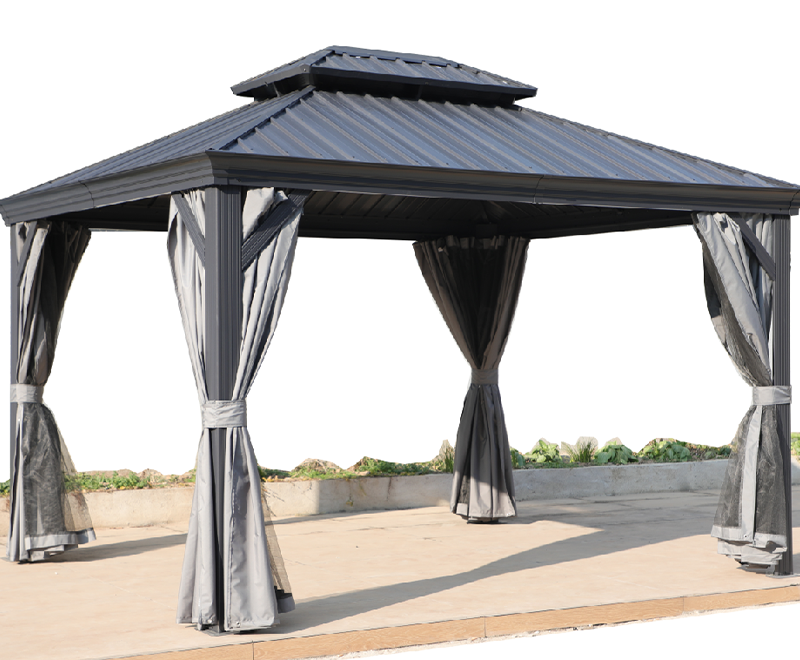
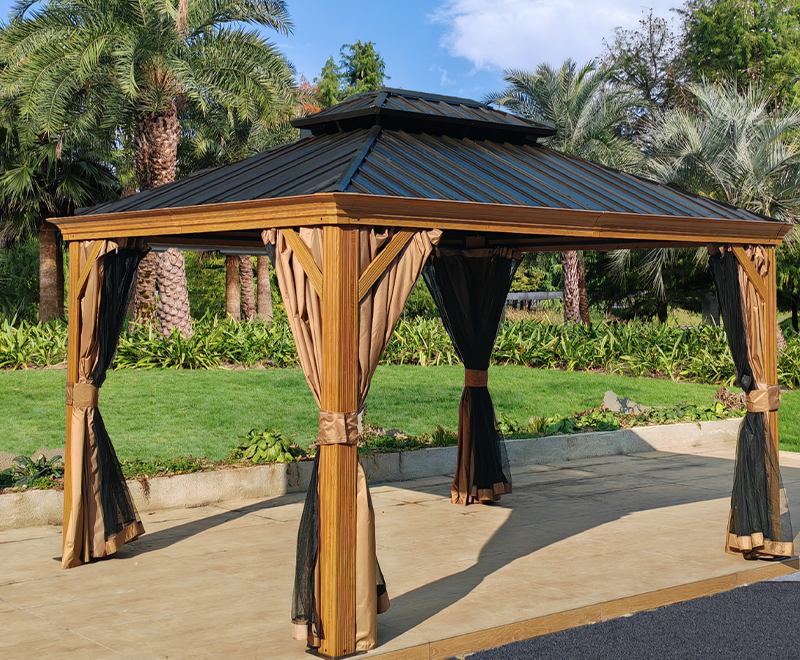
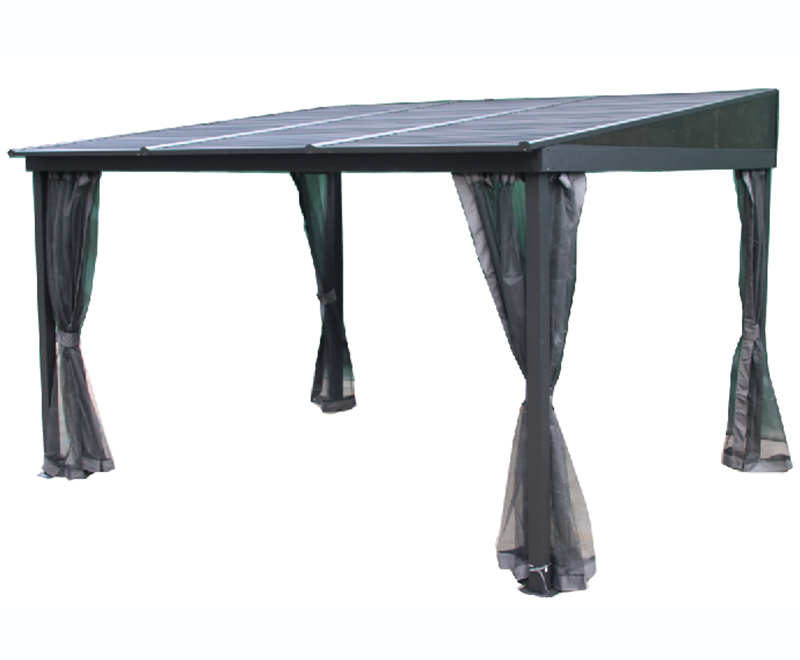
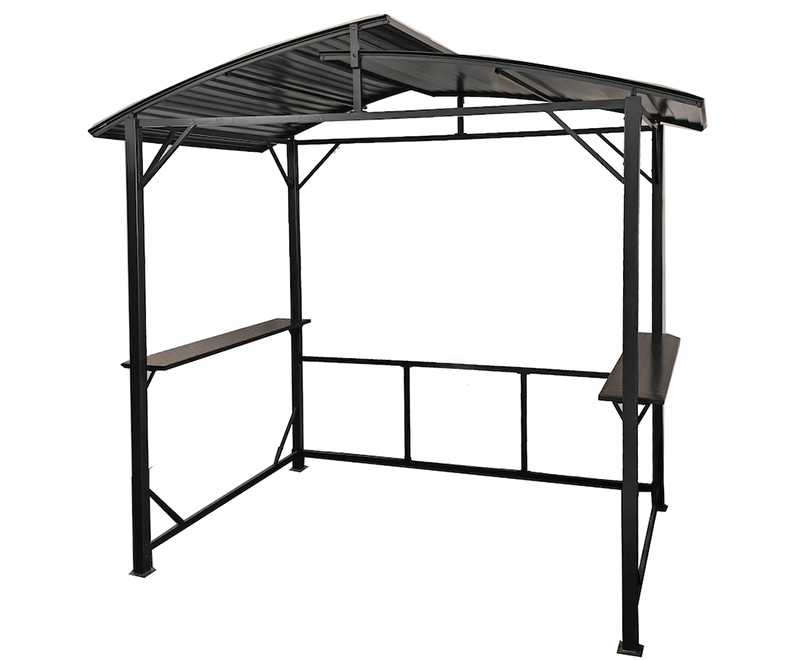
When creating the ideal outdoor living space, homeowners often face a core dilemma: should they choose an economical and lightweight soft-top gazebo, or invest in a sturdy and durable hardtop gazebo? While soft-top models are attractive for their low initial price point, a hardtop gazebo is undoubtedly the more strategic investment if you are seeking a year-round, all-weather outdoor experience.
1. Unmatched Weather Resistance and Structural Integrity
The primary advantage of a hardtop gazebo lies in its superior structural integrity. When faced with extreme weather conditions, the performance gap between soft-top and hardtop models widens rapidly.
Handling Extreme Snow Loads
In colder northern regions, snow accumulation is the “number one killer” of outdoor structures. The fabric canopy of a soft-top gazebo essentially acts as a giant net; even a few centimeters of wet snow can cause the fabric to tear or the aluminum frame to buckle.
- The Hardtop Solution: Professionally designed hardtop gazebos typically utilize galvanized steel or thickened aluminum panels. These materials come with a defined snow load rating, often capable of supporting 30 to 50 lbs per square foot.
- Pitch Design: Hardtop gazebos usually feature a sloped or double-tier roof design. This not only allows snow to slide off naturally but also distributes pressure through internal reinforcement ribs, ensuring the structure remains rock-solid in the dead of winter.
Wind Stability and Resistance
Soft-top gazebos tend to behave like a giant sail in high winds, creating “lift” that can cause the entire unit to flip or shift. In contrast, the significant self-weight of a hardtop gazebo, combined with its ability to be permanently anchored to a concrete patio or wooden deck using expansion bolts, provides immense stability. This permanent installation allows them to resist winds of 60 mph or higher, making them the ideal choice for hurricane-prone areas or high-elevation terraces.
2. Longevity, Durability, and Maintenance Cycles
From a long-term perspective, the Total Cost of Ownership is the true measure of outdoor furniture value. Although a hardtop gazebo requires a higher upfront investment, its ultra-long lifespan and minimal maintenance needs make it more cost-effective over time.
Material Aging and UV Resistance
Soft-top gazebos typically use polyester or canvas. Even with UV-resistant treatments, these fabrics inevitably undergo chemical degradation under prolonged sun exposure.
- Fading and Brittleness: Fabric tops usually begin to fade, become brittle, or even develop “dry rot” within 1 to 2 years.
- Hardtop Materials: Premium hardtop gazebos utilize powder-coated aluminum or multi-wall polycarbonate panels. These materials are virtually immune to UV radiation, maintaining their color for years and boasting a structural lifespan of 10 to 15 years or more.
Minimalist Maintenance Routine
Maintaining a soft-top gazebo is a tedious chore: you must remove the fabric in winter, regularly clean fiber crevices where mold thrives, and repeatedly apply waterproof protectants.
- The Hardtop Advantage: Maintenance is usually limited to an occasional rinse with a garden hose to remove dust. The hard surface prevents mold from taking root, and there is no need for annual disassembly, truly achieving a “set it and forget it” lifestyle.
| Performance Dimension |
Soft-Top Gazebo |
Hardtop Gazebo |
| Lifespan |
2-3 Years (Canopy needs frequent replacement) |
10-20 Years (Structurally sound) |
| Seasonal Adaptability |
Spring/Summer only (Must remove in winter) |
Year-round, all-weather use |
| Wind Rating |
Low (Prone to tearing/lifting) |
Very High (Can be anchored) |
| Daily Maintenance |
High (Mold prevention, cleaning, storage) |
Extremely Low (Simple rinsing) |
| Long-term ROI |
Low (High recurring replacement costs) |
High (Home value increase, durability) |
3. Enhanced Thermal Comfort and Functional Versatility
A top-tier gazebo is about more than just rain protection; it is about creating a comfortable microclimate. Hardtop structures excel in temperature control and functional expansion.
Thermal Insulation and Shading
While fabric tops block direct sunlight, heat often radiates through the fibers into the space below. Modern hardtop gazebos with double-tier roof designs offer a natural advantage.
- Air Circulation: The vented roof structure utilizes the principle of heat rising, allowing trapped hot air to escape through the gaps, creating natural convection.
- Heat Barrier: Metal or high-density polycarbonate panels reflect a higher percentage of infrared radiation, keeping the area underneath 5 to 10 degrees Celsius cooler than the surrounding environment during peak summer.
Accessory Integration and Space Expansion
Because a hardtop gazebo features rigid internal rafters and a load-bearing structure, it supports the installation of heavy accessories that a soft-top cannot, greatly increasing the utility of the space.
- Electrical Integration: You can safely install heavy ceiling fans, recessed LED strips, or even infrared heaters on the brackets.
- Full Enclosure Systems: Hardtop models usually feature a dual-track system, allowing you to hang both mosquito netting and heavy-duty privacy curtains simultaneously. In the cold winter months, closing the heavy curtains can effectively block freezing winds; combined with an outdoor fire pit, the gazebo is instantly transformed into a cozy winter sanctuary.
FAQ
Q: Is a hardtop gazebo very noisy when it rains?
A: While metal roofs do produce a “patter” during heavy rain, modern powder coatings and composite structures significantly dampen the noise. Many users find the rhythmic sound of rain enhances the outdoor ambiance.
Q: Can I assemble a hardtop gazebo by myself in my backyard?
A: Hardtop gazebos are considered semi-permanent structures. While most products come with DIY guides, installing heavy roof panels typically requires the collaboration of 2 to 3 adults. Assembly time generally ranges from 4 to 8 hours.
Q: Does a hardtop gazebo increase my home’s valuation?
A: Yes. Unlike temporary soft-top gazebos, a permanent hardtop gazebo is viewed as a landscaping investment. It increases the usable “built” square footage of the property, which is often seen as a value-add during home appraisals.
References & Industry Standards
- ASCE 7-16: Minimum Design Loads and Associated Criteria for Buildings and Other Structures (American Society of Civil Engineers).
- ASTM D6662: Standard Specification for Polyolefin-Based Plastic Lumber Decking Boards and Shapes.
- International Residential Code (IRC) Section R301: Design Criteria for Outdoor Permanent Structures.



 English
 中文简体
中文简体 Français