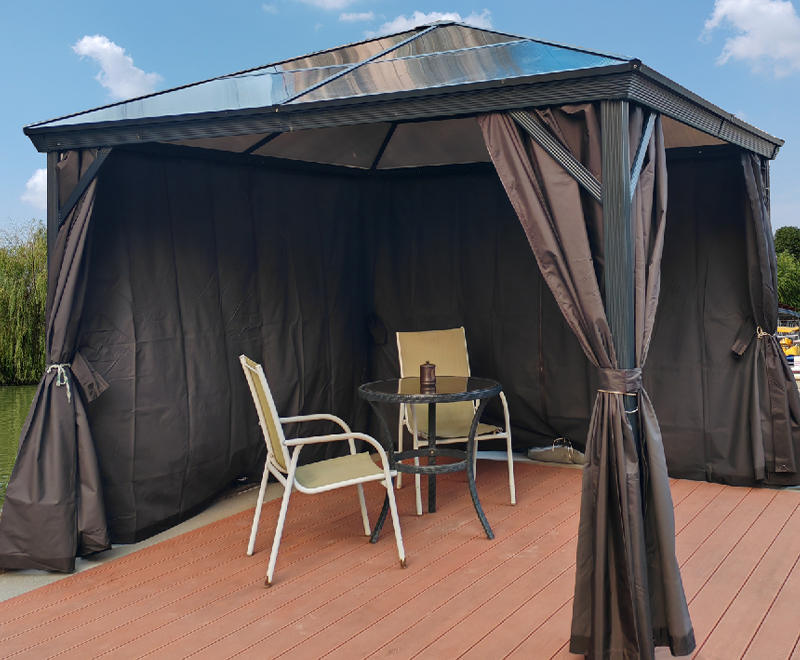
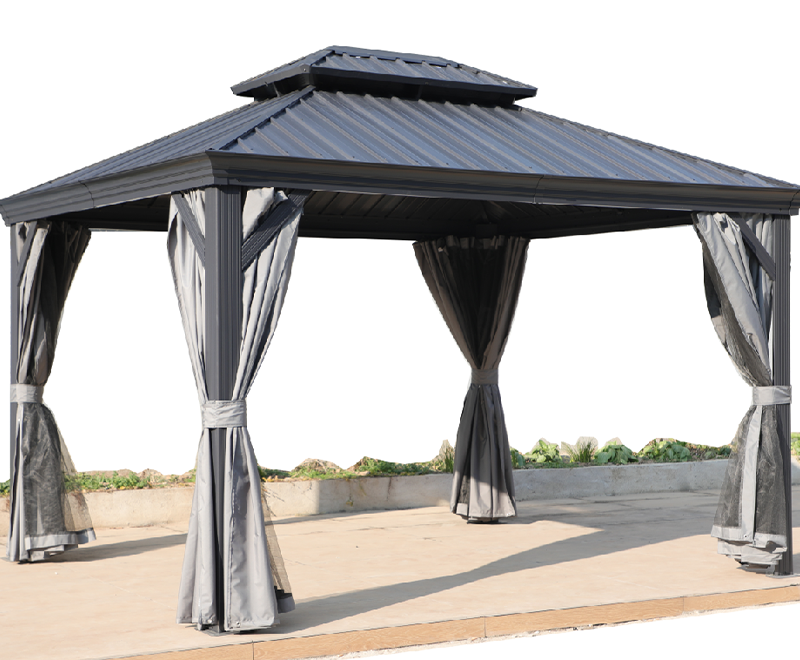
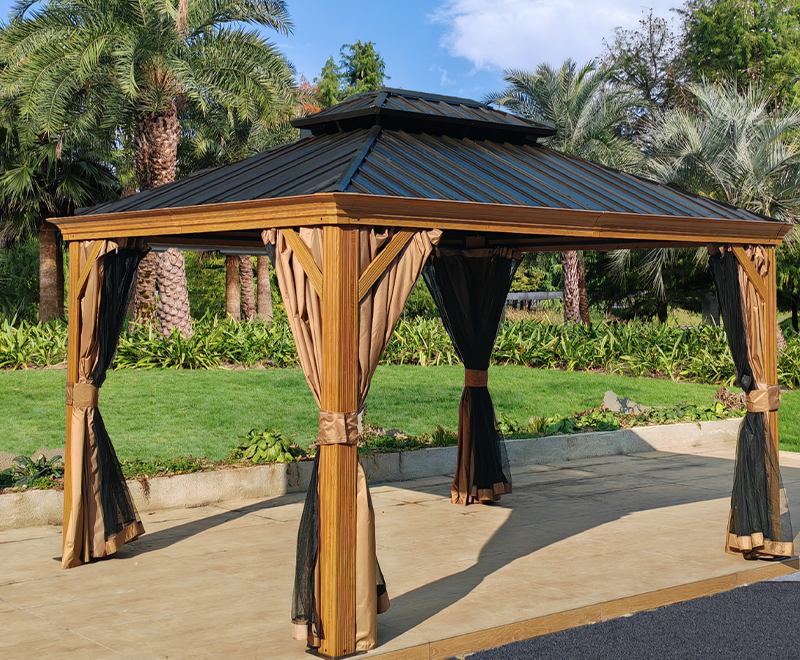
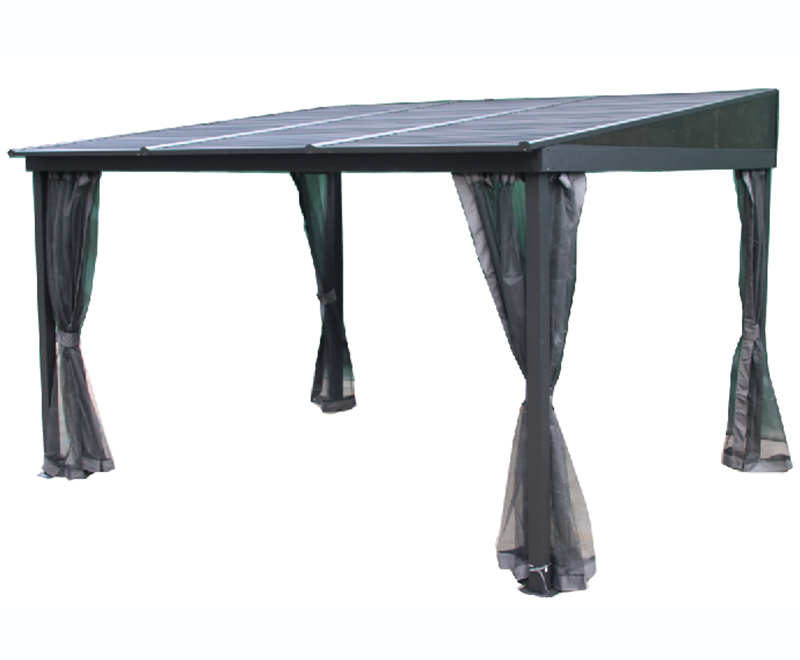
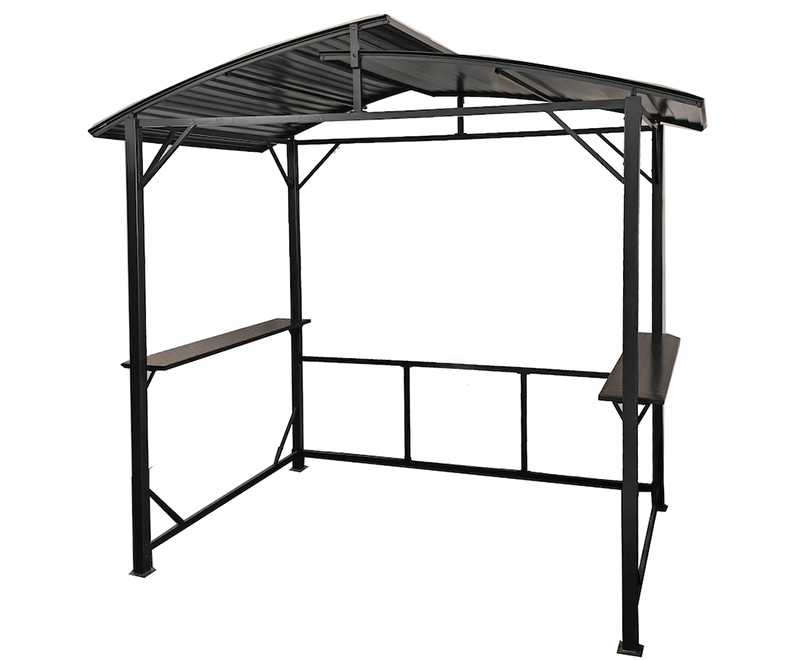
Transforming a modest backyard into a high-end retreat requires more than just furniture; it requires a structural element that defines the space and provides architectural character. A Wall-mounted Gazebo is the premier architectural solution for maximizing the utility and aesthetic of small patios. Unlike traditional freestanding structures that require four or more pillars—which often clutter a narrow area and break up the visual flow—the wall-mounted design anchors directly to your home’s exterior wall.
Maximizing Square Footage and Architectural Flow
The primary advantage of a Wall-mounted Gazebo in a compact environment is its exceptional spatial efficiency. By utilizing the existing structural wall of your house as one of the primary supports, you eliminate the need for inward-facing posts that typically obstruct movement and sightlines on a small patio. This “lean-to” configuration keeps the ground area open and unobstructed, allowing for larger dining sets, outdoor kitchens, or sectional sofas that would otherwise feel cramped or impossible to fit.
Creating an Outdoor Extension of the Home
A wall-mounted structure acts as an organic extension of your interior living room or kitchen. When the gazebo is installed flush against the house, it provides a consistent overhead canopy that makes stepping through your sliding doors feel like entering a specialized lounge. This integration is key to modern “indoor-outdoor living” trends.
- Seamless Transitions: By matching the frame color and material of the gazebo to your existing window trim, siding, or gutters, you create a cohesive look that appears as a custom-built part of the original architecture.
- Uninterrupted Views: With only two front pillars supporting the structure, your view of the garden, pool, or horizon remains unobstructed. This is a critical factor in making a small backyard feel significantly larger than its actual physical dimensions.
Weather Protection and Seasonal Versatility
Luxury is defined by comfort and accessibility, regardless of the weather. A Wall-mounted Gazebo provides a permanent shield against intense UV rays and unexpected rain showers. Because it is physically anchored to the house, it often benefits from the home’s thermal mass, staying slightly warmer in the evening and cooler during the peak of the day. High-end models often feature retractable canopies or adjustable louvers, allowing you to control the exact amount of sunlight filtering through. This ensures your patio remains a usable, high-end living space from the first days of spring through late autumn, protecting your outdoor furniture from sun damage and rain along the way.
Elevating Aesthetics with Premium Materials and Features
To truly achieve a “luxury” feel, the choice of materials for your Wall-mounted Gazebo is paramount. Moving away from temporary, flimsy pop-up tents toward permanent aluminum, powder-coated steel, or high-grade polycarbonate structures adds a sense of permanence and significant value to the property. A well-designed wall-mounted canopy serves as a focal point that ties together your hardscaping and landscaping elements into a unified, high-value asset.
Integrated Lighting and Climate Control Systems
One of the hallmarks of a luxury living space is the seamless integration of technology and utility. Because a Wall-mounted Gazebo is attached directly to the house, it is significantly easier and more cost-effective to run electrical lines for high-end amenities.
- Ambient Illumination: Integrated LED strip lighting along the rafters or elegant hanging pendant lights can turn a daytime shade structure into a sophisticated evening bistro. This creates an inviting atmosphere for nighttime entertaining.
- Outdoor Heating and Cooling: Professional infrared heaters can be installed directly onto the gazebo frame or the house wall under the canopy. For warmer climates, high-efficiency outdoor ceiling fans can be mounted to the crossbeams, ensuring a gentle breeze even on the hottest afternoons.
Privacy, Soft-scaping, and Textile Elegance
A luxury space often requires a degree of seclusion and “softness” to contrast with hard building materials. Wall-mounted Gazebos provide the perfect framework for adding privacy solutions and natural elements.
- Textile Elegance: Adding heavy-duty, weather-resistant curtains in neutral tones provides a soft, resort-like aesthetic. These curtains can block the wind, provide shade from low-angle sun, and offer privacy from neighboring houses.
- Vertical Gardening: The front pillars of the gazebo serve as ideal trellises for climbing plants like jasmine, wisteria, or climbing roses. Introducing natural greenery softens the industrial lines of the metal frame and introduces pleasant fragrances, further enhancing the “private oasis” vibe of your transformed patio.
Technical Comparison: Wall-mounted vs. Freestanding Configurations
The following table highlights the technical and functional differences that make the wall-mounted configuration the superior choice for luxury transformations on limited-footprint patios.
| Feature |
Wall-mounted Gazebo |
Freestanding Gazebo |
| Footprint Efficiency |
Excellent (Utilizes house structure) |
Moderate (Requires 4+ corner posts) |
| Structural Stability |
Very High (Braced by house wall) |
High (Dependent on independent footings) |
| Indoor-Outdoor Flow |
Seamless / Integrated Extension |
Separated / Detached Structure |
| Installation Complexity |
Moderate (Requires wall anchoring) |
Simple (Self-standing assembly) |
| Electrical Integration |
Very Easy (Proximity to house power) |
Difficult (Requires underground trenching) |
| Rainwater Management |
Directed away from house door |
Dispersed on all four sides |
| Cost Efficiency |
High (Fewer structural pillars needed) |
Moderate |
| Visual Weight |
Minimalist and Modern |
Substantial and Traditional |
FAQ: Frequently Asked Questions
Can a wall-mounted gazebo be installed on any type of house siding?
Most Wall-mounted Gazebos can be installed on brick, stone, or wood siding. However, it is critical that the structure is anchored into the house’s structural studs, rim joists, or headers rather than just the decorative siding. For vinyl or stucco siding, specialized spacers and waterproof sealants are required to prevent crushing the material and ensuring a leak-proof connection to the wall.
How does the rain drainage system work?
Professional designs feature a sloped roof (mono-pitch) that directs water away from the house wall toward a gutter system integrated into the front horizontal beam. This ensures that rainwater is discharged through the front pillars or downspouts, keeping the area directly next to your back door completely dry and free from splashing.
Do I need a building permit for a wall-mounted gazebo?
Building regulations vary significantly by location. In many regions, a Wall-mounted Gazebo under a certain size is considered a “temporary” or “non-permanent” structure and may not require a permit. However, because it is attached to the primary residence, some jurisdictions may classify it as a patio cover. It is always recommended to check with your local building department before installation.
How do I maintain the metal frame to prevent rust?
Most modern gazebos are made of powder-coated aluminum, which is naturally rust-proof. For steel frames, it is important to check for any scratches in the coating once a year. Applying a simple touch-up paint or a clear protective wax can extend the lifespan of the frame by decades, even in coastal or high-humidity environments.
References and Technical Resources
- International Residential Code (IRC) - Section R301: Design criteria for attached patio covers.
- ASTM E84: Standard Test Method for Surface Burning Characteristics of Building Materials (Standards for canopy fabrics).
- National Association of Home Builders (NAHB): “Design Trends for Outdoor Living and Urban Patios.”



 English
 中文简体
中文简体 Français