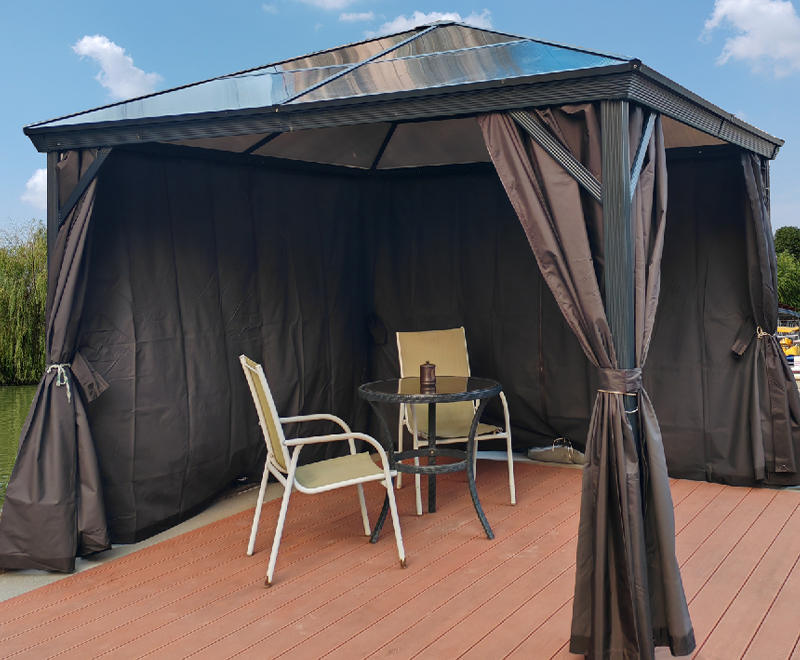
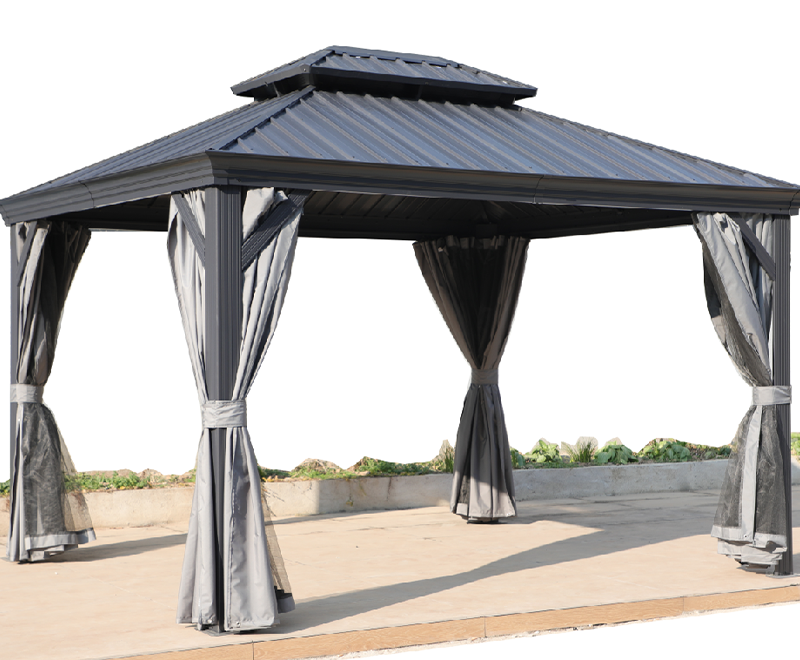
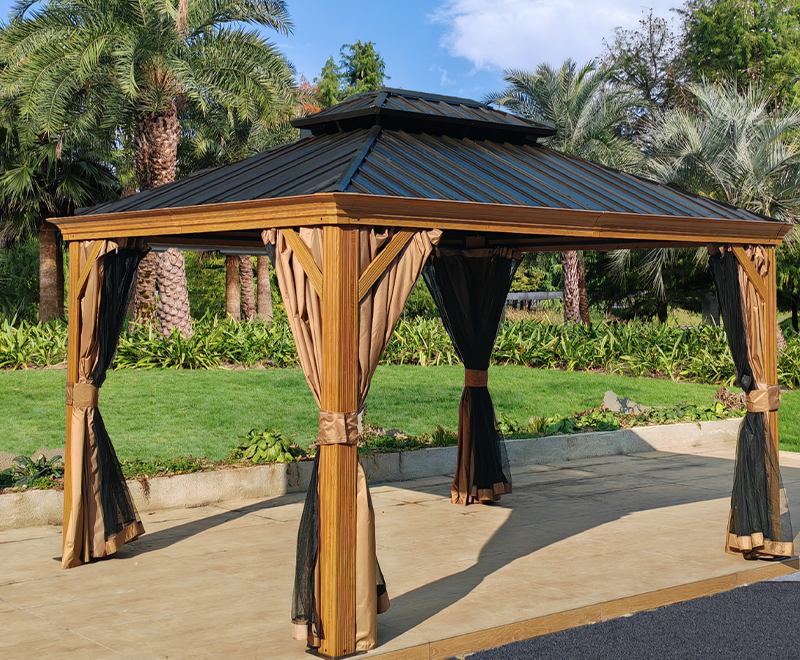
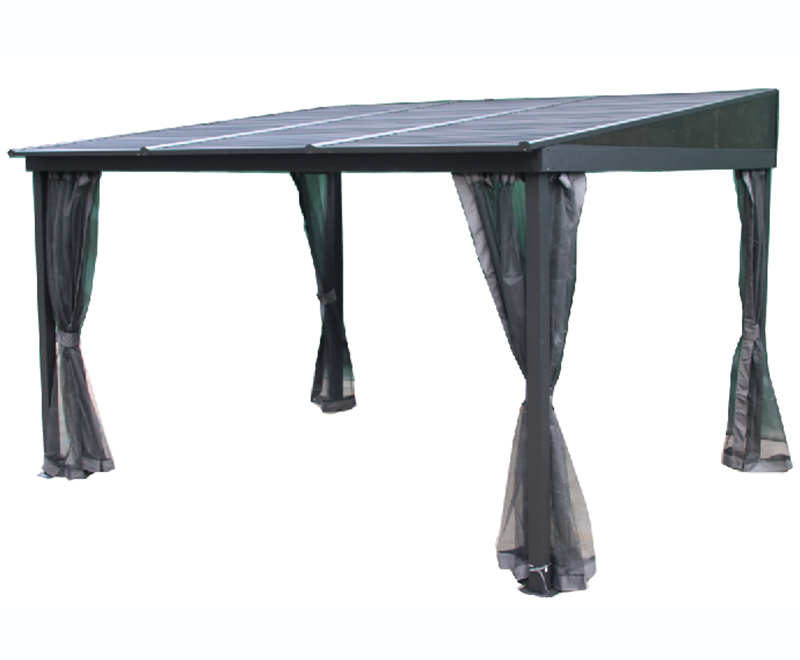
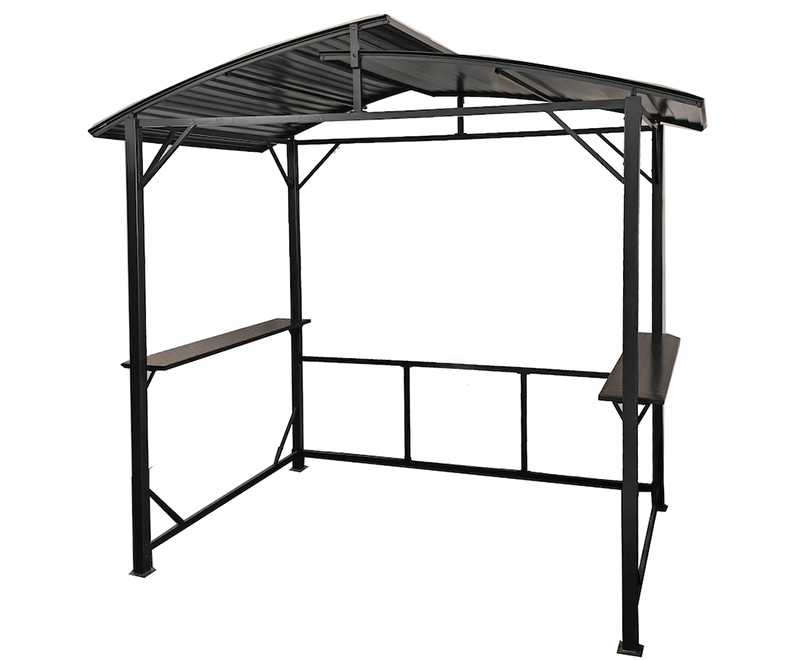
The short answer: a hardtop gazebo is a freestanding outdoor structure with a rigid roof — typically made from aluminum, steel, polycarbonate, or tempered glass — built to provide permanent or semi-permanent shelter in a backyard, patio, or garden setting. Unlike soft-top gazebos, which use fabric or polyester canopies stretched over a frame, hardtop gazebos offer superior weather resistance, structural longevity, and a more architectural appearance. If you want a structure that looks like it belongs to the house rather than a temporary addition, and that can handle rain, snow, and wind without replacement canopies every few years, a hardtop gazebo is the category to focus on.
What Defines a Hardtop Gazebo
A hardtop gazebo is defined by its rigid, non-fabric roof panel — the element that separates it from every other portable or semi-permanent outdoor shelter category. The roof is the load-bearing, weather-shedding component, and its material determines the structure's performance across rain, UV exposure, wind, and snow load.
Beyond the roof, a hardtop gazebo typically includes:
- A structural frame: Powder-coated steel or anodized aluminum posts and rafters that support the roof and define the interior space
- Open or screened sides: Most hardtop gazebos have open sides by default, with optional curtain panels, mosquito netting, or privacy screens available as accessories
- Anchor points: Pre-drilled base plates or foot pads for securing to a deck, concrete pad, or pavers
- Integrated guttering: Many premium hardtop models include built-in drainage channels in the roof frame to direct rainwater away from the interior and down the posts
Standard residential hardtop gazebos range from 10×10 feet (3×3m) to 13×15 feet (4×4.5m), with commercial-grade units available in larger custom configurations. Most weigh between 150 lbs and 400 lbs (68–180 kg) depending on roof material and frame gauge — substantially heavier than equivalent soft-top structures.
Hardtop Roof Materials: What Each One Offers
The roof material is the single most important specification in a hardtop gazebo. It determines weather performance, light transmission, thermal comfort, weight, and price point.
Aluminum Roof Panels
The most common hardtop roof material in the mid-to-premium segment. Aluminum panels are lightweight, corrosion-proof, and can be powder-coated in any color. Most use an insulated double-skin panel design — two aluminum sheets with an air gap or foam core between them — which reduces heat transfer and drumming noise in rain.
- Snow load rating: Typically 15–30 lbs per square foot (73–146 kg/m²) for quality aluminum roof systems
- Wind resistance: 50–75 mph (80–120 km/h) for properly anchored units
- Best for: Year-round use, all climates, homeowners who want a permanent-looking structure
Polycarbonate Roof Panels
Twin-wall or triple-wall polycarbonate sheets that allow diffused natural light to pass through while blocking UV radiation. A good polycarbonate panel blocks up to 99% of UV rays while transmitting 70–80% of visible light — creating a bright, naturally lit space without direct sun exposure.
- Key advantage: Natural light transmission — ideal over outdoor dining areas, gardens, or spaces where a dark roof would feel oppressive
- Key limitation: Rain noise — polycarbonate amplifies rainfall sound significantly more than aluminum or steel panels
- Best for: Mild climates, garden rooms, spaces where natural light is a priority
Steel Roof Panels
Galvanized or powder-coated steel panels offer the highest structural strength and snow load capacity of any hardtop gazebo roof material. They are heavier than aluminum but provide exceptional rigidity and impact resistance — important in hail-prone regions or where falling debris is a concern.
- Snow load rating: Up to 40+ lbs per square foot (195+ kg/m²) for heavy-gauge steel roof systems
- Key limitation: Weight — steel roof gazebos require robust foundations and are more difficult to relocate
- Best for: High snowfall regions, permanent installations, commercial applications
Tempered Glass Roof Panels
Found in premium and luxury hardtop gazebo models. Tempered glass provides maximum light transmission with a high-end aesthetic that polycarbonate cannot match. Glass roofs are scratch-resistant, non-yellowing, and do not degrade over time — maintaining optical clarity for the lifetime of the structure.
- Typical glass thickness: 6mm–10mm tempered safety glass
- Key limitation: Cost and weight — glass roof gazebos typically start at $3,000–$8,000+ and require substantial frame structures to carry the load
- Best for: Luxury outdoor living spaces, mild climates, permanent architectural installations
What Is a Soft-Top Gazebo and How It Works
A soft-top gazebo uses a fabric canopy — typically polyester, solution-dyed acrylic, or oxford cloth — stretched over a lightweight metal or wood frame. The canopy provides shade and limited rain protection, but it is fundamentally a temporary covering rather than a structural roof.
Soft-top gazebos are significantly lighter and less expensive than hardtop models, and many are designed to be assembled and disassembled seasonally. The fabric canopy is the component most exposed to environmental stress, and it is the part that requires periodic replacement.
- Typical canopy lifespan: 2–5 years depending on UV exposure, rainfall frequency, and fabric quality
- Replacement canopy cost: $50–$300 depending on size and material — a recurring expense that adds to lifetime cost
- Wind vulnerability: Most soft-top gazebo canopies are rated for winds up to 20–35 mph (32–56 km/h) — above this, canopies can lift, tear, or cause the entire structure to overturn
- Snow load: Most soft-top canopies cannot support any meaningful snow accumulation and must be cleared manually or removed entirely before winter
Hardtop vs. Soft-Top Gazebo: Full Comparison
| Feature |
Hardtop Gazebo |
Soft-Top Gazebo |
| Roof material |
Aluminum, steel, polycarbonate, or glass |
Polyester, acrylic, or oxford cloth fabric |
| Weather resistance |
Excellent — rain, snow, UV, wind |
Moderate — rain and shade only |
| Wind rating |
50–75+ mph (80–120+ km/h) |
20–35 mph (32–56 km/h) |
| Snow load capacity |
15–40+ lbs/sq ft |
Near zero — must be cleared |
| Structural lifespan |
10–25+ years |
5–10 years (frame); 2–5 years (canopy) |
| Maintenance |
Minimal — occasional cleaning |
Regular — canopy replacement every 2–5 years |
| Assembly difficulty |
Moderate to complex — 2–4 people, 4–8 hours |
Easy — 1–2 people, 1–3 hours |
| Appearance |
Architectural, permanent, high-end |
Casual, temporary, decorative |
| Entry price point |
$500 – $8,000+ |
$80 – $800 |
| Year-round use |
Yes — in most climates |
Seasonal only in cold or windy climates |
| Property value impact |
Positive — treated as permanent improvement |
Negligible |
Full comparison of hardtop and soft-top gazebos across performance, cost, and practical use factors
Weather Performance: Where the Difference Is Most Obvious
Rain
A hardtop gazebo with aluminum or steel panels sheds rain completely and permanently. Integrated roof guttering channels water down the posts and away from the interior — in a well-designed unit, no water enters the covered space even in heavy rainfall. Soft-top canopies, even when labeled waterproof, rely on fabric coatings that degrade over time. After 2–3 seasons, most fabric canopies begin to leak at seams and center points under sustained rainfall.
Snow
Snow load is where the performance gap between hardtop and soft-top becomes critical. Fresh snow weighs approximately 5 lbs per cubic foot (80 kg/m³) — even a modest 6-inch accumulation on a 10×10 foot gazebo represents over 250 lbs of load. A quality aluminum hardtop is engineered to carry this load safely. A soft-top canopy will sag, tear, or cause frame collapse under the same conditions — many soft-top gazebo manufacturers explicitly void warranties for snow damage.
Wind
Wind resistance depends on both the roof material and anchoring method. A properly anchored hardtop gazebo with a rigid aluminum roof resists wind uplift far more effectively than a fabric canopy, which acts as a sail. In storm conditions where a soft-top canopy would require removal or would be destroyed, a hardtop gazebo remains functional and in place.
Frame Materials: Aluminum vs. Steel
Both hardtop and soft-top gazebos use either aluminum or steel frames, but the frame specification matters more in hardtop models because the frame must carry the weight of a rigid roof.
| Frame Material |
Advantages |
Disadvantages |
Best For |
| Aluminum |
Rust-proof, lightweight, low maintenance |
Less rigid than steel at equivalent wall thickness |
Coastal areas, humid climates, permanent installs |
| Powder-coated steel |
Higher strength, more rigid, lower cost |
Can rust if coating is chipped or scratched |
Inland locations, high snow load regions |
Aluminum vs. steel frame comparison for hardtop gazebo applications
For coastal installations within 1 mile (1.6 km) of saltwater, aluminum frames are strongly preferred — salt air accelerates corrosion on steel frames even through powder coating, particularly at cut edges, drilled holes, and fastener points.
Total Cost of Ownership: Hardtop vs. Soft-Top Over 10 Years
The upfront price difference between hardtop and soft-top gazebos is significant — but the 10-year total cost comparison is much closer than it appears, once canopy replacements and maintenance are factored in.
| Cost Item |
Hardtop Gazebo (10×10ft) |
Soft-Top Gazebo (10×10ft) |
| Initial purchase |
$800 – $2,500 |
$150 – $500 |
| Canopy replacements (10 years) |
$0 |
$200 – $600 (2–3 replacements) |
| Frame replacement (if needed) |
Unlikely within 10 years |
$150 – $500 (possible at year 5–8) |
| Maintenance costs |
Minimal — wash down annually |
Low — canopy treatment and frame touch-up |
| Estimated 10-year total |
$800 – $2,500 |
$500 – $1,600 |
Estimated 10-year total cost of ownership comparison for mid-range hardtop vs. soft-top gazebos (10×10ft)
The gap narrows considerably when replacement canopies and potential frame replacements are included — and the hardtop delivers significantly better weather performance and aesthetic value throughout that period. For homeowners planning to stay in their property long-term, a hardtop gazebo is typically the better financial decision beyond the 7–10 year mark.
Who Should Choose a Hardtop Gazebo
- Homeowners in four-season climates where snow, rain, and wind are regular conditions — a soft-top canopy simply cannot handle year-round exposure in these environments
- Anyone who wants a permanent outdoor living room — with lighting, ceiling fans, curtains, and furniture — that looks and functions like an architectural extension of the home
- Homeowners who want to add measurable property value — a well-installed hardtop gazebo on a concrete or paver base is treated as a permanent improvement and can increase home resale value
- Commercial users — restaurants with outdoor dining, event venues, hotel pool areas — where weather reliability directly affects revenue and a collapsed or damaged canopy creates liability
Who Should Choose a Soft-Top Gazebo
- Renters who cannot make permanent structural modifications to an outdoor space and need a portable, easily removed solution
- Seasonal use only — if the gazebo will be used only in summer months and stored or removed in winter, a soft-top is a practical, cost-effective choice
- Budget-constrained buyers who need shade and basic weather protection quickly and at minimum upfront cost
- Event and pop-up use — temporary event coverage, market stalls, or garden party situations where the structure needs to be assembled and disassembled repeatedly



 English
 中文简体
中文简体 Français