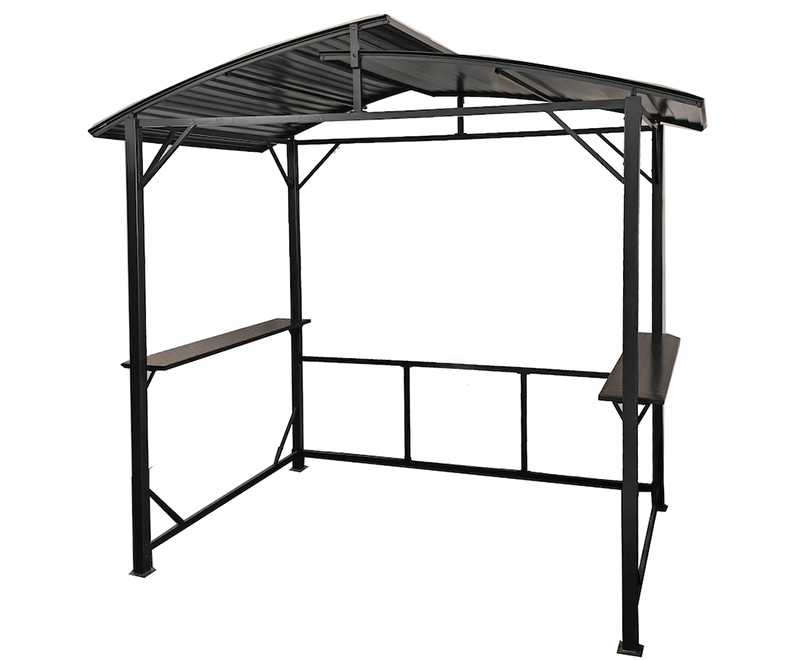
What are the Best Wall-mounted Gazebo Designs to Match Modern Architecture?
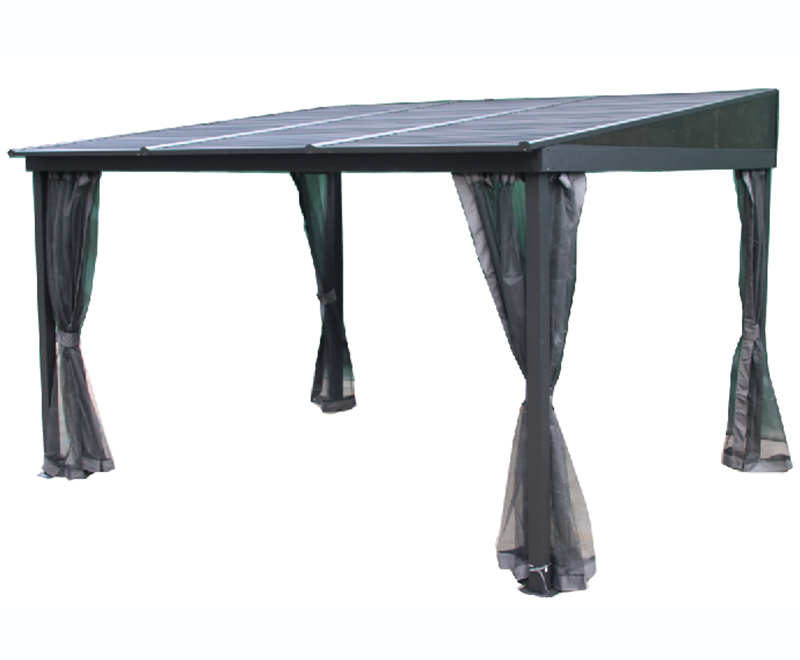
Modern architecture is defined by its commitment to clean lines, functional minimalism, and a seamless transition between indoor and outdoor living. When selecting a Wall-mounted Gazebo, the primary goal is to ensure the structure feels like a deliberate, organic extension of the building’s footprint rather than a bulky or distracting afterthought. Unlike traditional free-standing gazebos that often feature ornate Victorian swirls or rustic timber finishes, modern wall-mounted versions emphasize geometric simplicity and the use of high-performance industrial materials. This “lean-to” approach is inherently modern because it maximizes space efficiency—perfect for urban environments where patio square footage is at a premium.
The Philosophy of Modern Outdoor Design
Modern design seeks to remove the barriers between the living room and the garden. A wall-mounted gazebo facilitates this by creating a sheltered “corridor” or transition zone. By anchoring one side of the structure directly to the home’s facade, you create a visual bridge that carries the interior design language outside. This is often achieved by matching the gazebo’s frame color to the house’s window mullions or door frames, typically in shades of anthracite, bronze, or matte black.
Bioclimatic Louvre Systems: The Pinnacle of Modernity
The most prestigious design in contemporary outdoor architecture is the bioclimatic wall-mounted gazebo. These structures feature motorized or manual louvres that can rotate from 0° to 135°.
- Visual Integration: The flat-top roofline aligns perfectly with modern flat-roof houses or mid-century modern facades, maintaining a low profile that doesn’t obstruct second-story views.
- Smart Functionality: These systems embody the “smart home” ethos. They allow users to control light, shade, and ventilation with a remote or smartphone app. When closed, the louvres form a completely waterproof seal; when tilted, they allow hot air to escape, naturally cooling the patio area.
Cantilevered and Slimline Profiles
For homes with large floor-to-ceiling glass walls, a heavy, four-posted structure can be visually intrusive. Modern “Slimline” designs utilize high-tensile aluminum to reduce the thickness of the support beams. In some high-end custom designs, a cantilevered aesthetic is used, where the structure is so securely anchored to the wall that it requires only two (or even zero) outer posts, providing an unobstructed panoramic view of the landscape or infinity pool. This creates a floating effect that is hallmarks of “High-Tech” architectural styles.
Material Selection: Balancing Durability with Industrial Style
In the context of modern architecture, the “honesty of materials” is a core principle. This means choosing materials that are what they appear to be—strong, durable, and refined—without the need for decorative cladding. For a wall-mounted structure, the choice of material impacts not only the aesthetic but also the structural integrity of the host building’s exterior wall.
The Dominance of Powder-Coated Aluminum
For modern wall-mounted gazebos, Aluminum is the undisputed king. It is significantly lighter than steel, which is a critical advantage when you are drilling into a home’s structural studs or masonry.
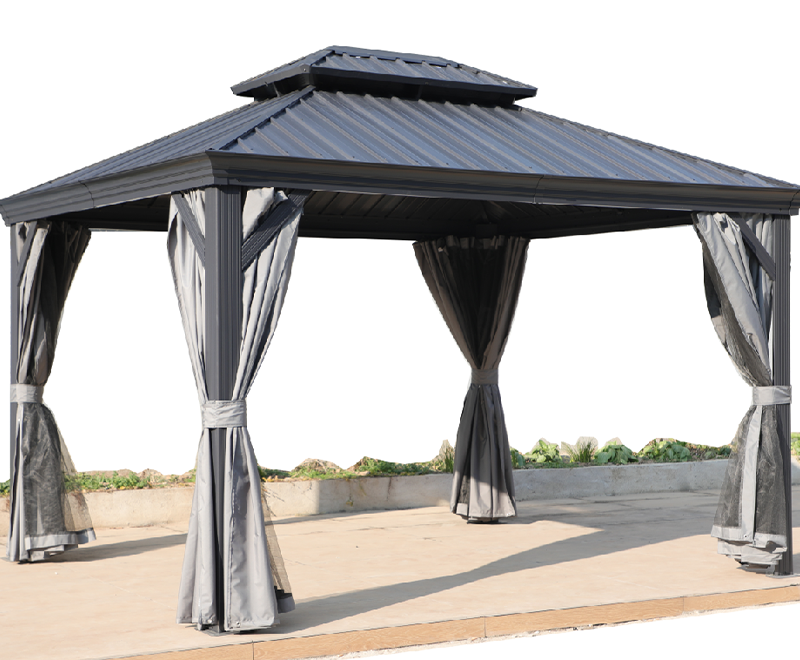
- Architectural Finishes: Modern aluminum frames undergo an advanced powder-coating process. The most popular colors—Anthracite Grey (RAL 7016) and Carbon Black—offer a textured, matte finish that resists fingerprints and scratches. These dark tones allow the structure to “recede” visually into the building’s shadows, making the outdoor space feel larger.
- Rust and Corrosion Resistance: Unlike iron or standard steel, aluminum does not rust. In modern design, where “crisp edges” are essential, the lack of bubbling paint or rust streaks ensures the gazebo looks as new in ten years as it did on day one.
Innovative Roofing: Polycarbonate vs. High-Performance Fabric
Modern gazebos often move away from traditional shingles.
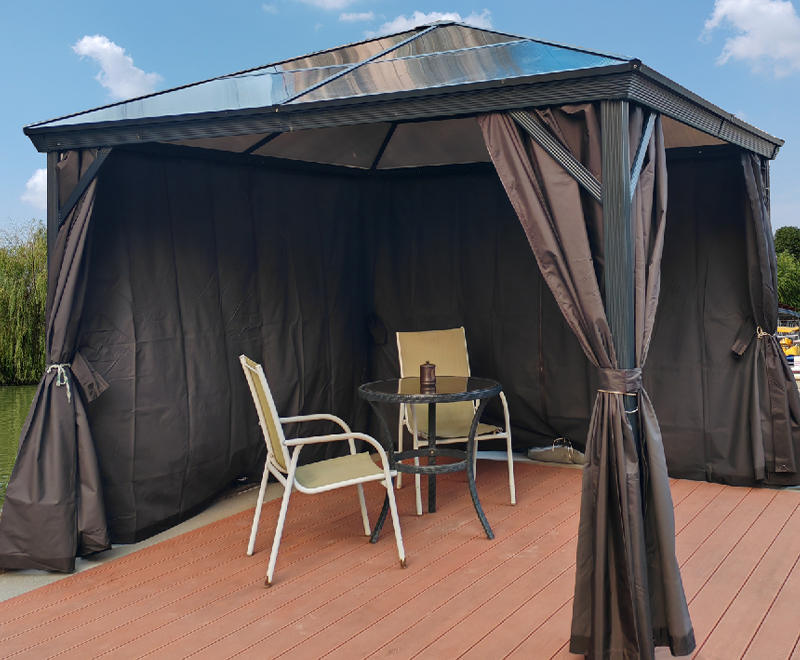
- Tinted Polycarbonate: This material offers a glass-like appearance but with much higher impact resistance. Smoked or bronze-tinted panels are preferred in modern design as they reduce glare while still allowing natural light to enter the home’s interior windows.
- High-Tech Tensile Fabrics: For a “Soft Modernism” look, retractable fabric roofs made from UV-stabilized polymers (like Serge Ferrari fabrics) provide a clean, architectural sail-like appearance. These can be retracted completely, allowing the home to benefit from solar gain during winter months.
Material Comparison for Modern Wall-Mounted Gazebos
| Feature |
Bioclimatic Aluminum |
Polycarbonate Hardtop |
Retractable Fabric |
| Aesthetic |
Ultra-Modern / Industrial |
Contemporary / Tech |
Scandi-Minimalist |
| Weather Protection |
100% Waterproof & Snow |
100% Waterproof |
Water Resistant |
| Light Control |
Adjustable (0-135°) |
Fixed (Translucent) |
Full Sun or Full Shade |
| Durability |
20+ Years |
10-15 Years |
5-10 Years (Fabric) |
| Maintenance |
Extremely Low |
Low (Requires Cleaning) |
Moderate (Wash Fabric) |
Technical Integration: Ensuring Structural Harmony
A wall-mounted gazebo is not just a piece of furniture; it is a structural addition to the dwelling. Modern architecture often utilizes advanced building envelopes, including external insulation, rainscreens, or delicate metal panels, all of which require specialized engineering to ensure the gazebo is mounted safely without compromising the home’s insulation or warranty.
Precision Mounting and Load-Bearing
Because the gazebo is physically anchored to the house, it must be able to handle “live loads” such as wind uplift and snow accumulation.
- The “Pull” Factor: In high winds, a gazebo acts like a giant sail. Modern designs utilize heavy-duty wall brackets that distribute this force across multiple structural studs. If the home has a brick veneer, installers must use chemical anchors or sleeve anchors that reach the structural “backup” wall.
- Snow Load Management: Modern flat-roof gazebos are engineered with internal reinforcement. For regions with heavy winters, “Heavy-duty” models are rated for 30-50 lbs per square foot, ensuring that the point where the gazebo meets the house doesn’t buckle under the weight of frozen precipitation.
The Art of Hidden Engineering: Integrated Drainage
One of the key differences between a cheap “big-box” gazebo and an architecturally-aligned wall-mounted gazebo is how it handles water. Modern design detests visible plastic gutters and dangling downspouts.
- Hidden Guttering: In premium designs, the gutter is built into the perimeter frame of the gazebo. Water is collected invisibly at the roofline.
- Post-Integrated Downspouts: The water is then channeled internally through the hollow aluminum support posts. It exits at the very base of the post, where it can be tied directly into the home’s underground drainage system. This keeps the patio bone-dry and preserves the “clean-line” aesthetic by hiding all the plumbing within the structure’s skeleton.
FAQ: Modern Wall-mounted Gazebo Design
Can I install a wall-mounted gazebo on a house with a “Rainscreen” or EIFS facade?
Yes, but it requires specialized “stand-off” spacers. You cannot simply bolt the gazebo directly onto the exterior insulation or cladding, as it would crush the material. The bolts must pass through spacers into the solid structural sheathing or studs of the house.
What is the best color to match a modern house?
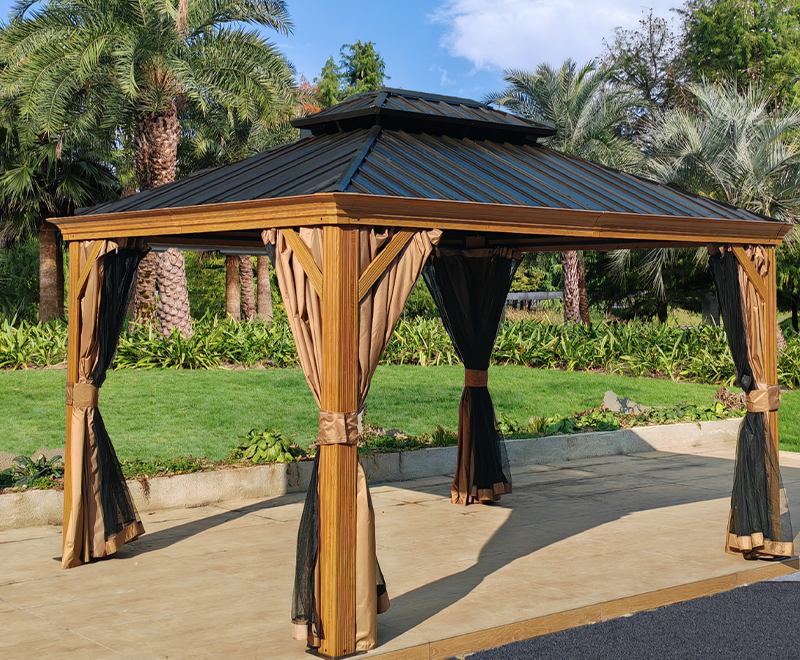
Anthracite Grey and Matte Black are the current industry standards. They provide a high-contrast, sophisticated look that matches modern black-frame windows. If your home has a lighter “Scandinavian” wood aesthetic, some manufacturers offer “wood-look” sublimation finishes on aluminum that provide the warmth of timber with the durability of metal.
Is a permit required for an attached gazebo?
In many jurisdictions, because the structure is physically attached to the primary residence, it is classified as a permanent addition. You should always check with your local building department regarding “setback” requirements and structural permits.
How do I prevent the gazebo from making the inside of my house too dark?
This is a common concern. To avoid this, choose a model with a translucent polycarbonate roof or a retractable fabric system. This allows you to “open” the roof during the day to let light into your kitchen or living room, and close it only when you are using the patio or during rain.
References and Citations
- Architectural Digest: The Rise of the “Outdoor Room”: Designing for Seamless Transitions.
- ASCE (American Society of Civil Engineers): Standard 7-22: Minimum Design Loads and Wind Uplift for Attached Structures.
- International Building Code (IBC): Section 3105: Regulations for Permanent Awnings and Canopies.
- Journal of Modern Construction: Aluminum Extrusion and Powder Coating Standards for Coastal Environments.



 English
 中文简体
中文简体 Français