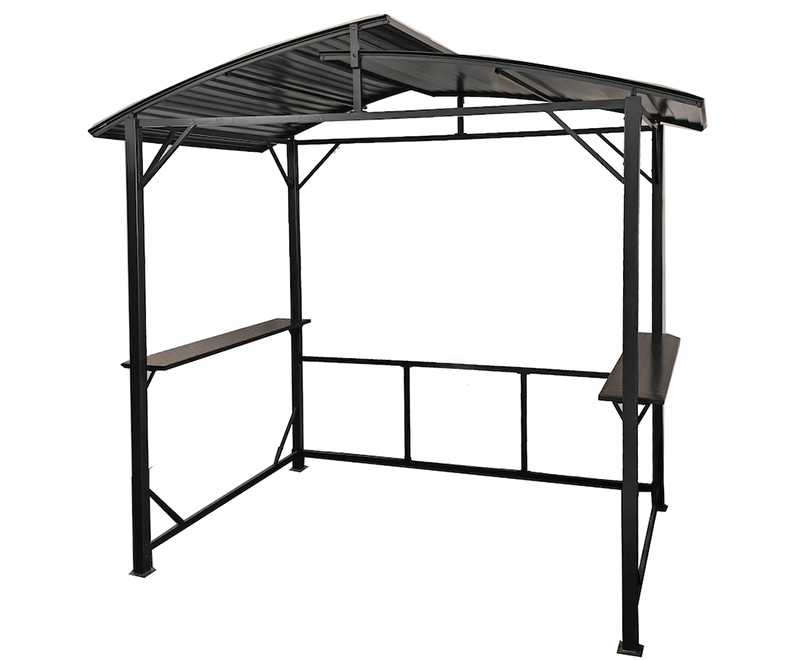
A metal storage shed is a freestanding outdoor structure made from steel or aluminium panels, designed to store tools, garden equipment, vehicles, or household items. Unlike timber or plastic sheds, metal sheds offer superior strength, fire resistance, and longevity — often lasting 20–30 years with minimal upkeep. Whether you need a compact 6×4 ft unit for a small backyard or a large 20×10 ft workshop, there is a metal shed to suit every space and budget.
What Is a Metal Storage Shed?
Metal storage sheds are prefabricated or custom-built structures assembled from galvanised steel or aluminium sheets fixed to a metal frame. They are sold as flat-pack kits — meaning all panels, fasteners, and instructions are included — or as fully custom structures erected by a builder.
The key construction materials are:
- Galvanised steel: The most common material. Hot-dip galvanisation adds a zinc coating that prevents rust. Typical sheet thickness ranges from 0.3 mm to 0.5 mm for budget kits and up to 0.8–1.2 mm for heavy-duty models.
- Zincalume / Colorbond steel: A zinc-aluminium alloy coating used widely in Australia and New Zealand. Offers superior corrosion resistance and comes in a range of baked-on powder-coat colours.
- Aluminium: Lighter than steel and naturally corrosion-resistant without coatings. Preferred for coastal locations where salt air is a concern. Typically 30–40% more expensive than equivalent steel sheds.
Metal sheds differ from plastic (resin) sheds in that they can span larger areas without central support posts, accept heavier roof and wall loads, and are significantly more resistant to impact and attempted break-ins.
Types of Metal Storage Sheds
Metal sheds come in several structural configurations, each suited to different uses and site conditions.
Apex (Gable) Roof Sheds
The most popular residential style. A central ridge runs the length of the shed, creating two equal sloping roof panels. The peaked shape sheds rain efficiently and allows for greater internal headroom at the centre — typically 1.8–2.4 m at the apex. Ideal for general garden storage and workshops.
Pent (Lean-To) Roof Sheds
A single-sloped roof that pitches from a higher front wall to a lower rear wall. Pent sheds have a lower profile and are well-suited to tight spaces against boundary fences or walls. Common sizes range from 4×2 ft to 10×6 ft.
Barn (Dutch Barn) Style Sheds
Characterised by a curved or gambrel roof profile that maximises internal volume relative to footprint. Barn-style sheds typically offer 15–25% more usable headroom than a standard apex shed of the same base dimensions, making them popular for ride-on mowers, quad bikes, and bulky equipment.
Workshop / Garage Sheds
Heavy-duty steel structures designed for vehicle storage or trade use. Wall heights of 2.1–3.0 m are standard, and roller doors or double swing doors accommodate cars and motorcycles. These are typically custom-fabricated rather than flat-pack kit products.
Arrow / Economy Kit Sheds
Budget flat-pack sheds using thinner-gauge steel (0.3–0.4 mm) and basic overlap panel construction. Entry-level pricing starts from $200–$500 USD for a 6×4 ft unit. Suitable for light garden tool storage but not recommended for areas with heavy snow or high winds.
Comparison of Metal Shed Types
| Type |
Best Use |
Typical Size Range |
Price Range (USD) |
| Apex / Gable |
General garden storage |
6×4 ft – 16×10 ft |
$300 – $4,500 |
| Pent / Lean-To |
Tight spaces, low-profile |
4×2 ft – 10×6 ft |
$200 – $2,000 |
| Barn / Dutch Barn |
Large equipment, mowers |
8×6 ft – 20×12 ft |
$600 – $6,000 |
| Workshop / Garage |
Vehicles, trade use |
12×20 ft – 30×40 ft |
$3,000 – $25,000+ |
| Economy Kit |
Light tool storage |
6×4 ft – 10×8 ft |
$200 – $800 |
Overview of common metal storage shed types, their recommended uses, size ranges, and approximate retail price ranges (USD, supply only).
Standard Sizes: How Big Should Your Metal Shed Be?
Choosing the right size is the single most important decision when buying a metal shed. Most buyers underestimate how much space they need — a common rule of thumb is to add 20–30% to your estimated storage needs to allow for future items and comfortable access.
Size Guide by Use Case
- 6×4 ft (1.8×1.2 m): Fits a push mower, basic hand tools, and a few pots. Minimum practical size for a suburban garden.
- 8×6 ft (2.4×1.8 m): The most popular residential size. Accommodates a push mower, wheelbarrow, bikes, and a workbench.
- 10×8 ft (3.0×2.4 m): Suitable for a ride-on mower, multiple bicycles, and general garden storage with room to move around.
- 12×10 ft (3.6×3.0 m): A versatile size that works as a hobby workshop, larger garden store, or motorbike shelter.
- 16×12 ft and above: Semi-commercial scale. Suitable for a full car, boat, or caravan storage alongside workshop space.
Always check your local council or HOA regulations before purchasing. Many jurisdictions allow sheds up to 10 m² without a building permit, but structures above this threshold — or above a certain wall height — typically require approval.
Benefits of Metal Storage Sheds
Durability and Long Lifespan
A quality galvanised steel shed will last 20–30 years, and heavy-duty Colorbond or Zincalume structures can exceed 40 years with basic care. By comparison, timber sheds typically require significant maintenance within 5–10 years, and plastic sheds become brittle and discoloured after 10–15 years in UV-exposed environments.
Low Maintenance
Metal sheds do not rot, warp, or require painting. An annual rinse with water and a check of door seals and fasteners is all that most owners ever need to do. This compares to timber sheds, which require repainting or re-staining every 3–5 years at a cost of $200–$800 per cycle.
Fire Resistance
Steel and aluminium are non-combustible materials. A metal shed will not ignite from an ember attack or adjacent fire, making it a significantly safer option in bushfire-prone areas compared to timber structures. Many home insurers offer reduced premiums for metal outbuildings for this reason.
Pest Resistance
Metal cannot be chewed through by rodents or damaged by termites — one of the most costly and common problems with timber sheds in warm climates. Termite damage costs Australian homeowners an estimated $1.5 billion per year; metal sheds eliminate this risk entirely.
Security
Heavy-gauge steel panels are significantly harder to breach than timber or plastic. Many metal sheds include reinforced door frames, concealed hinge pins, and compatibility with high-security padlocks or hasps. For valuable tools or equipment, a steel shed provides a meaningful deterrent.
Cost-Effectiveness
Entry-level metal sheds start from as little as $200–$400 for a basic kit, making them the most affordable covered storage solution available. Even mid-range metal sheds at $800–$2,500 represent strong value when the low lifecycle maintenance cost is factored in.
Metal vs. Wood vs. Plastic Sheds: Which Is Best?
| Feature |
Metal |
Wood (Timber) |
Plastic / Resin |
| Lifespan |
20–40 years |
10–20 years (with upkeep) |
10–15 years |
| Maintenance |
Very low |
High (paint/stain every 3–5 yr) |
Low |
| Fire Resistance |
Excellent |
Poor |
Poor (melts) |
| Pest Resistance |
Excellent |
Poor (termites, rot) |
Good |
| Aesthetics |
Functional / modern |
Best (natural look) |
Basic |
| Entry-Level Cost |
$200–$500 |
$600–$1,500 |
$300–$800 |
| Security |
Good–Excellent |
Moderate |
Poor |
| Condensation Risk |
Moderate (needs vents) |
Low |
Low |
Side-by-side comparison of metal, wood, and plastic shed materials across key performance and cost criteria.
The one genuine weakness of metal sheds is condensation: metal surfaces cool rapidly overnight and can cause moisture to collect inside, potentially damaging stored items. This is easily addressed by fitting roof vents, applying anti-condensation felt to the underside of roof panels (a standard option on most quality kits), and storing absorbent materials in sealed containers.
Installation: Building a Metal Shed Step by Step
Most flat-pack metal sheds can be assembled by two people over a weekend. Here is the standard process:
- Choose the site: Select a level, well-drained location. Avoid low-lying areas where water pools. Allow a clearance of at least 600 mm on all sides for maintenance access.
- Prepare the base: A concrete slab is the most durable option (100 mm thick with mesh reinforcement). Alternatives include compacted gravel, paving slabs, or a proprietary plastic base grid. The base must be perfectly level — even a 10 mm difference across the footprint will cause door alignment problems.
- Check permit requirements: Confirm with your local council whether a building permit is needed. Most jurisdictions exempt sheds under 10 m² and below a set wall height (typically 2.4 m).
- Lay out all components: Before beginning assembly, lay out all panels, frames, bolts, and brackets and cross-check against the parts list. Missing components are far easier to identify before assembly than during it.
- Erect the frame: Assemble the floor frame (if included), then the wall frames, followed by the roof trusses. Hand-tighten all bolts at this stage; do not fully tighten until the structure is square.
- Fix the wall panels: Overlap panels are fixed from the bottom up, with each panel overlapping the one below by the specified amount (typically 25–40 mm). Check for plumb and square at each stage.
- Install the roof: Fix roof panels working from one end. Ensure all ridge caps and barge flashings are correctly fitted and sealed with the supplied mastic or silicone.
- Hang the doors and fit hardware: Adjust door hinges so doors swing freely and close flush. Fit the lock, hasp, or padlock bar supplied or upgraded hardware as required.
- Anchor to the base: Fix the shed to the base using the anchor bolts or coach screws supplied. This step is critical in windy areas — an unanchored shed can be moved or overturned in winds above 60–70 km/h.
Total assembly time for a standard 8×6 ft apex shed is typically 4–8 hours for two people with basic DIY skills. Larger workshop-style sheds may take 1–3 days.
Buying Guide: How to Choose the Right Metal Storage Shed
1. Steel Gauge (Thickness)
Thicker steel is heavier, stronger, and more resistant to denting and wind damage. As a guide:
- 0.3–0.4 mm: Economy range. Adequate for light tool storage in sheltered locations.
- 0.5–0.6 mm: Mid-range. A good balance of affordability and durability for most residential applications.
- 0.7–1.2 mm: Heavy-duty. Recommended for exposed locations, coastal areas, or where security is a priority.
2. Roof Load Rating
If you live in an area with snowfall, check the manufacturer's stated roof load rating. A minimum of 15–20 lbs/ft² (73–97 kg/m²) is recommended for areas with moderate snowfall; heavier snow zones require 30 lbs/ft² (146 kg/m²) or more.
3. Wind Rating
Quality sheds are tested to specific wind speeds. Look for a stated wind resistance of at least 100 km/h (62 mph) for standard residential use, or 130–160 km/h for exposed or coastal sites. Always anchor the shed to its base regardless of the stated wind rating.
4. Door Type and Width
Consider what you will be moving in and out of the shed. Door options include:
- Single hinged door: Fits sheds up to 6 ft wide. Opening width typically 600–750 mm — sufficient for a wheelbarrow but tight for a ride-on mower.
- Double hinged doors: Open to 1.2–1.8 m wide. Standard for 8 ft wide and larger sheds.
- Sliding doors: Space-efficient as they do not swing outward. Useful where access space is limited.
- Roller doors: Standard on vehicle-access garage sheds. Electrically operated options are available.
5. Warranty
A reliable manufacturer will offer a minimum 10-year structural warranty and a separate coating/paint warranty of 10–15 years. Be cautious of sheds sold with only a 1–2 year warranty — this typically signals thin-gauge steel or inferior coating processes.
6. Useful Optional Extras to Consider
- Anti-condensation roof lining (felt or foam-backed panels) — highly recommended for any climate with temperature swings.
- Roof vents or ridge vents — improve airflow and reduce internal moisture buildup.
- Skylights or polycarbonate roof panels — provide natural light without requiring electrical installation.
- Shelving kits — purpose-made to fit the shed's internal dimensions and rated for heavier loads than aftermarket options.
- Security bar and padlock — upgrading the supplied hardware to a closed-shackle padlock and reinforced hasp significantly improves resistance to forced entry.
Common Mistakes to Avoid When Buying a Metal Shed
- Buying too small: The most frequently reported regret among shed owners. If in doubt, buy the next size up — the cost difference between an 8×6 ft and a 10×8 ft shed is often only $150–$300.
- Skipping the base preparation: An unlevel or unstable base causes doors to drop and panels to misalign within months. Spending $200–$500 on a proper concrete or paver base protects a much larger investment.
- Ignoring local wind and snow conditions: A shed rated for 80 km/h winds in a region that regularly sees 100 km/h gusts is not a suitable purchase, regardless of price.
- Not anchoring the shed: Even heavy metal sheds can be lifted and shifted by strong winds if not bolted to the base. Anchor kits cost $20–$50 and are non-negotiable.
- Choosing standard steel in a coastal location: Salt air corrodes standard galvanised coatings significantly faster than inland environments. Specify Colorbond, Zincalume, or aluminium within 1–2 km of the ocean.
- Overlooking ventilation: Without at least one vent, interior temperatures in a metal shed can exceed 60°C on a hot day, damaging stored items and accelerating corrosion of tools and equipment.
Final Verdict: Are Metal Storage Sheds Worth It?
For the vast majority of homeowners, a metal storage shed is the best value outdoor storage solution available. It combines the lowest entry price, the longest lifespan, the least maintenance, and the best resistance to fire, pests, and forced entry of any shed material on the market.
The key to a successful purchase comes down to three decisions: choosing the right size (go bigger than you think you need), specifying the correct steel gauge and coating for your climate, and investing in a solid, level base. Get these right, and a metal shed will serve you reliably for decades with almost no ongoing cost or effort.



 English
 中文简体
中文简体 Français