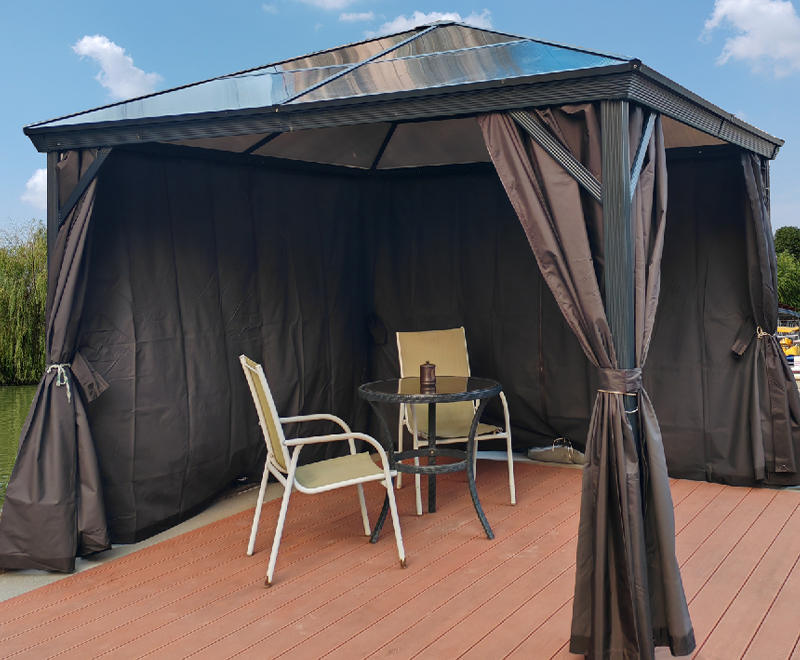
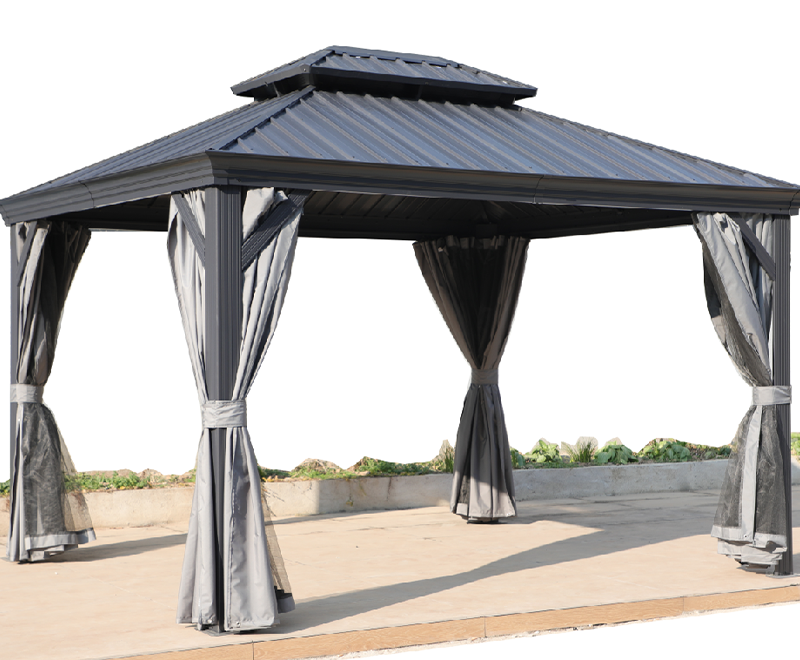
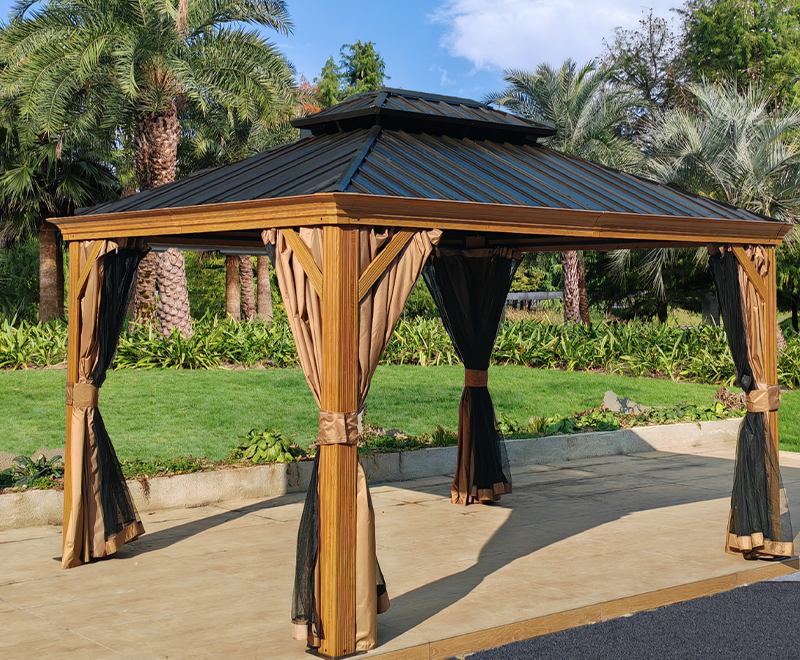
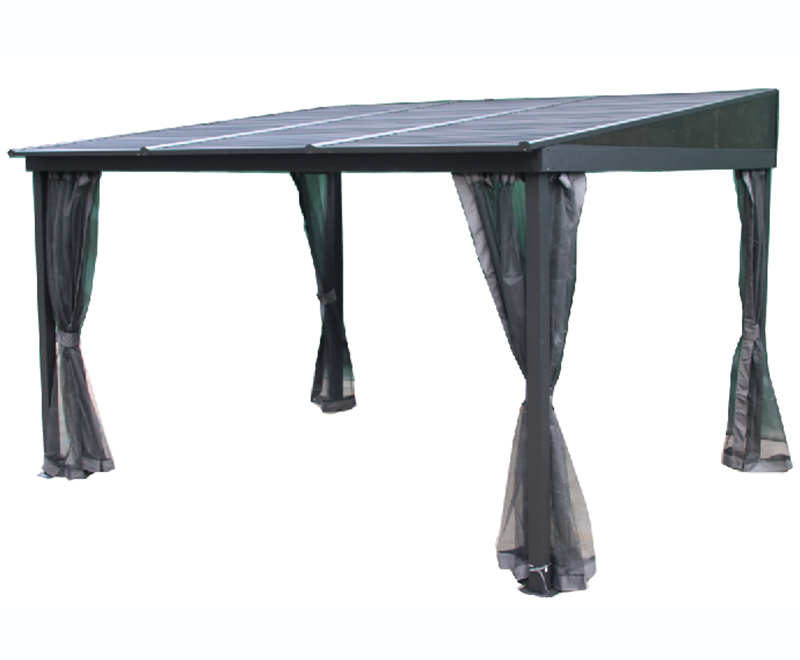
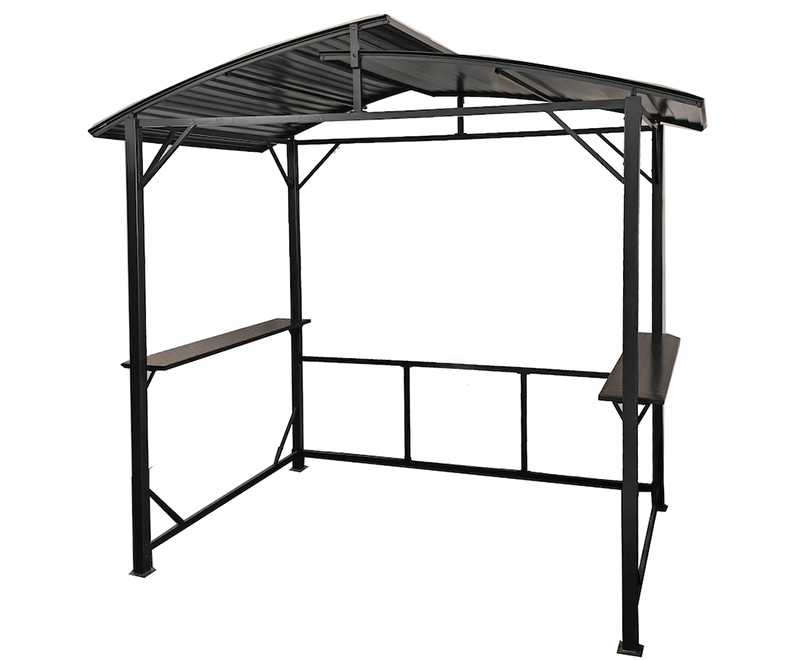
Choosing the right size hardtop gazebo starts with one rule: the gazebo should occupy no more than 25–30% of your total usable backyard space. For most suburban backyards, this means a 10×10 ft (3×3 m) or 10×12 ft (3×3.6 m) gazebo is the practical sweet spot — large enough to seat 6–8 people comfortably, small enough to leave meaningful open lawn space around it. The right size depends on four factors: your yard's total dimensions, your intended use, the number of people you want to accommodate, and local zoning setback requirements.
Measure Your Backyard Before Looking at Any Gazebo Listings
The most common sizing mistake is choosing a gazebo based on how it looks in a product photo rather than how it will actually fit in the available space. Before browsing any products, take accurate measurements of your backyard and map out the usable area.
How to Measure Your Available Space
- Measure total yard dimensions — record the full length and width of your backyard in feet or meters.
- Subtract fixed obstructions — deduct space occupied by existing structures (sheds, pools, raised beds, HVAC units), mature trees with root zones, and sloped or unusable ground.
- Identify your preferred placement zone — mark where you want the gazebo: near the house for convenience, at the rear for privacy, or centered on a patio area.
- Allow clearance around the structure — plan for a minimum of 3 ft (0.9 m) of clearance on all sides between the gazebo roof edge and any fence, wall, or tree canopy. This ensures safe access, proper drainage, and prevents moisture buildup against adjacent structures.
- Check local setback requirements — most municipalities require permanent outdoor structures to be set back 5–10 ft (1.5–3 m) from property lines. Verify your local ordinance before finalizing placement.
The 25–30% Rule in Practice
Apply the 25–30% guideline to determine your maximum recommended gazebo footprint based on your yard size:
| Backyard Size |
Total Area (sq ft) |
Max Recommended Gazebo Area (30%) |
Suggested Gazebo Size |
| Small (20×25 ft) |
500 sq ft |
~150 sq ft |
10×10 ft or smaller |
| Medium (30×40 ft) |
1,200 sq ft |
~360 sq ft |
10×12 ft or 12×12 ft |
| Large (50×60 ft) |
3,000 sq ft |
~900 sq ft |
12×16 ft or 13×15 ft |
| Extra Large (80×100 ft) |
8,000 sq ft |
~2,400 sq ft |
14×20 ft or custom build |
Table 1: Recommended hardtop gazebo sizes based on backyard area using the 25–30% guideline
Standard Hardtop Gazebo Sizes and What Each One Is Best For
Hardtop gazebos are available in a defined range of standard footprints. Understanding what each size realistically accommodates helps match the structure to your actual use case.
10×10 ft (100 sq ft) — The Entry-Level Standard
The most widely available hardtop gazebo size and the most affordable. Comfortably fits a 4-person dining set with approximately 2–3 ft of walkway clearance on each side, or a small loveseat and two chairs for a lounging configuration.
- Best for: Small backyards, apartment patios, or as a dedicated barbecue station
- Fits: 4–6 people seated, or a 4-burner grill with side prep table
- Typical price range: $600–$1,800 depending on material and brand
- Popular models: Sunjoy 10×10 Steel Hardtop Gazebo, Aoodor 10×10 Aluminum Hardtop
10×12 ft (120 sq ft) — The Most Versatile Choice
The extra 2 feet of depth transforms the usability of this size significantly. A 10×12 ft gazebo can accommodate a 6-person rectangular dining table with chairs and still leave comfortable circulation space, or a sectional sofa with a coffee table for an outdoor living room setup.
- Best for: Medium backyards, families who regularly entertain 6–8 guests
- Fits: 6–8 people seated at a dining table, or a 3-seat sofa, two armchairs, and a coffee table
- Typical price range: $900–$2,500
- Popular models: YITAHOME 10×12 Hardtop Gazebo, Sunjoy Adelaide 10×12
12×12 ft (144 sq ft) — The Entertainer's Footprint
A square 12×12 configuration provides symmetrical space that works well for round or square table arrangements. This size comfortably accommodates an 8-person dining set or a full outdoor kitchen island with bar stools on one side and a seating area on the other.
- Best for: Frequent entertainers, families with outdoor kitchens, hot tub enclosures
- Fits: 8–10 people, a 7-person hot tub (standard dimensions approximately 84×84 inches), or dual-zone dining and lounging setup
- Typical price range: $1,200–$3,500
- Popular models: Palram Canopia Milano 12×12, Kozyard 12×12 Hardtop Gazebo
12×16 ft and Larger (192+ sq ft) — Large-Scale Outdoor Living
Structures at this scale function more as permanent outdoor rooms than simple shade structures. A 12×16 ft hardtop gazebo can house a full dining set for 10, a bar cart, and a side lounge area simultaneously. At this size, professional installation and a concrete or paver foundation are strongly recommended due to structural weight and wind load requirements.
- Best for: Large backyards, commercial use, permanent outdoor entertaining pavilions
- Fits: 10–16 people, full outdoor kitchen, multiple furniture groupings
- Typical price range: $2,000–$6,000+ depending on material and complexity
- Note: Structures above 200 sq ft may require a building permit in many U.S. counties — verify local regulations before purchasing
Size by Intended Use: Matching the Gazebo to How You Will Actually Use It
Yard dimensions establish the upper limit of what will fit — but your intended use determines what size you actually need. These are the most common use cases with specific size recommendations:
| Intended Use |
Minimum Size |
Recommended Size |
Key Space Consideration |
| 4-person dining |
10×10 ft |
10×10 ft |
Allow 3 ft behind each chair for comfortable pull-out |
| 6–8 person dining |
10×12 ft |
12×12 ft |
Standard 6-person table is 36×72 inches — needs 4 ft clearance on each end |
| Outdoor lounge / living room |
10×12 ft |
12×12 ft |
Standard 3-seat outdoor sofa is approximately 85 inches wide |
| Hot tub enclosure |
12×12 ft |
12×14 ft |
Allow minimum 3 ft walkway around all sides of the hot tub for safe entry/exit |
| BBQ and grill station |
10×10 ft |
10×12 ft |
Grill must maintain minimum 24 inches clearance from roof structure — verify manufacturer guidance |
| Outdoor kitchen |
12×14 ft |
12×16 ft |
Standard kitchen island run is 8–10 ft; allow 4 ft aisle width for safe movement |
| Kids' play area / sandbox cover |
10×10 ft |
10×10 ft |
Prioritize low roof height clearance and open sides for supervision |
Table 2: Recommended hardtop gazebo sizes by intended use case with key spatial requirements
Height Matters Too: Roof Clearance and Ceiling Height Considerations
Footprint is the primary sizing decision, but roof height significantly affects comfort, usability, and what you can place inside the gazebo. Most standard hardtop gazebos offer an eave height (the lowest interior point) of 7–8 ft (2.1–2.4 m), with the roof peak rising to 9–11 ft depending on pitch angle.
- Minimum comfortable standing height: 7 ft (2.1 m) eave clearance — sufficient for most adults but may feel low for taller individuals or when adding ceiling fans or pendant lighting.
- Ceiling fan installation: Requires a minimum eave height of 8 ft (2.4 m) with the fan blade at least 7 ft above the floor — check the gazebo's specifications before purchasing a fan kit.
- Adjacent to a house wall: If attaching or positioning close to a one-story roofline, ensure the gazebo peak height does not exceed or obstruct windows, gutters, or eaves — typically a maximum of 10–11 ft peak height is appropriate.
- Hot tub use: Consider that users stand up inside a hot tub — a minimum eave clearance of 7.5 ft is recommended to avoid a cramped feeling when standing in the tub.
Foundation Surface and How It Affects Size Selection
The surface where you plan to install the gazebo constrains not just placement but also which sizes are structurally safe and practically feasible.
Concrete or Paver Patio
The ideal foundation for any hardtop gazebo. The gazebo footprint must match or be smaller than the patio dimensions — the anchor posts should land on solid paving, not on lawn or soil at the patio edge. If your existing patio is 12×14 ft, a 10×12 ft gazebo centered on it provides secure anchoring with a 1-foot border on each side.
Wooden Deck
Hardtop gazebos are significantly heavier than soft canopy alternatives — a 10×12 ft aluminum hardtop gazebo typically weighs 200–350 lbs (90–160 kg) before furniture is added. Before installation, verify your deck's load rating with a structural engineer or contractor. Most residential decks are built to a live load of 40 psf (pounds per square foot) — adequate for most gazebo sizes, but worth confirming for 12×16 ft or larger structures.
Grass or Soil
Not recommended for permanent hardtop gazebo installation without ground anchors or a poured concrete pad. For grass installation, ground anchor stakes or helical anchors must be used at each post, and a minimum anchor depth of 18–24 inches is recommended for structures 10×12 ft and larger. Larger gazebos (12×16 ft and above) installed on grass should have a concrete footing poured at each post location.
How Seating Capacity Translates to Square Footage
A practical rule of thumb used by outdoor living designers: allow a minimum of 15–20 sq ft of gazebo floor space per seated person for comfortable dining, or 20–25 sq ft per person for lounge seating where people move around more freely.
- 4 people dining: 60–80 sq ft minimum → 10×10 ft (100 sq ft) is adequate
- 6 people dining: 90–120 sq ft minimum → 10×12 ft (120 sq ft) is the minimum; 12×12 ft is more comfortable
- 8 people dining: 120–160 sq ft minimum → 12×12 ft (144 sq ft) is the practical choice
- 10–12 people dining: 150–240 sq ft minimum → 12×16 ft (192 sq ft) or larger is required
These figures assume standard dining chairs. If you plan to use bulkier armchairs, chaise lounges, or wide wicker furniture, add an additional 20–25% to the minimum square footage to avoid a cramped layout.
Mistakes to Avoid When Choosing Hardtop Gazebo Size
- Buying based on catalog photos alone: Product images are taken in large, open spaces with wide-angle lenses that make structures appear smaller than they are. Always stake out the exact footprint in your yard with rope or spray paint before purchasing.
- Forgetting furniture dimensions: Measure your existing or planned outdoor furniture before finalizing gazebo size. A 72-inch dining table with chairs pulled out requires at least 11–12 feet of clear interior length for comfortable use.
- Ignoring snow load ratings for larger sizes: In regions with significant winter snowfall, larger hardtop gazebo roofs accumulate more snow weight. Verify that the manufacturer's snow load rating — typically expressed in psf — is appropriate for your climate. A standard residential roof is engineered for 20–40 psf of snow load; check that your chosen gazebo meets local requirements.
- Choosing the largest size the yard allows: A gazebo that consumes the majority of your backyard creates a visually overwhelming, cramped outdoor environment. Preserve open lawn space — it makes the gazebo feel like a destination rather than a space-filling structure.
- Not accounting for future additions: If you plan to add a hot tub, outdoor kitchen, or additional seating within the next 2–3 years, size up now. Replacing a gazebo is significantly more expensive and labor-intensive than choosing the right size at the outset.
- Overlooking permit thresholds: In many U.S. jurisdictions, permanent outdoor structures exceeding 120–200 sq ft require a building permit. A 12×12 ft gazebo sits right at this threshold in many counties — check with your local planning department before purchase to avoid costly compliance issues after installation.
A Simple Size Selection Checklist
Before finalizing your hardtop gazebo purchase, confirm each of the following:
- I have measured my available backyard space and identified the installation zone.
- The gazebo footprint is no more than 25–30% of my total usable yard area.
- There is a minimum of 3 ft clearance on all sides between the gazebo and any fence, wall, or tree.
- I have verified local setback and permit requirements for my chosen size.
- I have measured my planned furniture and confirmed it fits with adequate circulation space.
- I have confirmed the foundation surface can support the gazebo's weight and anchor requirements.
- The eave height is sufficient for my intended use (fans, standing in hot tub, tall guests).
- I have staked out the exact footprint in my yard and walked around it to confirm the scale feels right.



 English
 中文简体
中文简体 Français