A louvered roof is usually the first thing people notice on a modern pergola: a row of angled blades overhead that tilt open to the sky or close against the rain. When those blades are aluminum, the structure stays lighter, straighter and easier to live with than timber or steel versions of the same idea.
We build aluminum outdoor structures for a living, including hardtop gazebos, sunrooms, screen houses and storage sheds, so we spend a lot of time thinking about what happens to a metal frame after ten summers of sun, rain and temperature swings. This guide gathers what we have learned about aluminum louvered roofs: how they work, which details actually matter, and when a different aluminum roof suits a garden better.
An aluminum louvered roof, sometimes sold as a bioclimatic pergola or an adjustable louver pergola, is a framed structure whose roof surface is a series of parallel blades instead of a solid panel. Each blade rotates on its own axis. Laid flat, they form an almost continuous cover; turned to roughly ninety degrees, the roof is open to the sky.
The parts are consistent across most designs:
Because the blades move, the roof responds to the weather instead of ignoring it. That flexibility is the whole point of the design, and it is also where most quality differences hide.
On a west-facing patio, a fixed roof is either too dark at noon or too bright at four in the afternoon. Adjustable blades let you tune the light through the day, which is why louvered roofs work so well over dining tables and loungers.
Heat collects under any roof. Opening a gap between the blades lets warm air escape instead of sitting above your head, a small effect but a noticeable one on still summer evenings.
Closed blades overlap and channel water into the perimeter beam, which slopes slightly toward a downspout or a leg. This only works when the blades seal tightly and the beam has a real drainage path. Inexpensive units tend to drip through the joints during a heavy shower.
Material choice shapes cost, maintenance and lifespan. Here is how the common options behave in practice.
| Material | Weight | Upkeep | Weather behaviour | Typical use |
|---|---|---|---|---|
| Powder-coated aluminum | Light | Low, a rinse twice a year | Does not rust; needs a good coating near salt air | Pergolas, sunrooms, wall-mounted roofs |
| Powder-coated steel | Heavy | Medium, watch for chips | Strong, but rusts once the coating breaks | Wide spans where rigidity matters |
| Timber | Medium to heavy | High, annual oiling or staining | Warps and cracks with wet and dry cycles | Traditional gardens and period homes |
| Retractable fabric | Very light | Medium, clean and store seasonally | Fades over time; remove before storms | Temporary shade and rented properties |
For most gardens, aluminum strikes the best balance. It does not rust the way steel does, it does not ask for the annual oiling that timber needs, and it can be extruded into slim, precise blade profiles that close tightly.
Two louvered roofs can look identical in a photograph and behave completely differently after three winters. These are the details worth asking about before you order:
Aluminum itself is only part of the story. How the material is formed, welded and finished decides whether the frame still looks new when a neighbour replaces their timber pergola for the second time. If you would like to go further into why all-aluminum construction is preferred for outdoor roof panels, we explain it in our notes on all-aluminum sun shed roofs.
There is no universal louvered roof. Coastal gardens fight salt and wind, inland gardens fight frost and snow, and hot dry regions fight UV rather than rain.
Near the sea, coating quality and corrosion-resistant fasteners matter most. A thicker powder film and stainless hardware are the difference between a ten-year roof and a three-year one. In colder regions, snow load and how the motor behaves at low temperatures deserve more attention, and a roof that can be locked shut through winter is simply easier to own.
In wet climates, drainage capacity decides comfort, because closed blades must move water away faster than a heavy shower delivers it. In hot, dry climates you will keep the blades partly open almost all year, so smooth rotation and UV-stable finishes matter more than rain sealing.
We build a low-temperature resistant sunroom for northern markets where winter performance is the deciding factor.
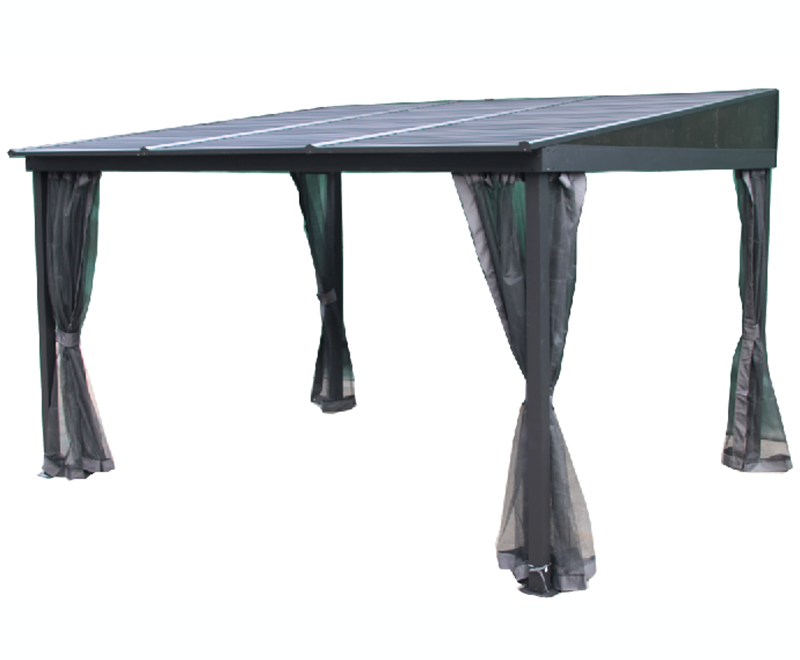
A louvered roof needs posts, and posts need floor space. On a narrow terrace or a balcony, a wall-mounted frame that uses the house as one side of the structure usually works better, because you keep the adjustable cover and lose the legs that would block the walkway.
Sliding roof designs take the idea a step further: one roof section travels over another, so the sky opens above the seating area while the rest stays covered. There are fewer moving parts than in a motorized louver system, and the mechanism is something an owner can operate by hand for decades.
 3x3.6m Sliding Roof Wall-Mounted Aluminum Sun ShedWall-mounted aluminum sun shed with sliding roof panel, UV-resistant sun panel, and three-side fabric and mosquito netting for garden, terrace, or balcony shade.View Product →
If you are weighing up fixing points, wall height and the way the frame meets an existing facade, our range of wall-mounted gazebos shows the configurations we build most often.
Most louvered roofs arrive as flat-pack kits with pre-drilled extrusions, and two people can assemble a residential unit over a weekend. The critical parts are the base, whether footings or a solid slab, and keeping the frame square, because blades bind when the beams are not parallel.
Once the roof is up, the upkeep is genuinely light:
None of that takes more than an afternoon a year, which is the practical argument for aluminum over timber.
Before you commit, walk through these questions with the supplier:
A supplier who answers these questions without hesitating is usually selling a properly engineered product.
An aluminum louvered roof is a long-term purchase, and it rewards a little patience at the research stage. Get the material, the coating and the drainage right, and the structure will quietly do its job for a decade or more, shading lunch in July, shedding rain in October, and asking almost nothing in return.
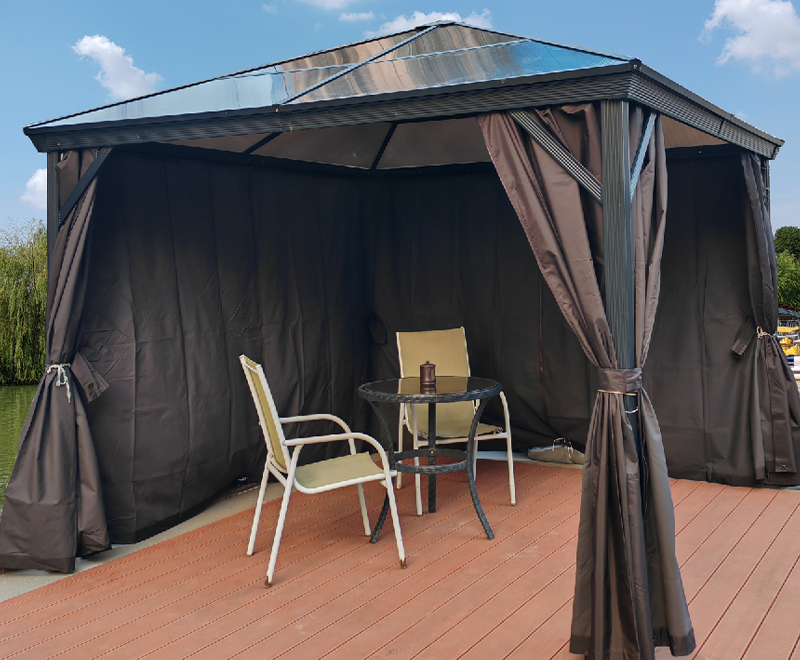
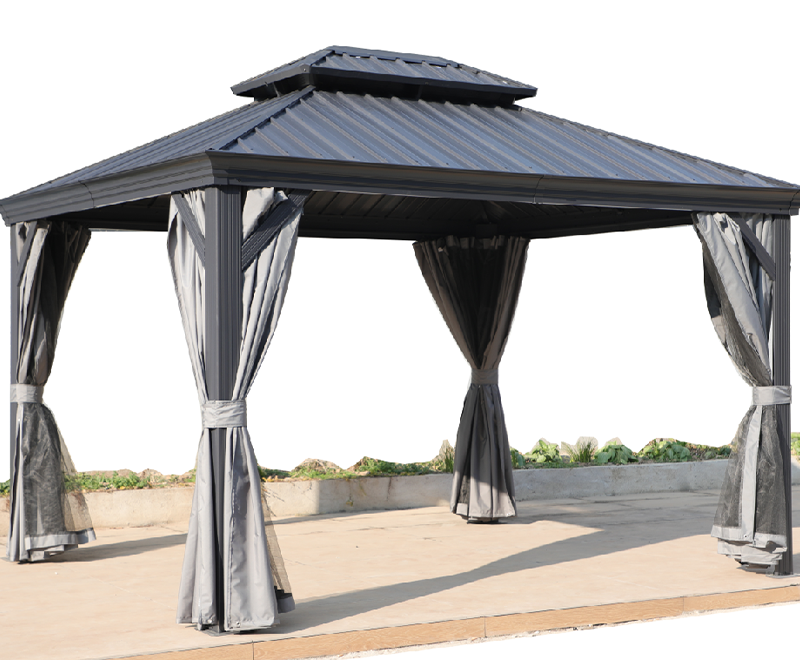
Not every garden needs moving blades, though. Where the goal is simply a permanent, maintenance-light cover over a seating area, a fixed aluminum roof is often the calmer choice, and our hardtop gazebo range is built exactly for that.
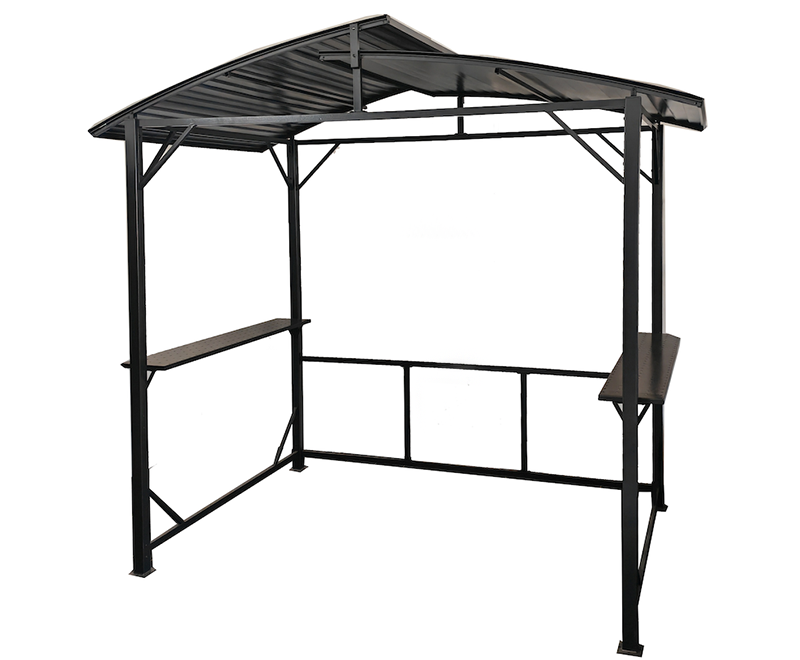
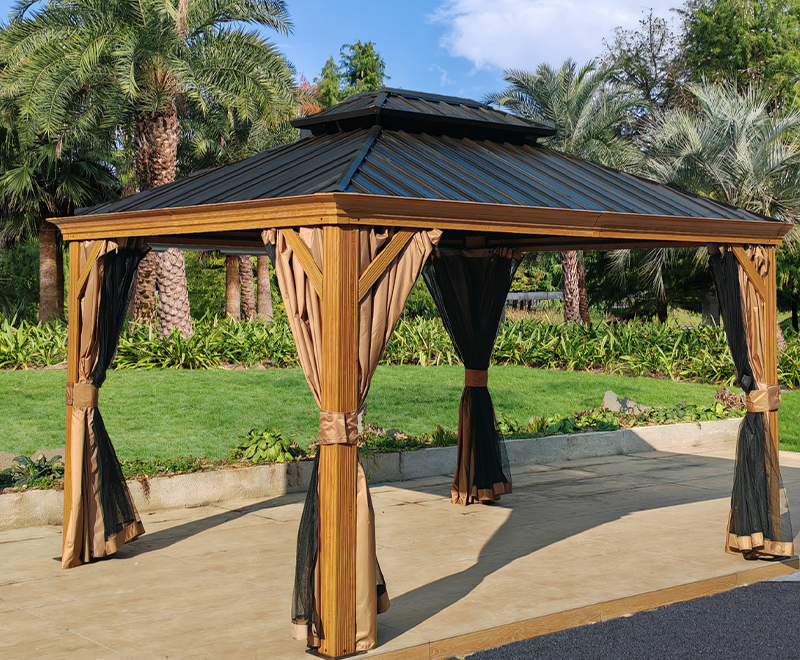 Hardtop Gazebo and Pergola RangeBrowse durable aluminum or galvanized steel hardtop gazebos and pergolas, including polycarbonate and metal roof options, for permanent garden cover.View Product →

The company has 20 professional and technical personnel and more than 200 company employees; it covers an area of 15,000 square meters. We are an enterprise specializing in the production, design and sales of metal products.
No. 137-1, Zhangjia, Shangtian, Fenghua, Ningbo, China
justin.gao@vip.163.com
+86-13867888253
OEM/ODM Hard Top Tent/Shelter Manufacturers
Copyright © Ningbo Jinjin Leisure Co., Ltd. All Rights Reserved.

 English
 中文简体
 Français