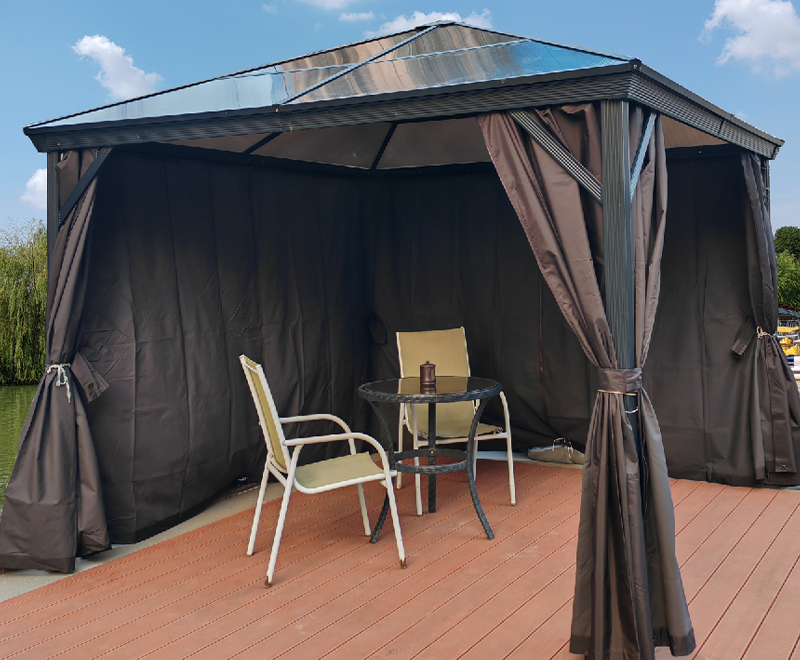
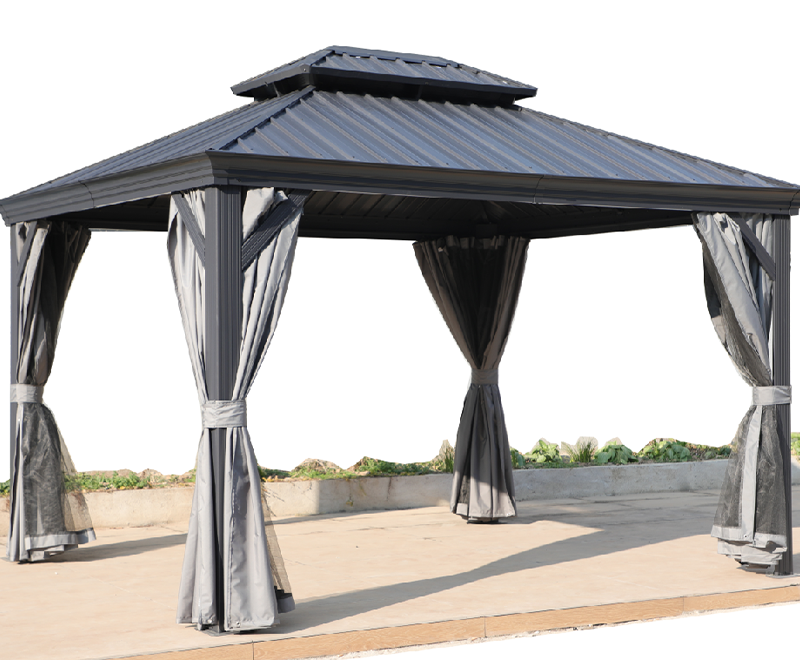
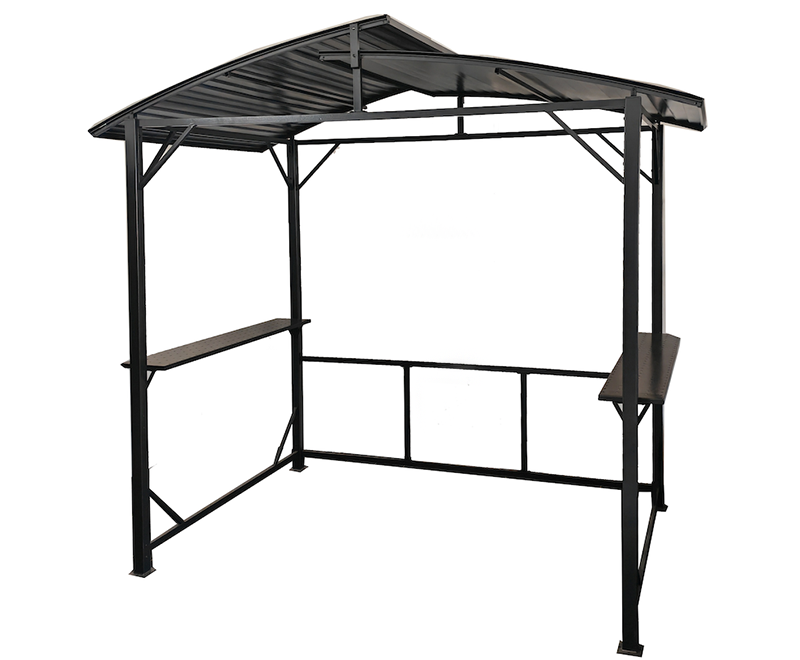
An aluminum gazebo looks simple in a product photo: four posts, a roof, and a patch of shade underneath. In reality, the aluminum label covers a wide range of structures, and two gazebos described in exactly the same words can differ in frame thickness, coating quality, roof material and wind performance. This guide walks through what the term really means, how aluminum compares with steel and timber, which roof panels suit which climate, and the details worth checking before money changes hands.
Most of the time, the phrase refers to the frame. Aluminum profiles are cut, welded or bolted into posts, beams and roof supports, then powder coated for colour and protection. The roof sitting on top of that frame may be aluminum, steel, polycarbonate or a fabric canopy. So when you compare listings, the first thing to establish is what the seller is actually describing:
Knowing which of these four you are looking at explains most of the price gap between two gazebos that appear identical online.
Aluminum frames have quietly taken over the garden structure market, and the reasons are practical rather than fashionable.
The one thing aluminum does not forgive is a thin profile. Wall thickness and joint design matter more than the headline material.
Frame material changes weight, upkeep and lifespan more than any other specification. The table below summarises how the three common options behave in a domestic garden setting.
| Frame material | Typical weight | Rust or rot risk | Maintenance | Realistic service life |
|---|---|---|---|---|
| Powder-coated aluminum | 60 to 90 kg | Very low | Rinse and inspect twice a year | 10 to 20 years |
| Powder-coated steel | 120 to 180 kg | Moderate at scratches and cut edges | Touch up chips promptly | 8 to 15 years |
| Timber | Heavy and varies by species | Rot and insect risk if untreated | Re-oil or re-stain annually | 5 to 12 years |
Polycarbonate sheets and twin-wall sun panels are the lightest way to close a roof. They diffuse daylight, cut glare and keep the space underneath bright enough to eat or read in without switching on a light. Heat build-up is lower than under a solid metal roof, and panels are usually replaceable if a branch or a hailstorm causes damage. We have written separately about why sun panel roof sheds are made from all-aluminum material if you want the detail on how frame and panel work together.
A hardtop roof turns a gazebo into something closer to a permanent room. Steel roof panels are rigid and give deep shade; aluminum roof panels do the same job with less weight. Both handle snow load better than fabric, and both are usually fitted with a slight slope and channels so rain runs off instead of dripping through the frame. This is the configuration most people picture when they search for a hardtop gazebo.
Fabric roofs are inexpensive and easy to replace, but they fade, sag and need to come down in strong wind. They suit a seasonal patio or a rented garden where nothing permanent is allowed.
The classic layout: four posts, a rigid roof, and open sides that can be fitted with screens or curtains. It works on a patio, a lawn or a deck, and it is the format most often specified where the structure stays up all year.
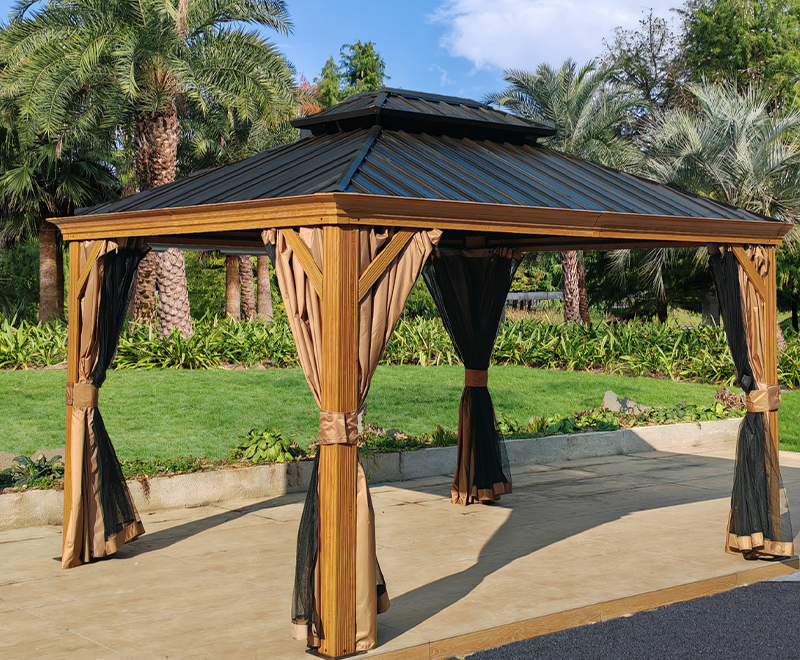 Hardtop Gazebo/Pergola ManufacturersHardtop Gazebo and traditional canvas-top gazebos each have their own characteristics and advantages in outdoor space design. Hardtop Gazebo is known for its durabilit...View Product →
A wall-mounted gazebo uses the house as one side, which saves ground space and creates a natural transition from the kitchen or living room into the garden. It is a good answer for narrow plots and for anyone who wants shade without giving up the middle of the lawn.
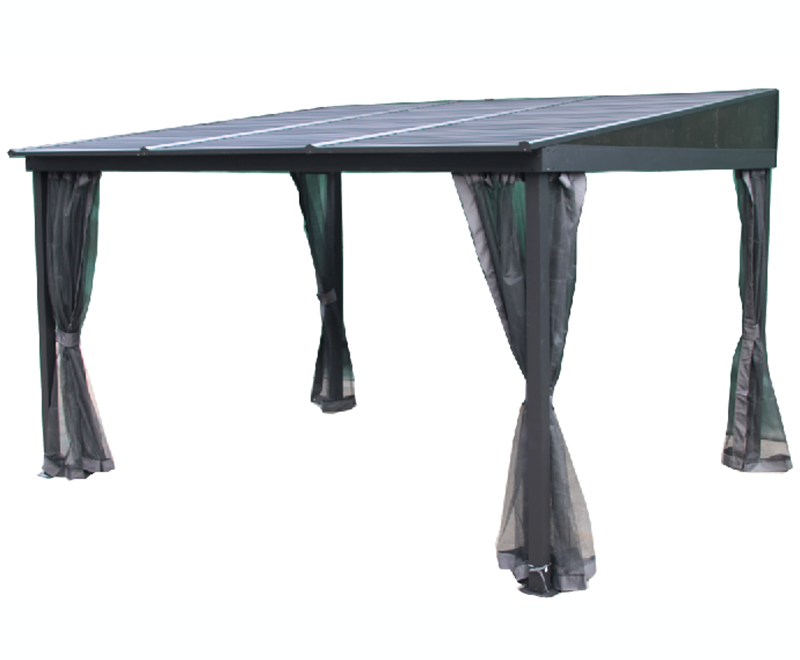 Custom Wall-Mounted Gazebos with Sliding or Iron Plate RoofsExplore customizable wall-mounted sun sheds that save ground space and offer sliding or iron plate roof options for outdoor leisure.View Product →
Smaller aluminum structures built around a barbecue, and screened gazebos designed to keep insects out while letting air through, cover the two most common secondary uses. Both benefit from the same frame material, because both live outdoors all year round.
Most aluminum gazebos sold today sit between 3 x 3 m and 3.6 x 5.48 m. The right size depends on what happens underneath it.
Leave at least 60 to 90 cm of clearance around the posts so you can move furniture and clean the frame without scraping your knuckles.
Before ordering, work through these points in order.
Once it is up, an aluminum gazebo is undemanding, but a short routine keeps it looking new.
If you are buying for a retail programme rather than a single garden, the questions shift from appearance to consistency. A supplier has to hold the same profile, coating colour and panel specification across repeat orders, and to handle the packaging needed for container shipping. Our own hardtop gazebo manufacturing base in Ningbo runs its own powder coating line, CNC metal machining, ten roll-forming lines for roof panels and laser welding equipment, with dedicated research and quality teams checking dimensions and finish before goods are packed. That combination is what makes it possible to deliver a 3.6 x 3.6 m gazebo in March and an identical one in September.
An aluminum gazebo is a long-term purchase dressed up as a simple one. Get the frame thickness, the roof material and the anchoring right, and the structure will quietly do its job for a decade or more. Get them wrong, and you will spend every windy night wondering about the roof. Start with how you want to use the space, then work back to the frame and roof that support it.

The company has 20 professional and technical personnel and more than 200 company employees; it covers an area of 15,000 square meters. We are an enterprise specializing in the production, design and sales of metal products.
No. 137-1, Zhangjia, Shangtian, Fenghua, Ningbo, China
justin.gao@vip.163.com
+86-13867888253
OEM/ODM Hard Top Tent/Shelter Manufacturers
Copyright © Ningbo Jinjin Leisure Co., Ltd. All Rights Reserved.

 English
 中文简体
 Français