When the afternoon sun strikes your patio, the concrete can quickly absorb heat until the space becomes unusable. A fixed canopy is a common fix, but it forces you to choose between full sun and full shade. Aluminum louvered pergola kits offer a simple way to adjust the opening in seconds, giving you control over light, air, and rain from one spot. Based on our experience reviewing outdoor structures for OEM buyers, the real difference between a kit you will enjoy for years and one you will want to replace is not the brand name but the specified material and engineering. In this guide we will cover the details that matter most when evaluating these kits.
What Aluminum Louvered Pergola Kits Offer
Aluminum is the preferred material for louvered pergolas because it does not rust or rot, even in humid coastal climates. A good extruded profile, like 6063-T5 alloy, provides a high strength-to-weight ratio, which means the structure can span wider openings without straining the posts. The louver blades themselves are usually powder-coated with a UV-stable finish that resists chalking and fading.
The key feature is the rotating mechanism. Manual crank models are reliable and inexpensive; electric models can be integrated with wind sensors to close automatically. When the louvers are closed, the roof also sheds water through internal gutter channels, a design point that many low-cost kits ignore.
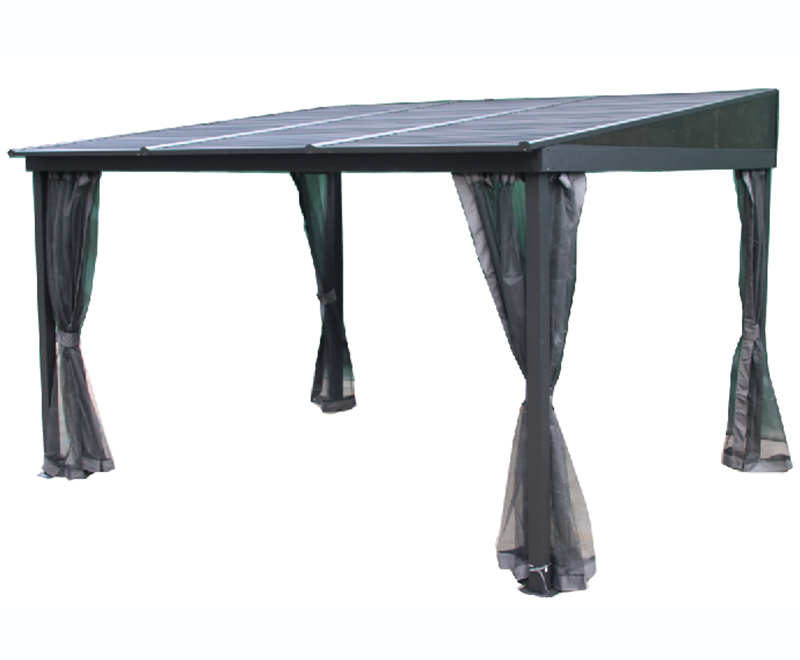
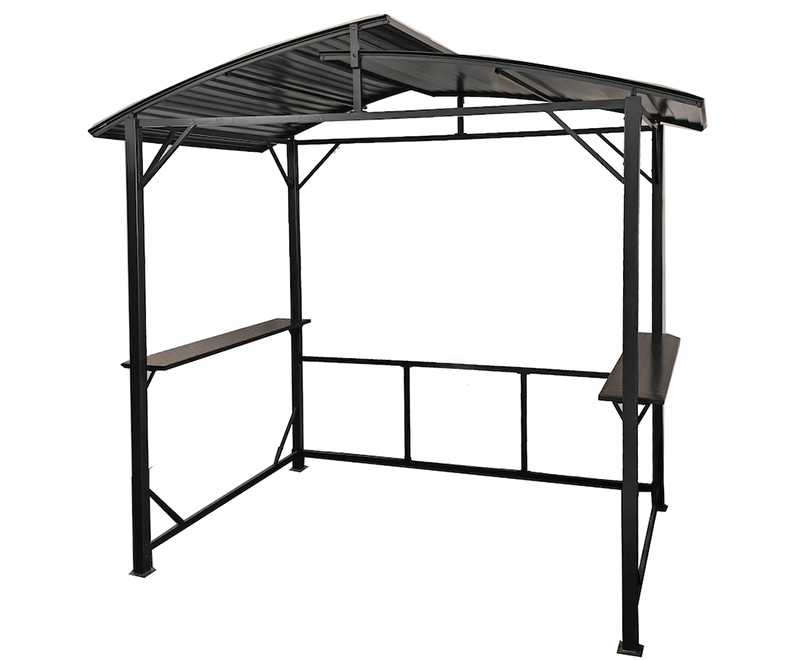
For a fixed alternative that still allows some air movement, our breathable iron-roof sun shed is a practical option for those who prefer no moving parts. It offers a sturdy roof and an open side profile that helps heat escape.
Key Specifications to Evaluate Before You Order
Before placing an order, review the technical sheet in detail. A few numbers tell you a surprising amount about the build quality.
- Aluminum wall thickness: 1.5 mm minimum for main beams and 1.2 mm for louver blades.
- Powder coating: 60-80 microns, with a polyester or PVDF base for UV resistance.
- Bearing type: self-lubricating nylon or stainless steel pivot bushings.
- Drainage: integrated gutter system that routes water to the posts or a hidden outlet.
- Wind rating: at least a 100 km/h load capacity when anchored properly.
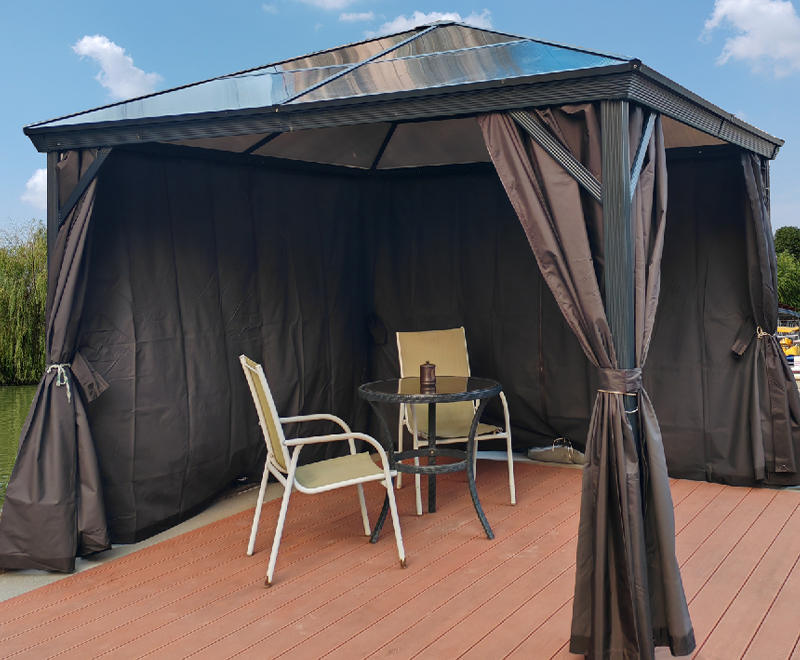
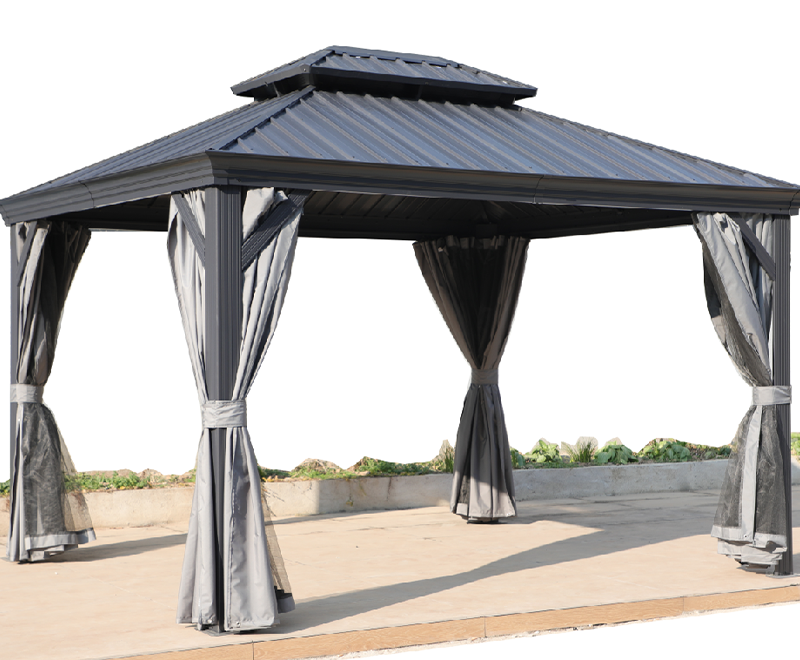
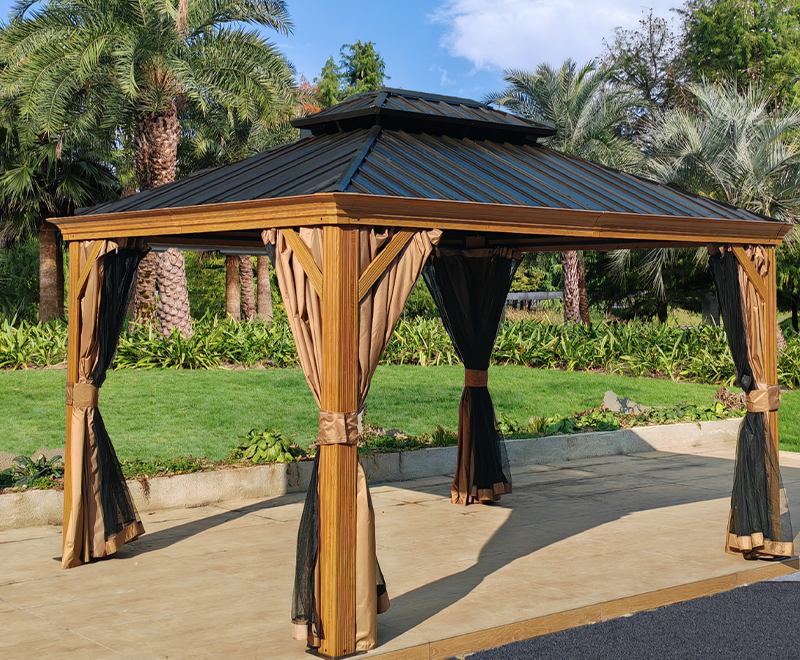
If a vendor cannot provide these specifications, treat that as a red flag. For this reason, many buyers compare an adjustable kit with a ready-to-install hardtop structure before making a final choice. You can explore our outdoor shade solutions and see how we specify materials, dimensions, and roof loads for different markets.
How to Prepare the Installation Site
A louvered pergola kit is only as stable as its foundation. On a wooden deck, you should check that the joists can support the weight of the kit plus snow loads. On a concrete patio, use heavy-duty expansion anchors. For a freestanding model, cast concrete footings with at least 300 mm depth in frost-prone regions.
- Mark the four post positions and confirm the diagonal measurements are equal.
- Set the anchors or brackets and level them with a spirit level.
- Assemble the frame according to the manufacturer's instructions before installing the louver blades.
- After attaching the blades, run a test rotation of the entire span to check for binding.
- Apply a marine-grade silicone sealant between the frame and the mounting surface to prevent water infiltration.
Even if you hire a contractor, you should know these steps well enough to verify their work. Now let us look at how a fixed hardtop structure compares in this respect.
Louvered Pergola Kits vs. Fixed Hardtop Structures
Both approaches can create a comfortable outdoor room, but the trade-offs matter. Louvered kits give you adjustable shade, but they have moving parts that need occasional maintenance. Fixed hardtop structures rarely fail and offer a solid seal against rain, snow, and wind.
Comparison of adjustable louvered kits and fixed hardtop structures for outdoor living spaces.
| Feature |
Aluminum louvered pergola kit |
Fixed hardtop gazebo/sunroom |
| Shade control |
Variable by rotating louvers |
Fixed, usually solid roof |
| Rain protection |
Good when louvers are closed |
Excellent, designed for weather |
| Assembly complexity |
Moderate to high |
Moderate |
| Wind resistance |
Depends on anchoring and blade lock |
Generally high with proper framing |
| Maintenance |
Louver mechanism needs occasional cleaning |
Low, mostly surface cleaning |
For a family that uses the patio from morning to evening, the rotatable roof is a real advantage. For a homeowner who wants to close the space and forget about it, a hardtop sunroom with generous glazing is often more satisfying. To make an informed decision, read our guide on choosing the right wall-mounted sunroom for your climate.
One fixed option that provides a bright, spacious interior is our large sunroom model. It features a large vertical footprint and wide windows that let natural light flood in while keeping the weather outside.
Maintenance and Long-Term Reliability
A louvered pergola kit will last longer if you treat it as an appliance rather than a static structure. At least twice a year, inspect the pivot points for grit or corrosion. Wipe the blades with a soft cloth and cleanser, then rinse with a garden hose. Do not use a pressure washer on the louvers or the mechanism.
For a fixed hardtop, maintenance is usually limited to washing the panels and checking the roof fasteners after heavy storms. The absence of moving parts removes a whole category of potential failures. That simplicity is often what turns a shaded patio into a permanent living area.
Where to Start with Your Aluminum Pergola Project
Start by measuring the area you want to cover and decide how much sunlight you really need to block. Then research the local building requirements. If your region receives strong snow, the roof design must be engineered for accumulation, not just wind. If you have extremely hot summers, consider a translucent roof panel that filters UV while letting reasonable light enter.
A compact start is our 3m x 3m sun shed with sun-panel roofing. It is ideal for a small patio or a corner garden, and it uses aluminum alloy framing with a translucent roof that keeps the space bright without overheating.
Remember that the best kit or structure is one that fits your exact site and meets your comfort expectations. Take your time with the specifications, ask for detailed drawings, and verify the load ratings before committing.



 English
 中文简体
中文简体 Français