Imagine you have a patio that faces south-west. The sun hits it from noon to evening, and you find yourself moving chairs around to avoid the glare. An aluminum louvered pergola solves that by letting you open or close the roof blades. Our conclusion, based on years of manufacturing metal outdoor structures and working with importers, is simple: louvered pergolas are excellent when you need controllable light and airflow, but they are only a good purchase if you buy a properly engineered unit. The frame must be thick enough, the louver seals must be designed to shed water, and the actuator must be rated for continuous outdoor use. Otherwise, you are paying a premium for a product that will need repairs within a few years.
How Aluminum Louvered Pergolas Work
A louvered pergola is built from extruded aluminum profiles. Most residential models use 6063 aluminum alloy, which is strong, corrosion-resistant, and easy to powder coat. The roof consists of a series of blades that rotate on a central axis. You control the blades through a wall switch, a remote control, or a smart home assistant. When the blades close, they overlap to create a solid cover. In an ideal design, the seams between blades include EPDM rubber gaskets that compress when closed. This is the same material family used in many aluminum outdoor products, and you can see why aluminum is a common choice for sun panel roofs in our production notes. The blade angle can usually be adjusted from 0 degrees (fully closed) to 90 degrees (fully open). This gives you the "how much shade do I want" control that fixed-roof structures cannot provide.
Key Advantages You Can Actually Use
- Adjustable shade: You can set the louvers to 30% open for a bright-but-cool environment, or 70% open for more sun. This matters for people who like to read outdoors without direct glare.
- Airflow: Open louvers allow hot air to escape from the gap between blades, creating a natural chimney effect. Combined with side screens or open sides, this can keep a patio cooler than a sealed glass room or a solid metal roof.
- Aesthetic continuity: Aluminum louvers have a slim profile, and powder coating can match most exterior trim colors. This makes the pergola look like a designed architectural element, not a bulky added structure.
- Low maintenance: Aluminum does not rust, and powder-coated surfaces only need an occasional wash with mild soap and water.
Risks and Limitations That Change the Decision
However, there are concrete risks.
- Wind resistance: With the louvers open, the structure becomes a large sail. A cheap louvered pergola with 1.5 mm wall thickness may flutter in 40 km/h winds. Better products use 2.0 mm or thicker profiles and have structural cross-bracing. Check the rated wind speed before you buy.
- Water sealing: Even with gaskets, no louvered roof is completely waterproof during heavy rain. Water can penetrate through the blade edges or the perimeter gutter system. Some manufacturers claim a waterproof rating, but a real test requires seeing how the water runs off the louver frame and how the frame drains. Look for integrated gutters and downspouts in the columns.
- Motor and electrical reliability: The actuator is the most common failure point. Low-cost units use 24 V motors, but the waterproof rating of the motor housing may be IP44 or lower. In exposed locations, water can enter over time. Ask about IP protection and inspect the motor housing.
- Installation complexity: A louvered pergola requires a flat and reinforced foundation, and you need to run an electric line to the structure. This increases initial cost. If you are not ready for that, a manually operated model may be an option, but then you lose the convenience.
- Price difference: Compared with a hardtop gazebo of the same footprint, a louvered pergola costs 30% to 60% more. The extra money buys adjustability, but not necessarily better weather resistance.
In our OEM work with buyers, the decision often comes down to whether the buyer prioritizes "all-day sun control" or "always-on weather protection." If the latter is more important, a fixed hardtop structure is usually the better choice.
Aluminum Louvered Pergola vs. Hardtop Gazebo
Let’s compare the two options side by side.
A practical comparison between adjustable louvered pergolas and fixed hardtop gazebos. The decision usually depends on whether you value sun control or full weather protection.
| Feature |
Aluminum Louvered Pergola |
Hardtop Gazebo |
| Shade control |
Louvers open and close, from 0 to 90 degrees |
Fixed roof, no louver movement |
| Ventilation |
Open louvers allow cross airflow |
Usually fixed metal roof, sides provide ventilation |
| Water resistance |
Good, but relies on gaskets and gutter system |
Strong, with solid roof and incorporated gutters |
| Wind rating |
50-80 km/h depending on model |
Often 80-120 km/h for certified structures |
| Installation needs |
Electric line, concrete base, sometimes wall mount |
Concrete base, assembly, no electrical wiring |
| Maintenance |
Motor, remote, gaskets require periodic checks |
Metal roof needs cleaning and occasional paint touch-up |
| Price range |
Higher (30-60% more) |
Mid-range to high, depending on panel and frame |
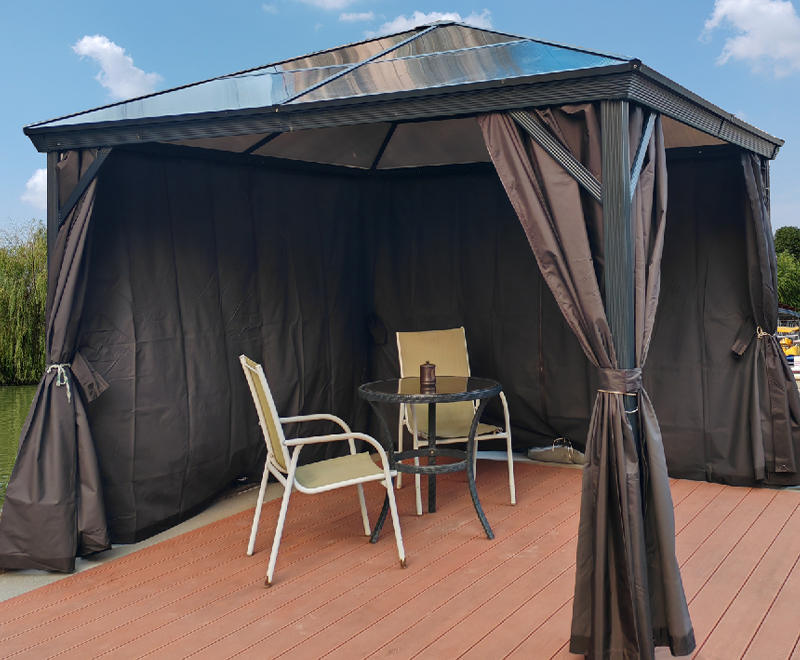
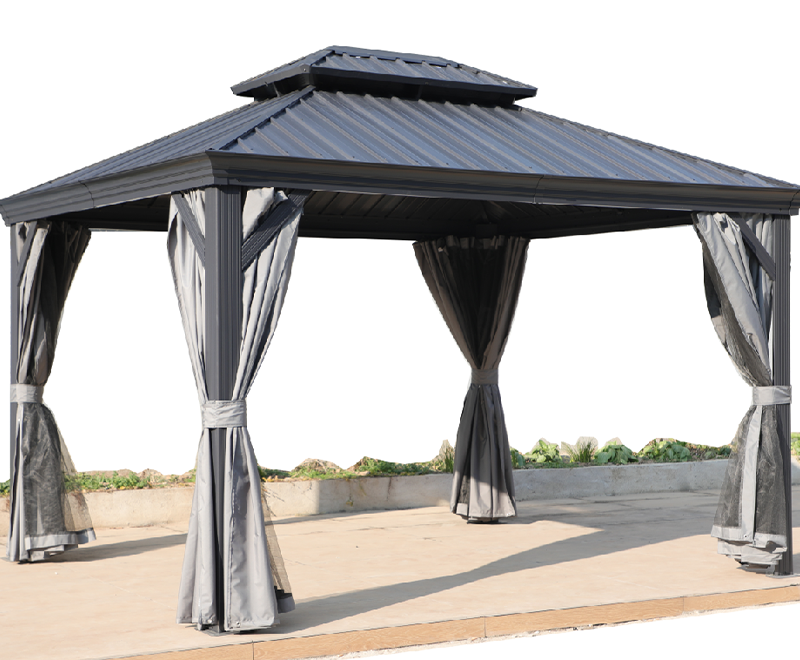
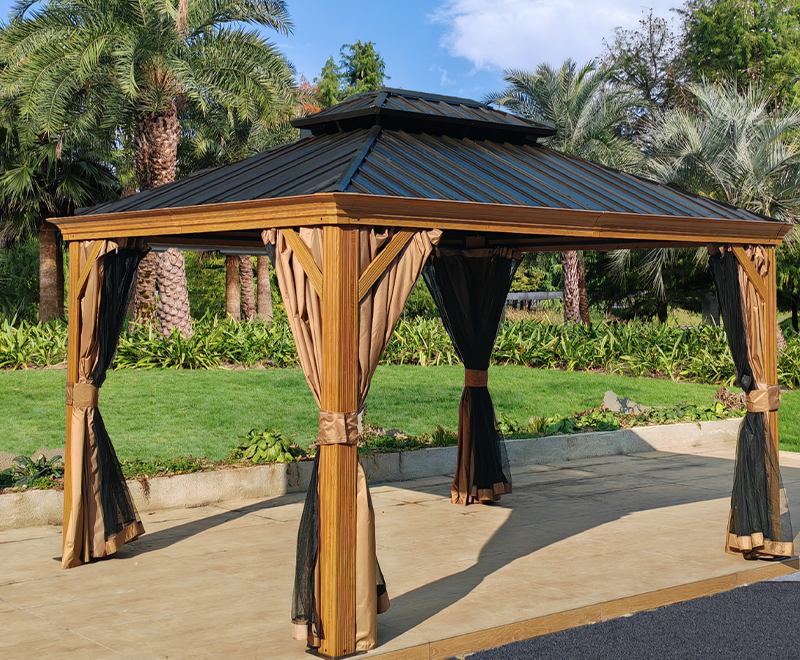
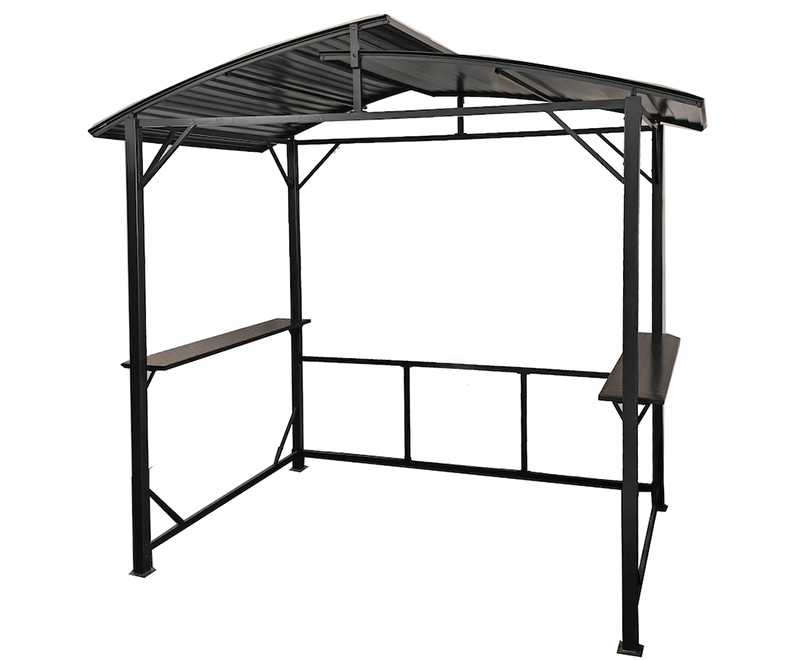
For buyers who want a reliable fixed-roof structure, our hardtop gazebo product line gives you a well-proven alternative. It uses a solid metal roof, large gutters, and structural bracing that is tested for strong wind and heavy rain. If you still want the look of a modern aluminum outdoor room but you are not ready for the louvered complexity, this is a pragmatic step.
Buying Guide: What to Check Before Ordering
Work with a supplier that can show you not just a catalog but a factory test. Here is the checklist we use when selecting a pergola for our own product development.
- Aluminum alloy and wall thickness. Ask for a material certificate. For a 3-meter span, the column wall thickness should be at least 2.0 mm, and the blade profile should have four chambers at a minimum.
- Surface treatment. Powder coating thickness should be 60-80 microns. An anodized finish lasts longer, but it limits color choice.
- Motor and control system. Look for an actuator with an IP65 housing and a remote control with a durability rating of at least 10,000 cycles. Check the cable rating and connector waterproofing.
- Gutter and drainage capacity. Ask the manufacturer to demonstrate how rainwater moves from the louvered roof to the columns. The gutter profile should be deep enough for a rainfall rate of 50 mm per hour.
- Fasteners and hardware. Stainless steel screws, aluminum end caps, and galvanized steel brackets are the minimum standards.
- Load and wind rating. Request a structural calculation or wind load test report. A well-built louvered pergola should handle at least 80 km/h with the louvers closed.
This is why manufacturers with in-house metal forming and powder coating lines have an advantage. They control the extrusion, cutting, welding, and coating process directly, which means fewer quality surprises during mass production.
Use Cases in Real Outdoor Spaces
Outdoor dining. A louvered pergola over a dining table lets you keep the sun off the food and the guests during the hottest part of the day. If you live in an area with morning sun, you can open the louvers to enjoy it, then close them when the heat becomes intense.
Grill area. For a barbecue station, you need some rain cover and the ability to let smoke escape. A louvered canopy gives you a cover that can still be opened for venting. However, louvered roofs are not designed for extreme grease; you need to clean the blades more often.
Poolside lounge. The sunscreen and privacy provided by angled louvers are useful near water. The aluminum profile is resistant to moisture and chlorine. You can adjust the blades to create a comfortable dry lounge area while the structure stays cool to the touch.
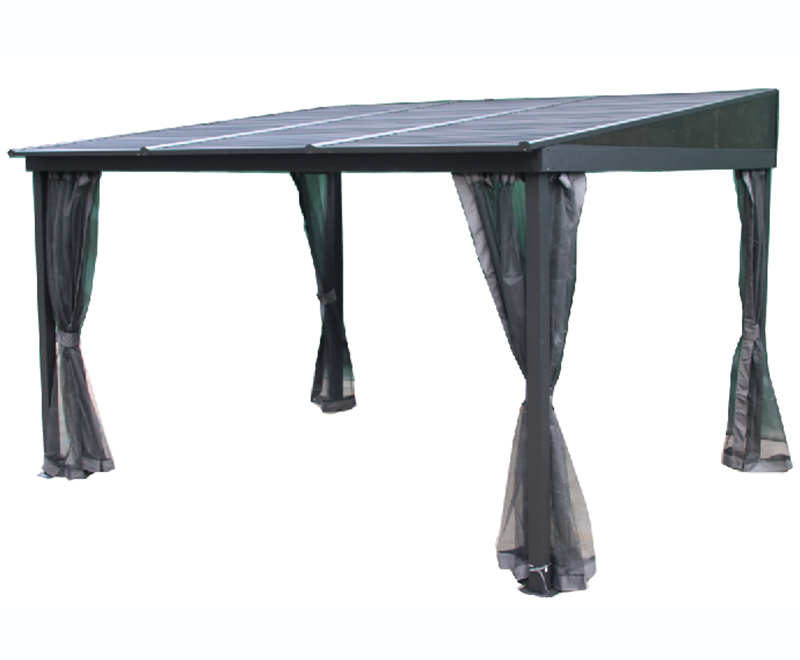
When mosquitoes are your main concern, a screened enclosure can add much more value than a louvered roof alone. That is where a mosquito-proof sunroom with a solid metal top comes in. It combines the UV shield of a hard roof with the insect protection you need in humid climates.
Aluminum louvered pergolas are a genuinely useful product for people who want to change their outdoor environment throughout the day. But they demand a different level of care during the buying process. Verify the extrusion thickness, investigate the water drainage, ask for the motor IP rating, and compare the total cost with a fixed hardtop gazebo. If your priority is dependable shelter in wind and rain, a solid-roof structure is often the better purchase. If you want variable light and airflow, a louvered pergola can be a stylish addition to your patio once you confirm that the supplier has the manufacturing capability to deliver a structure that will last.



 English
 中文简体
中文简体 Français