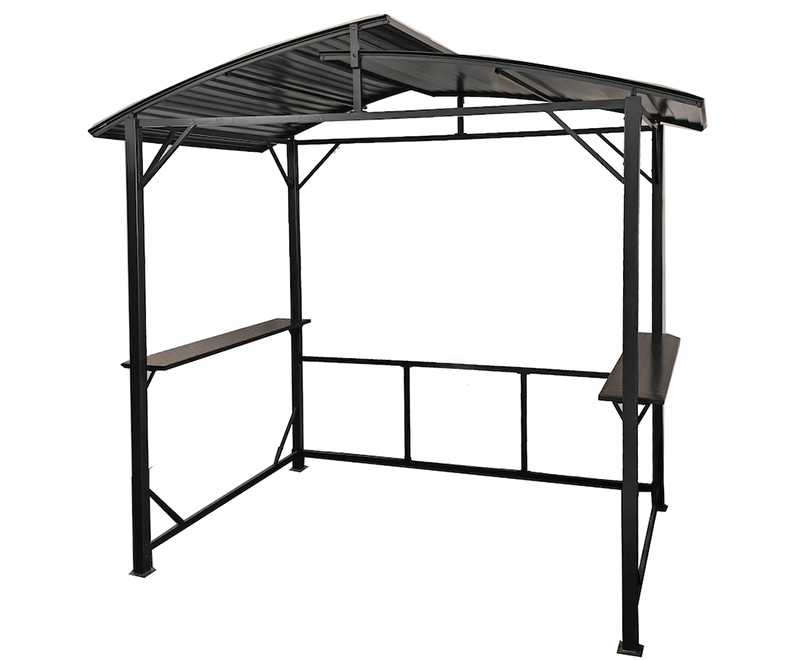
The Short Answer: What to Buy and Why
If you want a hardtop gazebo that lasts more than a decade without warping, rusting, or leaking, choose an aluminum frame with a galvanized steel or polycarbonate roof, sized at least 10x12 feet for a dining or lounge setup, and have it professionally anchored to a concrete pad or deck. This combination resists the three things that kill most gazebos early — moisture, UV exposure, and wind uplift — and typically carries a 10-15 year structural warranty from major manufacturers.
The rest of this guide breaks down exactly why, along with the size, material, and installation decisions that matter most before you buy.
Material Options Compared
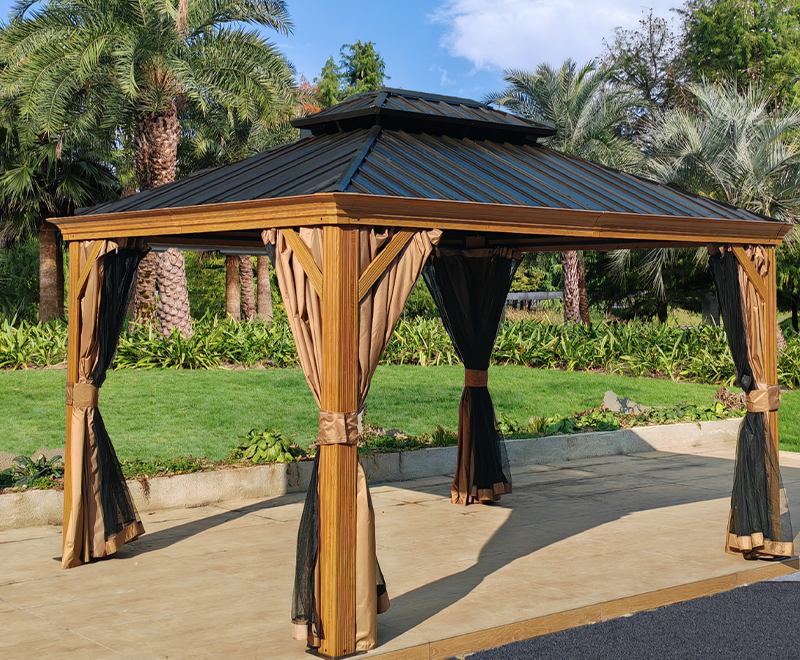
A hardtop gazebo has two material systems to evaluate separately: the frame (the structural posts and beams) and the roof panel (the solid covering that replaces fabric canopies).
Frame Materials
| Frame Type |
Lifespan |
Maintenance |
Relative Cost |
| Aluminum |
15-20 years |
Rinse only, no rust |
Medium-High |
| Galvanized Steel |
10-15 years |
Check coating yearly |
Medium |
| Wood (cedar/fir) |
8-12 years |
Annual sealing/staining |
Low-Medium |
Estimated outdoor lifespan assumes normal seasonal weather exposure without indoor storage.
Roof Panel Materials
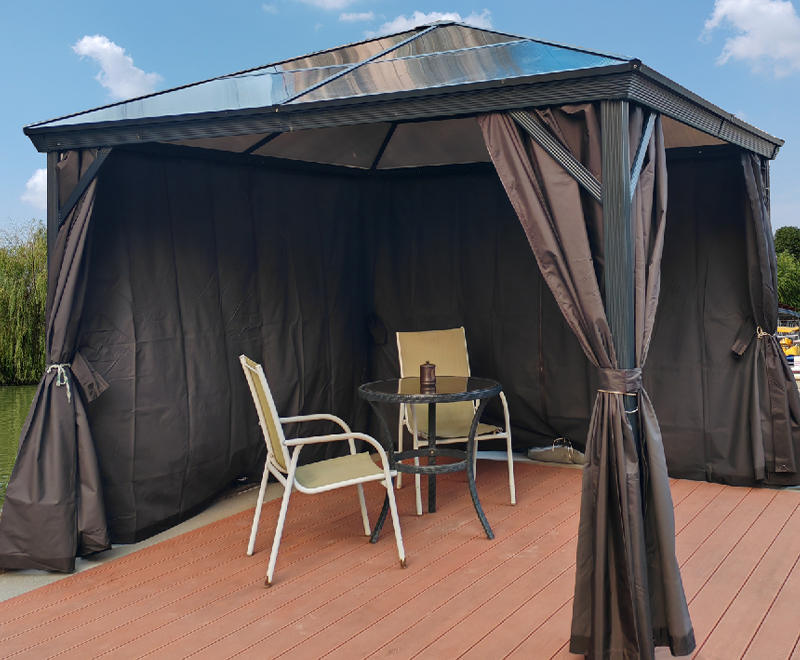
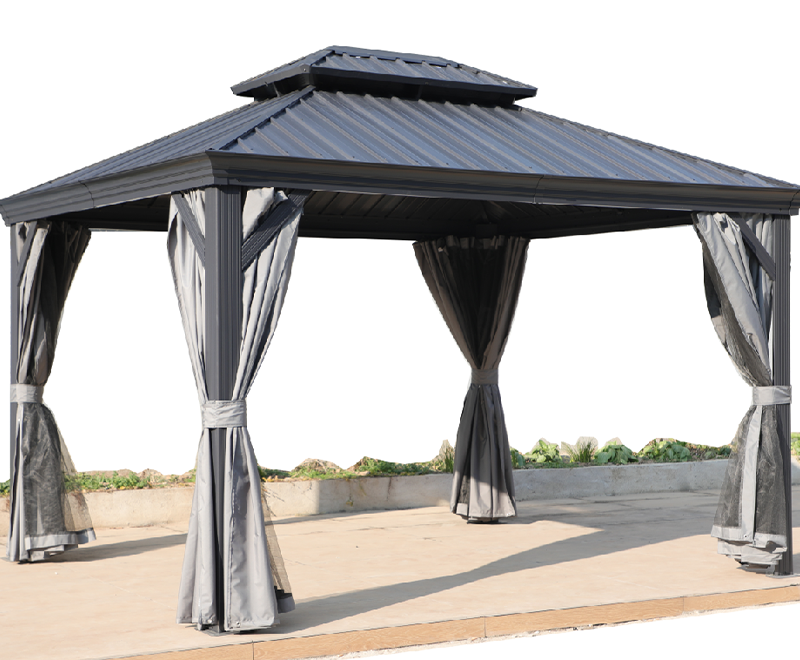
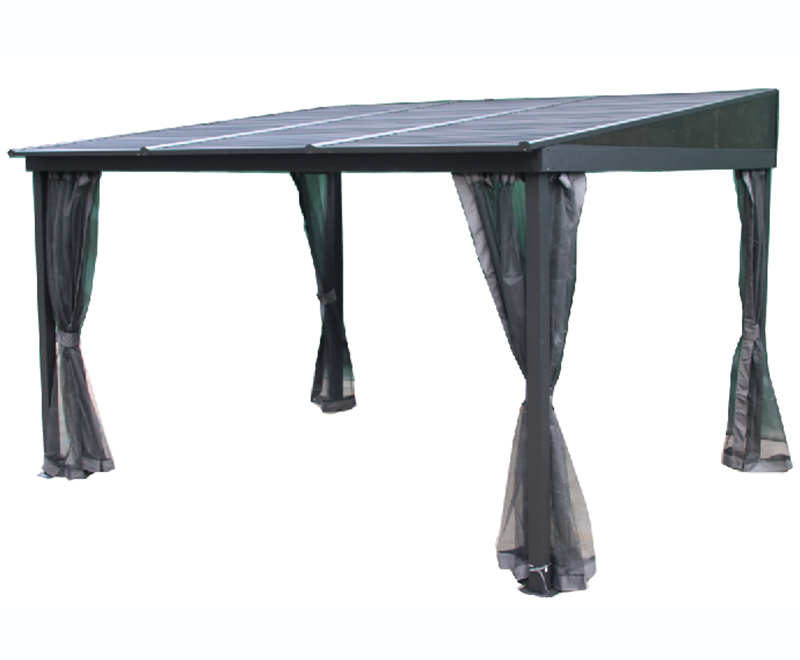
Galvanized or aluminum metal roofs are the most common hardtop option — they're rigid, fully waterproof, and handle snow loads well, which is the entire point of choosing "hardtop" over a fabric canopy. Polycarbonate roofs are a lighter-weight alternative that let some daylight through while still blocking rain; they cost slightly less but are more prone to scratching over time. Avoid asphalt-shingle hardtops unless the gazebo is a permanent structure, since the added weight requires a much heavier frame and foundation.
Choosing the Right Size
Size should be driven by function, not just yard space. Undersized gazebos are the most common buyer regret — a 10x10 model only comfortably fits a small bistro set, not a full dining table.
- 10x10 ft: Fits a small seating area or 4-person bistro set — best for balconies or narrow side yards
- 10x12 ft: Comfortably seats 6 at a dining table with room to walk around — the most popular size sold
- 12x14 ft or larger: Fits a dining set plus a separate lounge area, or an outdoor kitchen setup
Leave at least 2 feet of clearance on every side between the gazebo posts and fences, walls, or other structures for airflow, drainage, and code compliance.
Installation Tips That Prevent Common Problems
Foundation Matters More Than People Expect
A hardtop gazebo is significantly heavier than a fabric canopy, and its solid roof catches wind like a sail. Anchoring to a concrete pad or reinforced deck is the single biggest factor in wind resistance — gazebos installed on gravel or unanchored pavers are far more likely to shift or tip in storms above 40 mph.
Check Local Permit Requirements First
Many municipalities require a building permit for permanent structures over a certain size (often 100-120 square feet) or height. Checking this before purchase avoids fines or forced removal later.
Plan for Drainage
Since hardtop roofs shed water in concentrated streams rather than absorbing it like fabric, install the gazebo with a slight ground slope away from the base, or add gutters if it sits near a house foundation.
Two Installation Paths
- DIY assembly: Suitable for bolt-together kits under 10x12 ft; typically takes 4-8 hours with two people
- Professional installation: Recommended for anything over 12x14 ft or requiring a poured foundation; adds cost but ensures proper anchoring and warranty compliance
Budgeting for Your Purchase
Prices vary widely by material and size, but knowing rough ranges helps set expectations before shopping.
| Size |
Typical Price Range |
Common Use |
| 10x10 ft |
$1,200 - $2,500 |
Small patio, balcony |
| 10x12 ft |
$2,000 - $4,000 |
Dining area for 6 |
| 12x14 ft+ |
$3,500 - $8,000+ |
Dining + lounge, outdoor kitchen |
Prices reflect materials only; professional installation typically adds $500-$2,000 depending on foundation work required.
Aluminum-framed models sit at the higher end of each range but often pay for themselves within 5-7 years by avoiding the repainting, rust treatment, or roof replacement that cheaper steel or wood options require.



 English
 中文简体
中文简体 Français