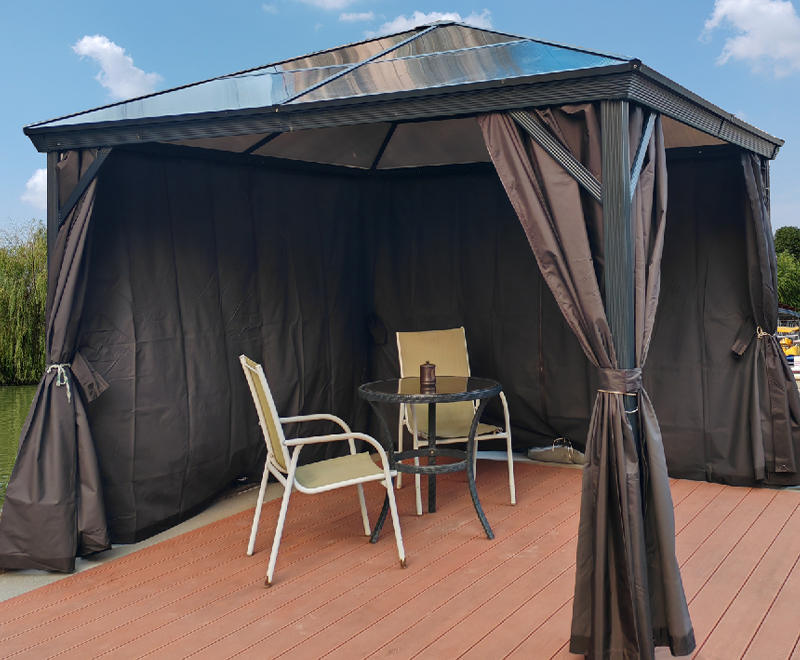
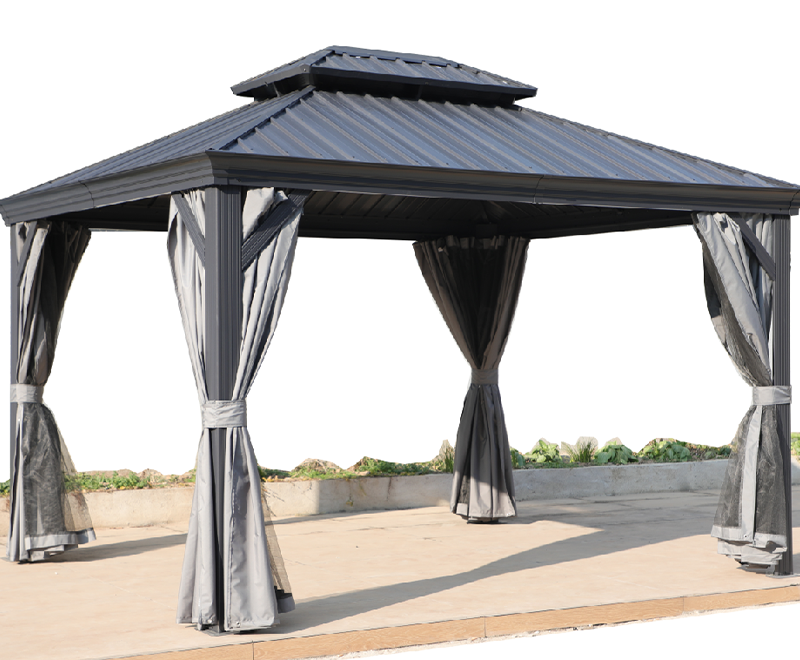
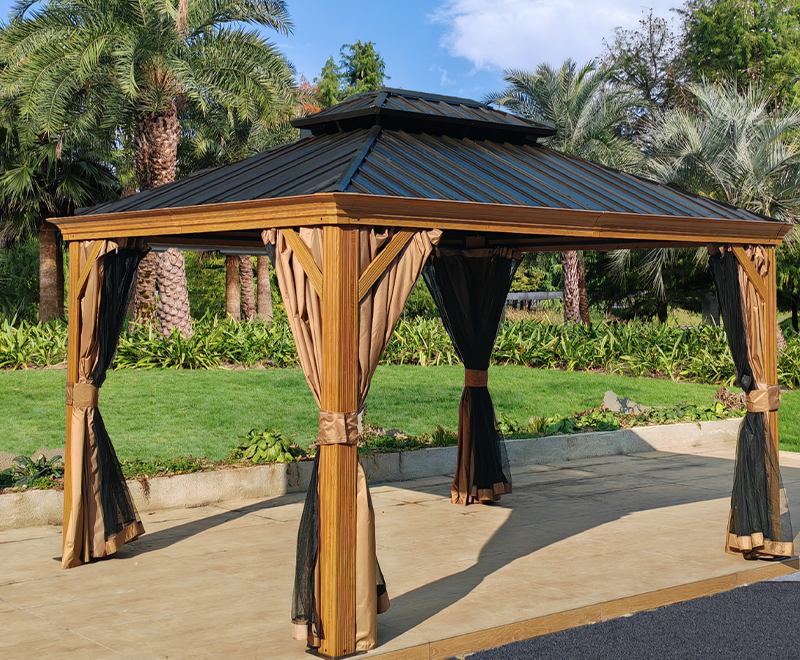
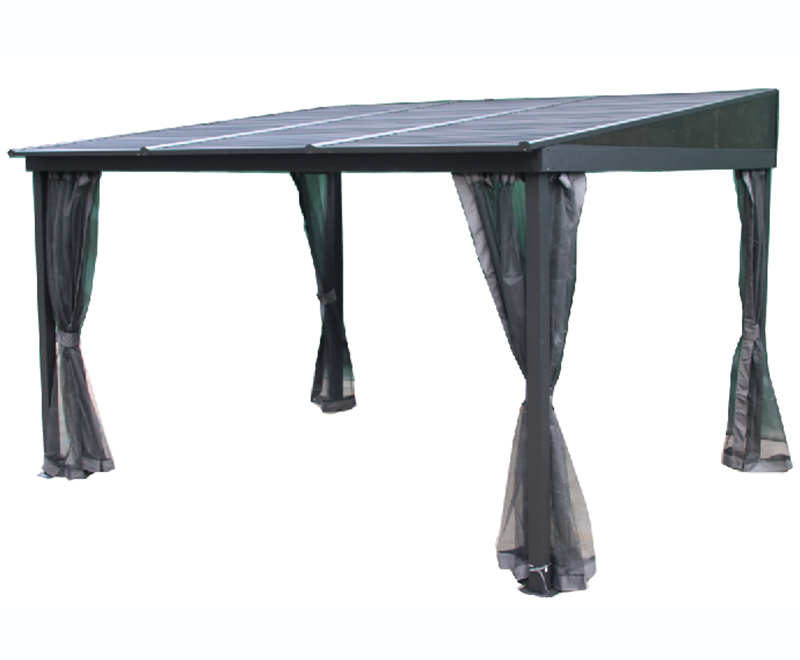
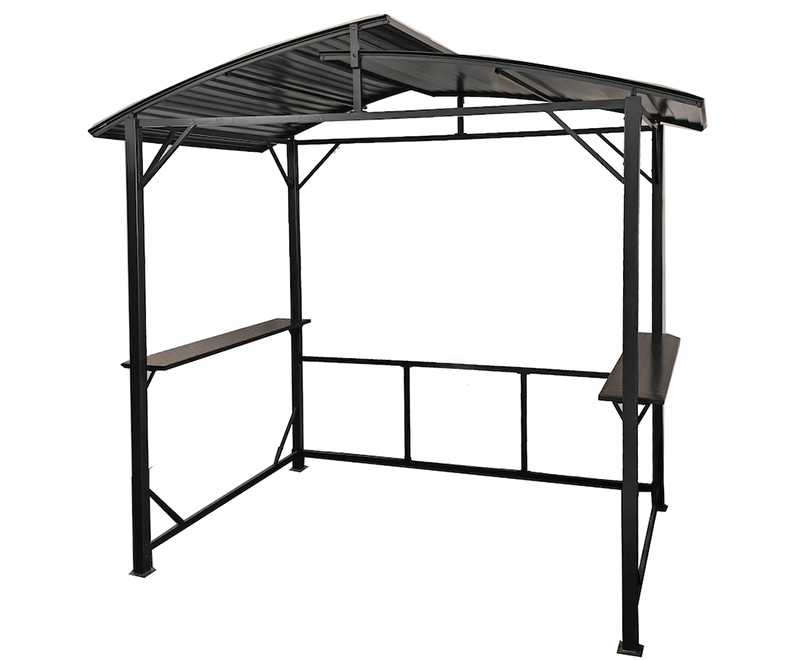
Hardtop gazebos are popular for their durability and aesthetic appeal. To ensure they last as long as possible and maintain their functionality, regular cleaning and maintenance are essential.
1. Regularly Inspect the Frame and Roof
The frame and roof are the most crucial components of a hardtop gazebo. Ensuring they remain in good condition is vital for the overall stability and durability of the structure. Begin by regularly checking the connections and support columns of the frame. Look for loose screws or components, and if any are found, repair or replace them immediately to maintain structural integrity. For metal frames, be especially cautious of any signs of rust. If rust is found, it should be cleaned off and repainted with rust-resistant paint.
The roof of the gazebo is often made of polycarbonate or aluminum, both of which are weather-resistant but still require periodic inspection for aging or damage. Check the roof surface for cracks or tears, as these can lead to leaks or cosmetic damage if not addressed promptly.
2. Clean the Roof Surface
The roof of a hardtop gazebo is typically made from polycarbonate panels, aluminum, or steel. When cleaning these surfaces, be sure to use appropriate cleaning materials. A gentle soap solution with a soft cloth or sponge is ideal for cleaning the roof. Avoid using harsh chemicals or abrasive cleaners, as they can damage the surface coating or material. Polycarbonate roofs, in particular, tend to accumulate dust and grime over time, which can affect their transparency and appearance.
During cleaning, use a soft-bristled brush to gently remove dust or stubborn dirt. For oil or sticky stains, you can add vinegar or alcohol to the cleaning solution, but ensure you rinse the surface thoroughly afterward to prevent any residue that might corrode the material.
| Cleaning Material |
Usage Recommendations |
Notes |
| Mild Soap Solution |
Use a sponge or soft cloth to clean the roof surface |
Avoid strong cleaners or abrasives |
| Vinegar or Alcohol |
Can be used to remove oil stains or stubborn dirt |
Make sure to rinse thoroughly after use |
| Soft-Bristled Brush |
To remove surface dust or lighter dirt |
Avoid using hard brushes or steel wool |
3. Remove Leaves and Debris
Especially in autumn and winter, leaves and branches can accumulate on the roof of the hardtop gazebo. If not cleared regularly, these debris can cause water to accumulate, affecting drainage and potentially adding extra weight to the roof. Not only does this affect the aesthetic appeal, but it can also lead to mold growth, which can degrade the materials over time.
To avoid this, use a long-handled brush or a soft broom to regularly sweep debris from the roof. If your gazebo has drainage outlets, ensure they are not clogged. Regular cleaning will also prevent water buildup that could lead to structural damage due to excessive weight.
4. Check the Drainage System
Many hardtop gazebos are designed with a drainage system, usually at the four corners or sides, to allow rainwater to flow off the roof. These drainage systems help prevent water accumulation, but they can easily become clogged with debris or leaves. To ensure proper drainage, it’s important to check the drainage system periodically.
If you notice any blockages, you can use a high-pressure hose or a soft hose to clear the drainage pipes. Also, check the joints and connections of the drainage system for any leaks or loose fittings, and repair or replace them as necessary to ensure proper water flow.
5. Clean the Frame and Metal Parts
The metal frame is an important aspect of the gazebo’s structure, and regular cleaning and maintenance of these parts are essential. Over time, dust, dirt, and grease can accumulate on the metal surfaces. Use a mild soap solution and a soft cloth to clean the metal frame and remove most of the dirt. For tougher grease stains, use a specialized metal cleaner.
If you notice rust on the metal frame, use sandpaper or a wire brush to remove the rust. Afterward, apply a rust-resistant coating or paint to protect the metal from further corrosion. This will help prolong the life of the gazebo’s frame.
6. Prevent Rusting
If the frame of your hardtop gazebo is made from steel, rust is a potential issue, especially in humid or rainy environments. Regularly check for any signs of rust, and treat any affected areas promptly.
When you find rust, remove it with sandpaper or a wire brush, and then apply a layer of rust-resistant paint or coating to the affected areas. Regularly apply anti-rust oil to metal parts, especially in areas exposed to the elements, to prevent rust formation.
7. Maintain the Roof Seals
The roof seals are designed to prevent water from leaking into the gazebo and ensure that the interior remains dry. Over time, seals may become worn, cracked, or degraded due to exposure to UV rays, weather, and temperature fluctuations. It’s essential to regularly check the seals for any signs of damage.
If you find that the seals are cracked or worn, replace them with high-quality rubber or silicone seals. This will help maintain the waterproofing of the roof and prevent leaks from affecting the gazebo’s structure.
8. Winter Preparation
In colder climates, snow and ice can put a significant strain on a hardtop gazebo. The weight of the snow can damage the roof or frame. To prevent this, clean any snow off the roof before it accumulates too much. You can also use a protective gazebo cover during the winter to shield it from heavy snow and ice.
During winter, avoid letting snow accumulate for long periods, as this can cause pressure damage to the structure. If necessary, use warm water and a soft brush to clear snow, but avoid scraping the surface with hard tools that may scratch or damage the material.
9. Prevent UV Damage
While many hardtop gazebos are designed with UV-resistant materials, prolonged exposure to direct sunlight can still cause damage to the roof and metal frame. UV rays can cause materials to fade and become brittle over time.
To protect your gazebo from UV damage, consider using additional shading options like sunshades, curtains, or tarps, especially during the summer months. Polycarbonate roofs, in particular, may become brittle and discolored after prolonged exposure to sunlight, so additional UV protection is advisable.
10. Apply Protective Coatings Regularly
If your hardtop gazebo has wooden or metal components, applying a protective coating can significantly extend its lifespan. For wooden frames, apply wood protection oil regularly to prevent cracking and warping caused by moisture and UV rays. For metal frames, use rust-preventive coatings to protect against corrosion.
For any parts that already have protective coatings, check them periodically to ensure that they are intact and add more layers as needed to maintain the protective barrier.
Frequently Asked Questions (FAQ)
Q1: Can a hardtop gazebo be used year-round?
Yes, hardtop gazebos are designed to withstand various weather conditions, including rain, snow, and sunlight. With proper maintenance, they can be used year-round.
Q2: How often should I clean my hardtop gazebo?
It’s recommended to clean your gazebo at least once every few months, especially after heavy storms or in autumn when leaves tend to accumulate. Regular maintenance will help prevent dirt and debris buildup, keeping it in good condition.
Q3: How do I prevent rust on my gazebo frame?
To prevent rust, regularly inspect the frame for any signs of corrosion and remove any rust spots as soon as they appear. Apply a rust-resistant paint or oil to metal parts to create a protective barrier.
Q4: What should I do during winter to protect my hardtop gazebo?
During winter, clear the snow off the roof to prevent excessive weight buildup. You can also cover the gazebo with a protective cover to shield it from harsh winter weather.
References
- Johnson, M. (2020). The Ultimate Guide to Gazebo Maintenance. Garden & Home Press.
- Williams, D. (2019). Weather-Proofing Your Outdoor Structures. Outdoor Living Publications.
- Smith, T. (2021). Long-Term Care for Outdoor Furniture and Structures. The Home Improvement Guide.



 English
 中文简体
中文简体 Français